
Polymer degradation is the process by which polymer chains break down under environmental, chemical, or mechanical stress, causing measurable changes in structure and performance. Furthermore, understanding and controlling polymer degradation is essential for engineers, materials scientists, and quality managers who rely on plastics, elastomers, and composites to perform reliably over time. At Materials Metric, we help organizations identify, quantify, and prevent degradation failures before they become costly problems.
Moreover, polymer materials power nearly every modern industry — from medical devices and aerospace components to food packaging and construction. However, exposure to heat, UV radiation, moisture, oxygen, and biological agents can progressively compromise their integrity. Consequently, understanding the mechanisms behind polymer degradation is not optional — it is a critical part of product design, quality assurance, and regulatory compliance.
Furthermore, as sustainability goals push manufacturers toward recycled and bio-based polymers, degradation behavior has become even more complex. In addition, degradation can be a failure mode to prevent or, in some cases, a design feature to engineer. Either way, accurate testing and characterization are the foundation of sound decision-making.
Key Takeaways
- Polymer degradation involves chemical, physical, or biological breakdown of polymer chains, reducing mechanical and functional performance.
- Multiple degradation pathways exist, including thermal, oxidative, hydrolytic, photolytic, and biodegradation — and often these act simultaneously.
- Early detection through analytical techniques such as FTIR Analysis, DSC Testing, and GC-MS Analysis enables proactive materials management.
- Regulatory standards such as ISO 10993-18 Chemical Characterization require degradation assessment for medical-grade polymers.
- Preventive strategies — including stabilizer selection and accelerated aging studies — can significantly extend polymer service life.
- Combining multiple analytical methods gives the most complete picture of degradation onset, rate, and mechanism.
Polymer Degradation: The irreversible chemical, physical, or biological alteration of a polymer’s molecular structure — typically through chain scission, cross-linking, or functional group changes — resulting in the loss of intended mechanical, optical, or barrier properties.
Key Fact: Polymer degradation is one of the leading causes of unexpected product failure across industries including aerospace, medical devices, automotive, and consumer packaging — making early-stage analytical testing a critical risk-management tool.
What Is Polymer Degradation and Why Does It Matter?
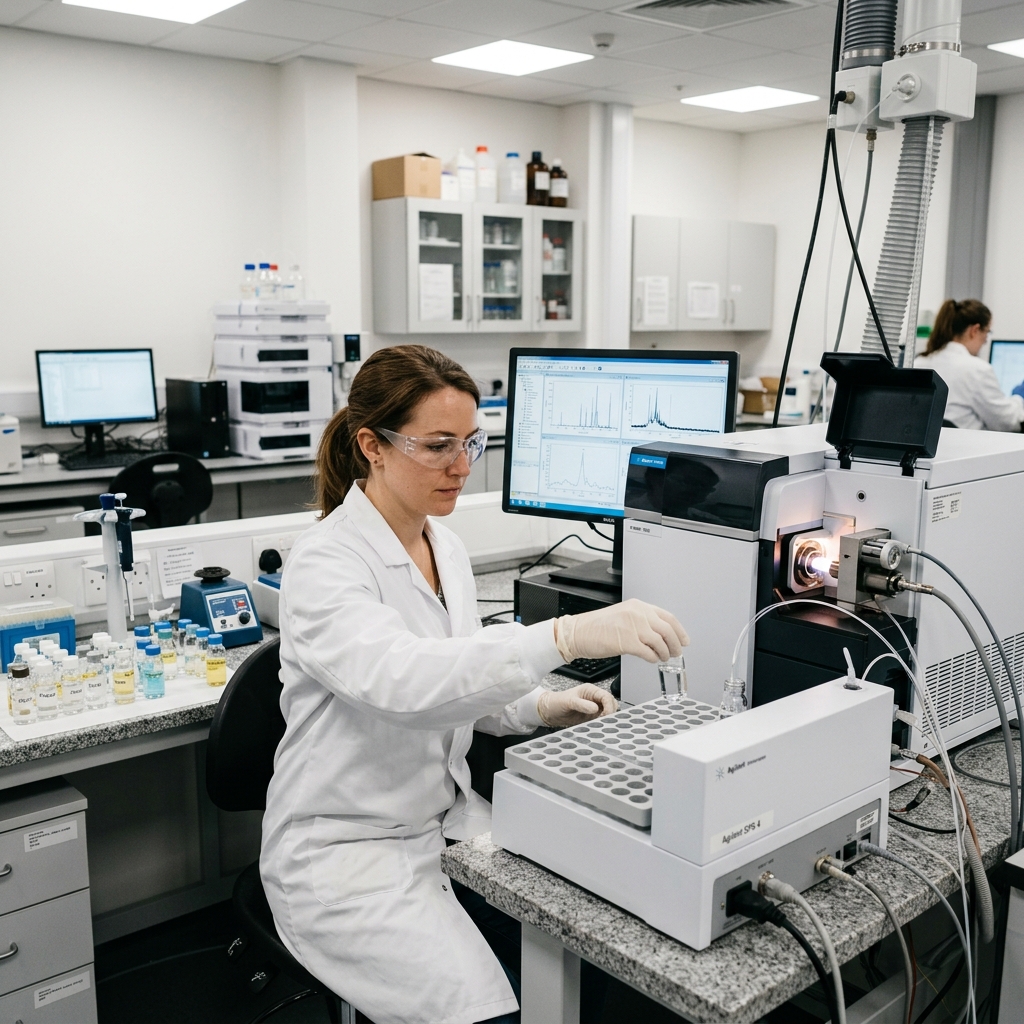
However, polymer degradation refers to any process that alters a polymer’s original chemical structure, leading to a decline in physical, mechanical, or aesthetic properties. These changes can be subtle at first — slight discoloration or surface cracking — but they often signal deeper structural compromise. Therefore, early detection is far more cost-effective than responding to catastrophic failures.
Therefore, in practice, degradation affects every polymer-based product with a finite service life. For instance, a medical catheter exposed to sterilization cycles, a plastic fuel tank enduring temperature swings, or a recycled polyethylene pipe in contact with soil — all face degradation mechanisms that engineers must anticipate and manage.
The Economic and Safety Consequences of Polymer Degradation
Consequently, degradation-related failures carry significant financial and safety implications. Product recalls, warranty claims, and liability exposure all escalate when polymeric materials fail prematurely in service. Moreover, in safety-critical applications such as medical implants or aircraft components, even partial degradation can create life-threatening outcomes.
Regulatory agencies also require evidence that materials remain stable throughout their intended service life. Specifically, frameworks like ISO 10993-18 Chemical Characterization mandate chemical characterization of degradation products for medical devices. Consequently, organizations that invest in systematic degradation testing avoid both regulatory delays and downstream failures.
Where Polymer Degradation Occurs Across Industries
Polymer degradation challenges are not limited to one sector. In the automotive industry, for example, underhood polymers face continuous thermal cycling and fluid exposure. Meanwhile, packaging polymers degrade under UV light and humidity during storage and transport.
In the medical sector, implantable and single-use devices must resist degradation during sterilization and in vivo exposure. By contrast, biodegradable polymers in agricultural or environmental applications are engineered to degrade on a controlled schedule. In both cases, accurate analytical characterization is essential. Services like Chemical & Analytical Testing provide the quantitative data teams need to make confident materials decisions.
What Are the Main Types of Polymer Degradation?
Several distinct degradation mechanisms act on polymer systems, and they frequently occur in combination. Understanding each type helps engineers design appropriate preventive measures and select the right analytical tests. The table below summarizes the primary degradation types, their triggers, and common examples.
| Degradation Type | Primary Trigger | Common Polymers Affected | Typical Signs |
|---|---|---|---|
| Thermal degradation | Elevated temperature | PVC, PTFE, nylon | Discoloration, embrittlement, off-gassing |
| Oxidative degradation | Oxygen / ozone exposure | Polyolefins, rubber | Surface cracking, reduced elongation |
| Hydrolytic degradation | Water / moisture | PET, polyurethanes, polylactic acid | Molecular weight loss, property drop |
| Photodegradation (UV) | UV radiation | Polypropylene, polycarbonate | Chalking, yellowing, brittleness |
| Biodegradation | Microbial activity | PLA, PHB, starch-based polymers | Mass loss, surface erosion |
| Mechanical degradation | Stress, abrasion, fatigue | Engineering plastics, elastomers | Microcracking, stress whitening |
| Chemical degradation | Solvents, acids, bases | Epoxies, acrylics, fluoropolymers | Swelling, dissolution, property loss |
Thermal Degradation: Heat as a Primary Stressor
Thermal degradation occurs when elevated temperatures break polymer backbone bonds, triggering chain scission or unwanted cross-linking. Processing conditions — such as injection molding or extrusion — can initiate thermal degradation if temperatures exceed a material’s safe processing window. As a result, finished parts may show discoloration, reduced molecular weight, or brittleness even before entering service.
Analytical tools such as DSC Testing measure thermal transitions and detect oxidative induction time, a key indicator of remaining thermal stability. Similarly, FTIR Analysis identifies carbonyl and hydroxyl group formation — hallmarks of early-stage thermal oxidation. Together, these techniques give engineers clear, quantitative evidence of thermal damage.
Oxidative Degradation: The Role of Free Radicals
Oxidative degradation proceeds through a free-radical chain reaction involving oxygen. Initially, heat or UV light generates radicals; these react with oxygen to form peroxy radicals that attack adjacent polymer chains. Consequently, the process is self-propagating and accelerates rapidly once initiated.
Antioxidant stabilizers interrupt this chain reaction, but they deplete over time. Monitoring antioxidant depletion and oxidation byproducts is therefore critical in life-prediction studies. GC-MS Analysis effectively identifies volatile degradation products, while HPLC Analysis quantifies residual stabilizer concentrations. Both approaches provide actionable data for material reformulation or replacement decisions.
Hydrolytic Degradation: The Effect of Moisture on Polymer Chains
Hydrolytic degradation affects polymers containing hydrolyzable bonds — such as esters, amides, urethanes, and carbonates. Water molecules cleave these bonds, progressively reducing molecular weight and mechanical strength. Furthermore, the process accelerates significantly in acidic or alkaline environments and at elevated temperatures.
Polyesters like PET and biodegradable PLA are particularly susceptible to hydrolytic degradation. In medical applications, hydrolysis in body fluids can alter drug release profiles or compromise structural implants. Therefore, characterizing hydrolytic stability is a core requirement under standards like ISO 10993-18 Chemical Characterization. Related work on polymer shelf life often depends directly on hydrolytic stability data.
How Does Photodegradation Affect Polymer Performance?
Photodegradation — also called UV degradation or photolytic degradation — results from the absorption of ultraviolet radiation by polymer chains or residual chromophores. This energy breaks chemical bonds, generating reactive species that trigger oxidation and chain scission. Notably, the damage often begins at the surface and progresses inward, making surface analysis techniques particularly valuable.
Outdoor applications bear the highest photodegradation risk. However, indoor polymers under fluorescent or LED lighting can also experience gradual UV-induced degradation over extended periods. In addition, certain additives and pigments can sensitize polymers to UV damage rather than protect them — making formulation review essential.
Identifying Photodegradation Products
Surface chemical changes from UV exposure are detectable through several powerful analytical methods. XPS Analysis provides elemental and chemical-state information from the outermost nanometers of a polymer surface. Furthermore, Raman Spectroscopy can map degradation zones across a material’s cross-section without requiring extensive sample preparation.
In addition, SEM Analysis reveals surface morphology changes such as craze networks, pitting, and micro-cracking that accompany photodegradation. Combining surface spectroscopy with microscopy gives engineers a comprehensive picture of degradation extent and depth. These data are particularly valuable for polymer failure analysis when UV exposure is a suspected root cause.
Quick Note: Accelerated UV Aging Tests
Quick Note: Accelerated UV aging protocols — such as ASTM G154 (fluorescent UV lamp) and ASTM G155 (xenon arc) — expose polymer samples to intensified UV and moisture cycling. These tests compress years of outdoor exposure into weeks, enabling faster materials qualification. However, the correlation between accelerated and real-world exposure varies by polymer type. Therefore, complementary analytical testing before and after exposure is essential to validate performance predictions accurately.
UV Stabilizers and Their Analytical Verification
Manufacturers add UV stabilizers — such as hindered amine light stabilizers (HALS) and UV absorbers — to slow photodegradation. Verifying their presence, concentration, and distribution within a polymer matrix is a critical quality step. Specifically, HPLC Analysis quantifies stabilizer levels, while NMR Spectroscopy confirms stabilizer identity and structural integrity.
Moreover, confirming that stabilizers have not migrated, volatilized, or chemically altered during processing is equally important. Residual stabilizer monitoring supports shelf-life prediction and helps teams set realistic retest intervals. Services like Chemical Purity & Contaminant Screening provide this level of formulation-level detail efficiently and accurately. Related topics such as polymer crystallinity also influence UV stabilizer distribution and degradation susceptibility at the microstructural level.
Advanced Analytical Techniques for Characterizing Polymer Degradation
Selecting the right analytical method is critical for accurately detecting and quantifying polymer degradation. Different techniques reveal different aspects of degradation — from molecular weight changes to elemental contaminants released during breakdown. Therefore, a multi-technique approach consistently delivers the most complete and defensible picture of material condition.
Furthermore, emerging regulatory expectations increasingly demand comprehensive characterization data. For medical, pharmaceutical, and aerospace applications especially, a single analytical method is rarely sufficient on its own. Combining complementary techniques ensures that no degradation pathway goes undetected.
Molecular-Level Characterization Methods
Molecular weight distribution is one of the most sensitive indicators of polymer degradation. Chain scission reduces average molecular weight, while cross-linking increases it — both are detectable through gel permeation chromatography (GPC). Notably, even small shifts in molecular weight distribution can precede visible or mechanical signs of degradation.
NMR Spectroscopy identifies specific structural changes at the molecular level, such as oxidation of methylene groups or hydrolysis of ester linkages. Additionally, FTIR Analysis tracks functional group evolution over time — making it ideal for monitoring degradation progression in accelerated aging studies. Both methods provide quantitative, reproducible data suited to regulatory submissions.
Thermal Analysis Techniques
Thermal methods reveal how degradation alters a polymer’s energy response and structural transitions. DSC Testing measures glass transition temperature, melting point, and oxidative induction time — all of which shift as degradation proceeds. Consequently, DSC serves as a rapid screening tool for detecting early-stage oxidative or thermal damage.
Thermogravimetric analysis (TGA) complements DSC by quantifying mass loss as a function of temperature, revealing decomposition onset points and volatile byproduct release. Moreover, combining DSC and TGA data with GC-MS Analysis enables identification of the specific gases or vapors released during thermal breakdown. This combination supports both safety assessments and formulation optimization.
Elemental and Surface Characterization Techniques
Polymer degradation can release or concentrate inorganic impurities — particularly in recycled polymers or those processed with metal-based catalysts. Chemical & Elemental Characterization using techniques such as ICP-MS and ICP-OES detects trace metals released during thermal or oxidative breakdown. These data are essential when polymer-derived extractables could contact food, pharmaceuticals, or biological tissue.
XRF Analysis offers rapid, non-destructive elemental screening of bulk polymer samples and surfaces. Meanwhile, XPS Analysis provides chemical-state information from the uppermost surface layers — critical for detecting oxidation, contamination, or coating degradation. Together, these surface methods reveal how degradation chemistry evolves from the outside in.
For microstructural investigation, SEM Analysis visualizes crack initiation, surface erosion, and morphological changes at the micron scale. Furthermore, TEM Analysis resolves nanoscale structural features such as lamellar disruption or filler-matrix interface degradation. Both techniques are particularly valuable in polymer failure analysis investigations where root-cause identification is the primary objective.
Chromatographic and Spectroscopic Methods for Degradation Byproducts
Degradation byproducts — including oligomers, monomers, additives, and reaction products — often migrate out of polymers over time. Identifying and quantifying these species requires sensitive chromatographic tools. Specifically, HPLC Analysis separates and quantifies non-volatile degradation products and leachable additives with high precision.
GC-MS Analysis handles volatile and semi-volatile byproducts, providing both identification and quantification in a single analysis. For complex mixtures, Raman Spectroscopy offers rapid, spatially resolved chemical mapping without sample destruction. These tools, reviewed extensively in ScienceDirect literature, form the analytical backbone of modern extractables and leachables testing programs.
Industry-Specific Polymer Degradation Challenges and Solutions
Different industries face unique polymer degradation environments, regulatory requirements, and failure consequences. Understanding sector-specific challenges helps teams select the most relevant testing protocols and prioritize their analytical investments effectively. The following overview covers four major application areas.
Medical Devices and Pharmaceutical Packaging
In the medical and pharmaceutical sectors, polymer degradation directly affects patient safety. Implantable devices, drug delivery systems, and primary packaging must all resist degradation throughout their labeled shelf life and in-use period. Consequently, regulatory frameworks such as ISO 10993-18 and USP Elemental Impurities guidance set stringent requirements for degradation product identification and risk assessment.
Hydrolytic and oxidative degradation pathways are particularly relevant in this context. Sterilization processes — including gamma irradiation, ethylene oxide, and steam autoclaving — can each trigger distinct degradation chemistries. Therefore, selecting the appropriate analytical testing suite before and after sterilization exposure is a regulatory necessity. Our Biocompatibility & Toxicity Testing services support this requirement comprehensively.
Aerospace and Automotive Applications
Aerospace and automotive polymers face some of the harshest thermal and chemical environments of any sector. Engine bay temperatures, hydraulic fluid exposure, and extreme altitude UV conditions all accelerate degradation significantly. Moreover, weight-saving trends have increased polymer use in structural and semi-structural roles — raising the consequences of any degradation-related failure.
For these applications, Chemical & Analytical Testing programs typically combine accelerated thermal aging, fluid immersion studies, and mechanical property tracking. Furthermore, surface characterization via XRD Analysis can detect crystallinity changes in semi-crystalline polymers subjected to repeated thermal cycling. Our Scientific & Technical Consulting team helps aerospace and automotive clients design custom test matrices tailored to their specific use environments and certification requirements.
Food Contact and Consumer Packaging
Food contact polymers degrade under UV exposure, temperature cycling, and contact with fatty or acidic food simulants. Degradation products — including oligomers and additive breakdown compounds — can migrate into food, raising both safety and regulatory concerns. Specifically, substances migrating at or above established thresholds require toxicological evaluation under EU Regulation 10/2011 and FDA guidance for food contact materials.
Monitoring migration levels requires sensitive chromatographic and spectroscopic techniques. Chemical Purity & Contaminant Screening services identify and quantify migrating species at trace concentrations. In addition, studies on polymer shelf life provide the time-resolved data regulators expect to see in food contact compliance dossiers.
Environmental and Biodegradable Polymers
Growing demand for sustainable materials has accelerated development of bio-based and biodegradable polymers. However, characterizing their degradation behavior in real-world environments — soil, seawater, compost — presents unique analytical challenges. Notably, degradation rate, byproduct toxicity, and residual microplastic formation all require monitoring under relevant environmental conditions.
Standard analytical techniques apply here, but test design must reflect environmental exposure rather than industrial processing conditions. Method Development & Validation expertise is therefore essential when standard protocols do not exist or need adaptation. Furthermore, elemental analysis confirms whether catalyst residues or heavy metal-containing additives leach into the environment during degradation — a critical ecotoxicological concern reviewed extensively in PubMed Central – Trace Metals Review literature.
Quality Assurance Best Practices for Managing Polymer Degradation
Effective quality assurance programs treat polymer degradation as a quantifiable risk — not an unpredictable event. Structured testing protocols, clear acceptance criteria, and data-driven decision frameworks all reduce the probability of in-service failures. The following best practices reflect the approach used by leading manufacturers and testing laboratories.
Establishing a Degradation Testing Strategy
A sound degradation testing strategy begins with a risk assessment that identifies the most likely degradation pathways for a given polymer, application, and environment. Specifically, teams should map the thermal, chemical, mechanical, and biological stressors their product will encounter over its entire service life. This mapping guides analytical method selection and helps prioritize resources effectively.
Accelerated aging studies — designed to mimic years of service in weeks — are a core component of any robust strategy. Furthermore, baseline analytical characterization of the as-received polymer (molecular weight, crystallinity, additive profile) is essential before any aging exposure begins. Without this baseline, meaningful comparison of pre- and post-aging data is impossible. Related work on polymer deformulation also provides crucial information about the starting formulation chemistry before degradation studies commence.
Key Analytical Methods Compared: A Practical Guide
| Analytical Method | What It Measures | Degradation Information Provided | Best Application |
|---|---|---|---|
| FTIR | Functional groups | Oxidation, hydrolysis, chain scission markers | Routine monitoring, QC screening |
| DSC | Thermal transitions | Oxidative induction time, Tg shift | Thermal stability assessment |
| GC-MS | Volatile organics | Byproduct identity and quantity | Extractables/leachables studies |
| HPLC | Non-volatile compounds | Additive depletion, oligomers | Stabilizer monitoring, migration testing |
| XPS | Surface chemistry | Oxidation state changes at surface | UV and oxidative surface degradation |
| SEM | Surface morphology | Crack networks, pitting, erosion | Failure analysis, mechanical degradation |
| ICP-MS / ICP-OES | Trace metals | Metal catalyst or additive leaching | Medical and food contact compliance |
Documentation, Traceability, and Regulatory Readiness
Regulatory agencies expect full traceability of degradation data — from sample collection through analysis to final reporting. Maintaining detailed records of polymer lot numbers, processing conditions, aging parameters, and analytical results is therefore non-negotiable in regulated industries. Moreover, using validated analytical methods strengthens the credibility of any submission or audit response.
Our Method Development & Validation services ensure that analytical protocols meet the specificity, precision, and accuracy requirements of ICH, ISO, and USP frameworks. Additionally, our Scientific & Technical Consulting team assists clients in interpreting complex degradation data and translating findings into actionable materials management decisions.
Frequently Asked Questions About Polymer Degradation
What is the most common type of polymer degradation?
Oxidative degradation is among the most prevalent forms of polymer degradation across industries. It affects virtually all organic polymer systems exposed to air, heat, or UV radiation. Consequently, antioxidant stabilizer systems are among the most widely used polymer additives in commercial formulations.
How do laboratories detect polymer degradation early?
Laboratories use a combination of spectroscopic, thermal, and chromatographic methods to detect degradation before it becomes visible. Specifically, FTIR identifies new functional groups, DSC measures changes in thermal transitions, and GC-MS detects volatile byproducts at early degradation stages. Furthermore, tracking molecular weight distribution over time via GPC provides a sensitive, quantitative degradation indicator. Our Chemical & Analytical Testing service offers these capabilities under one roof.
Can polymer degradation be reversed or stopped?
In most cases, polymer degradation is irreversible once significant chain scission or cross-linking has occurred. However, the rate of degradation can be dramatically slowed through proper stabilizer selection, processing optimization, and protective coatings. Therefore, preventive strategies — implemented before degradation progresses — are far more effective than attempts to restore a damaged material.
How does polymer degradation affect biocompatibility?
Degradation products from polymers in contact with biological tissue can trigger inflammatory responses, cytotoxicity, or systemic toxicity. Notably, even low-level leaching of degradation byproducts may disqualify a material from medical use under ISO 10993 and USP standards. For this reason, Biocompatibility & Toxicity Testing is an essential companion to chemical degradation analysis in medical device development.
What is accelerated aging, and how does it relate to polymer degradation?
Accelerated aging uses elevated temperature, humidity, UV intensity, or chemical concentration to compress long-term degradation into a shorter test period. Specifically, Arrhenius-based models relate accelerated test conditions to real-time degradation rates, enabling shelf-life and service-life predictions. However, these models require careful validation, since different degradation mechanisms have different acceleration factors. Our Method Development & Validation team designs and validates accelerated aging protocols appropriate to each material and application.
Which regulatory standards govern polymer degradation testing?
Several key standards apply depending on the industry. For medical devices, ISO 10993-18 governs chemical characterization and degradation product assessment. Additionally, USP Elemental Impurities guidance applies to pharmaceutical packaging polymers. For food contact materials, FDA and EU Regulation 10/2011 set migration limits. Furthermore, ASTM and ISO offer material-specific aging and degradation test standards across aerospace, automotive, and construction sectors.
Conclusion
Polymer degradation is a universal challenge — affecting every industry that relies on polymeric materials for structural, functional, or protective performance. Moreover, as material formulations become more complex and regulatory expectations more demanding, the need for rigorous, multi-technique analytical characterization has never been greater.
Understanding the mechanisms of degradation — thermal, oxidative, hydrolytic, photolytic, biological, or mechanical — and selecting appropriate analytical methods to detect and quantify them are the foundations of sound materials management. Furthermore, integrating degradation data into product design, quality systems, and regulatory submissions transforms analytical results into competitive and compliance advantages.
At Materials Metric, our team of analytical scientists and materials specialists delivers the full spectrum of polymer degradation testing and consulting services. From early-stage formulation screening to post-failure root-cause investigation, we provide clear, defensible data that supports confident decision-making. In addition, our expertise spans regulated industries — including medical devices, pharmaceuticals, aerospace, and food contact — ensuring that your testing program meets the standards that matter most to your business.
Whether you need a single degradation analysis or a comprehensive polymer characterization program, our laboratory is equipped and ready to help. Ultimately, investing in rigorous degradation testing protects your products, your customers, and your organization’s reputation. To discuss your specific polymer degradation challenges and testing requirements, contact Materials Metric today — our experts are ready to help you build a smarter, more resilient materials management program.
Related Posts from Materials Metric
Explore more insights from our team of materials scientists and analytical experts: