Material Deformulation & Reverse Engineering
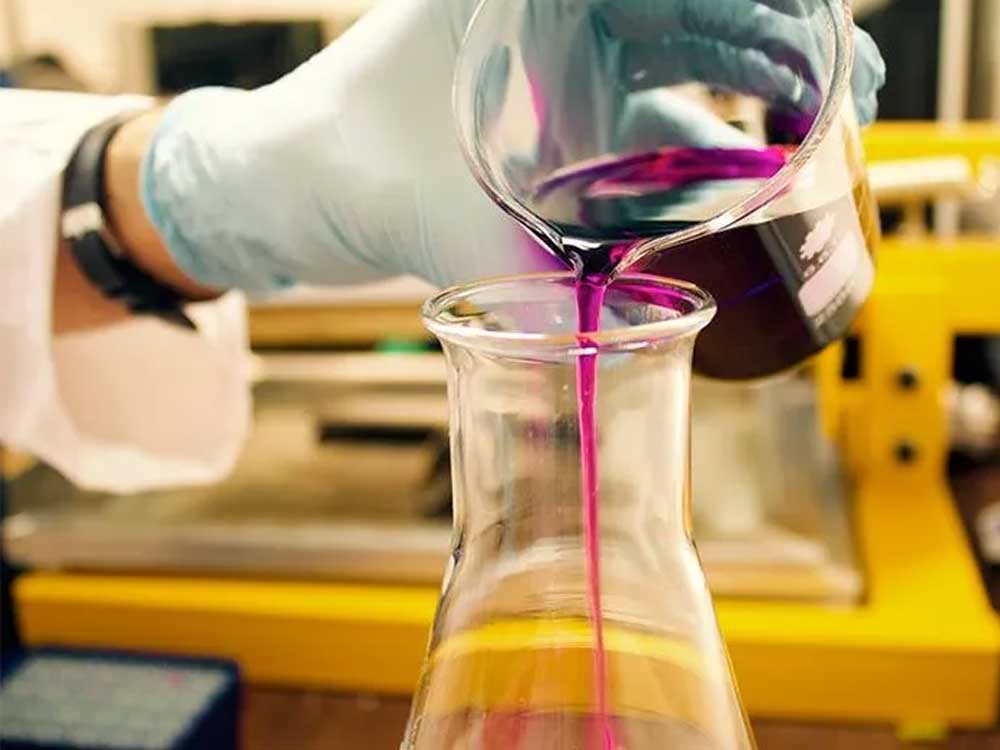
Material deformulation and reverse engineering help determine what a product, material, coating, polymer, adhesive, gel, powder, residue, or formulation is made of. This testing is used to identify base polymers, active components, fillers, plasticizers, stabilizers, pigments, processing aids, coatings, contaminants, and unknown ingredients.
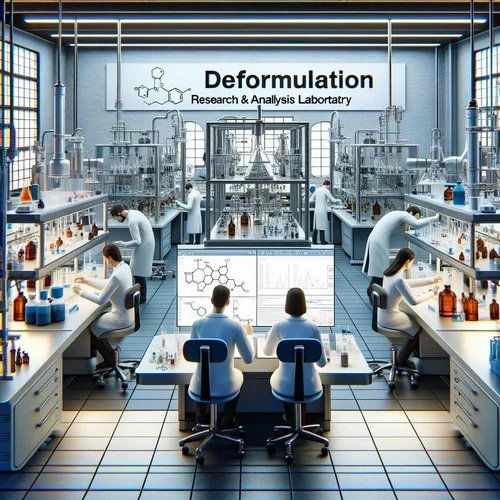
At Materials Metric, material deformulation combines spectroscopy, chromatography, mass spectrometry, elemental analysis, thermal analysis, microscopy, and expert interpretation to build a practical chemical and materials profile. Our approach supports product development, competitor benchmarking, supplier verification, quality control, failure investigation, and reformulation projects across regulated and industrial markets.
Use of Material Deformulation & Reverse Engineering
Material deformulation and reverse engineering are used to:
- Identify unknown material composition
- Determine polymer, resin, adhesive, coating, or gel chemistry
- Identify fillers, pigments, stabilizers, plasticizers, and additives
- Compare a product against a reference or competitor material
- Investigate lot-to-lot or supplier-related formulation differences
- Detect contamination, residue, or unexpected components
- Support product development and reformulation
- Verify raw material or finished product consistency
- Investigate product failure, discoloration, cracking, odor, residue, or degradation
Applications of Material Deformulation & Reverse Engineering
- Polymers & Plastics: base polymer identification, filler content, additive screening, degradation evaluation
- Adhesives & Sealants: resin chemistry, curing agents, plasticizers, fillers, and formulation comparison
- Coatings & Films: coating chemistry, layer structure, pigment identification, surface contamination
- Medical Devices & Biomaterials: polymer composition, extractable components, degradation products, material verification
- Pharmaceutical & Drug Delivery Materials: packaging components, polymeric carriers, excipients, coatings, and compatibility concerns
- Dental Materials: composites, cements, adhesives, fillers, and resin-based formulations
- Textiles & Coated Fabrics: fiber identification, coatings, finishes, residues, and performance-related material changes
- Consumer & Industrial Products: unknown ingredients, residues, powders, gels, deposits, and formulation differences
Sample Analysis Process
- Submission & Review
- Identify the material type, product use, and project objective
- Review known formulation information, SDS, technical data sheets, or prior test data
- Define whether the goal is identification, comparison, failure investigation, or full reverse engineering
- Determine sample quantity, reference materials, and reporting needs
- Sample Preparation
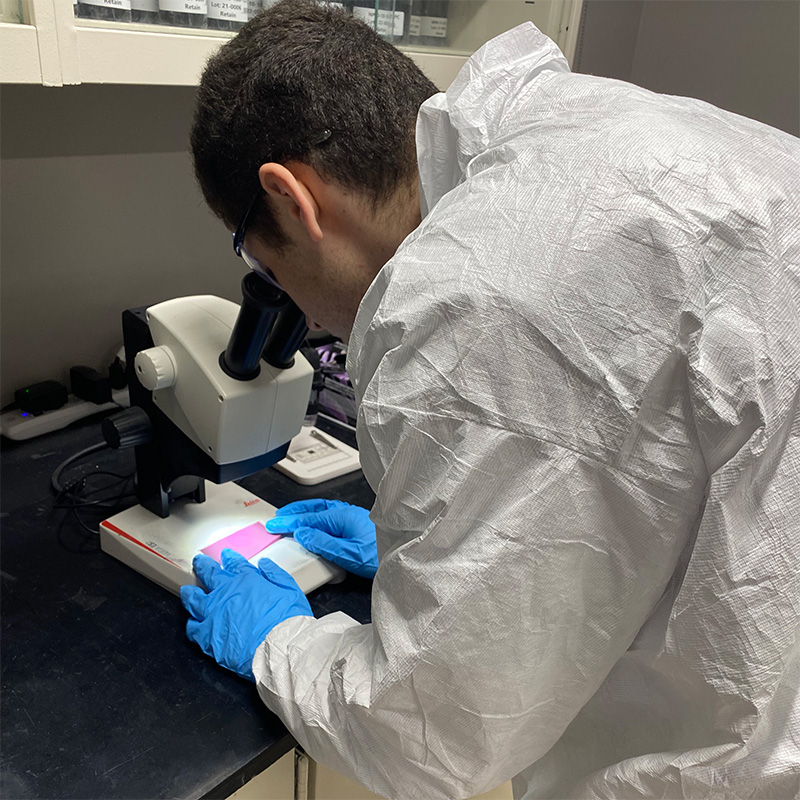
- Visual inspection and photographic documentation
- Representative subsampling
- Layer separation or cross-sectioning, if needed
- Solvent extraction for organic components
- Digestion or ashing for inorganic and elemental analysis
- Filtration or isolation of residues, particles, or deposits

- Analytical Testing
- FTIR and Raman spectroscopy for polymer, coating, and functional group identification
- GC-MS and LC-MS for organic additives, plasticizers, solvents, extractables, and degradation products
- ICP-MS / ICP-OES for metals, fillers, catalysts, and elemental impurities
- SEM-EDS for surface morphology, particle analysis, elemental mapping, and contamination investigation
- DSC and TGA for thermal transitions, filler content, ash content, and degradation behavior
- Microscopy for morphology, layers, defects, fibers, and visual comparison
- Data Processing & Reporting
- Summary of identified material components
- Probable polymer, resin, coating, or formulation chemistry
- Organic and inorganic component profile
- Additive, filler, pigment, or stabilizer identification where possible
- Comparison with reference or competitor material, if provided
- Interpretation of formulation differences or failure-related findings
- Recommendations for additional testing, if needed
Why Choose Materials Metric for Material Deformulation & Reverse Engineering
Materials Metric provides multi-technique material deformulation supported by chemical, polymer, biomaterial, and materials characterization expertise.
Our deformulation and reverse engineering capabilities include:
- Identification of polymers, coatings, adhesives, gels, residues, powders, and unknown materials
- Integrated analysis using spectroscopy, chromatography, mass spectrometry, microscopy, elemental analysis, and thermal analysis
- Comparative testing of approved, failed, supplier, or competitor materials
- Support for formulation development, quality control, and supplier verification
- Failure investigation for cracking, discoloration, odor, residue, contamination, and material degradation
- Clear technical reports tailored to R&D, quality, regulatory, or product development needs
Related services
- FTIR Spectroscopy
- Raman Spectroscopy
- GC-MS
- LC-MS / HPLC
- ICP-MS / ICP-OES Elemental Analysis
- SEM-EDS Imaging
- DSC & TGA Thermal Analysis
- Chemical Purity & Contaminant Screening
- Degradation & Impurity Tracking
- Materials Failure Analysis