Consumer Product Testing & Product Failure Analysis
Scientific Evaluation of Packaging Materials, Containers & Product-Contact Systems
Packaging does more than contain a product. It must maintain mechanical integrity, protect against contamination, resist environmental exposure, remain compatible with the formulation it contacts, and preserve performance throughout filling, storage, transportation, and use.
Materials Metric provides packaging material testing and container failure analysis for plastic, glass, metal, coated, elastomeric, and multilayer packaging systems. Projects can support packaging development, supplier qualification, product-container compatibility, contaminant investigations, extractables and leachables assessment, quality troubleshooting, and failure analysis.
Industry Risks & Technical Challenges
Common technical challenges may include:
- Cracking, crazing, stress whitening, warpage, or brittleness
- Delamination of multilayer films, coatings, liners, or laminated structures
- Chemical incompatibility between product and container
- Discoloration, swelling, softening, odor, or surface changes
- Unexpected particles, residues, deposits, or contamination
- Seal, closure, liner, gasket, or adhesive problems
- Glass fracture, surface defects, stress, or contamination
- Potential extractables, leachables, migrants, or degradation products
- Supplier or batch variability in polymers, coatings, or packaging components

Our Analytical Approach to Packaging Material Testing
Packaging investigations often involve both the container material and the contacting product. Materials Metric can evaluate composition, structure, interfaces, residues, degradation, and chemical migration using complementary analytical methods selected for the packaging system and question.
- FTIR and Raman for polymer, coating, liner, adhesive, residue, and degradation identification
- GC-MS, LC-MS, HPLC, ICP-MS/OES, and related methods for extractables, leachables, additives, contaminants, and elemental analysis
- SEM/EDS and microscopy for cross-sections, multilayers, particles, defects, fracture features, and interfaces
- DSC and TGA for polymer identity support, thermal transitions, filler/volatile content, and aging comparisons
- XRF and XRD for elemental and mineral/phase characterization where applicable
- Mechanical, adhesion, barrier-related, or custom physical testing where appropriate
- Comparative analysis of new versus aged, control versus failed, or supplier-to-supplier packaging
- Customized extraction and compatibility studies based on product contact and intended use
Standards & Technical Frameworks
Packaging programs may be structured around relevant ASTM or ISO methods and application-specific requirements. Pharmaceutical, medical, cosmetic, food-contact, and industrial packaging may require different analytical and regulatory frameworks; the study design should therefore be aligned with the product, contact conditions, intended market, and purpose of the data.

Packaging Materials & Components We Evaluate
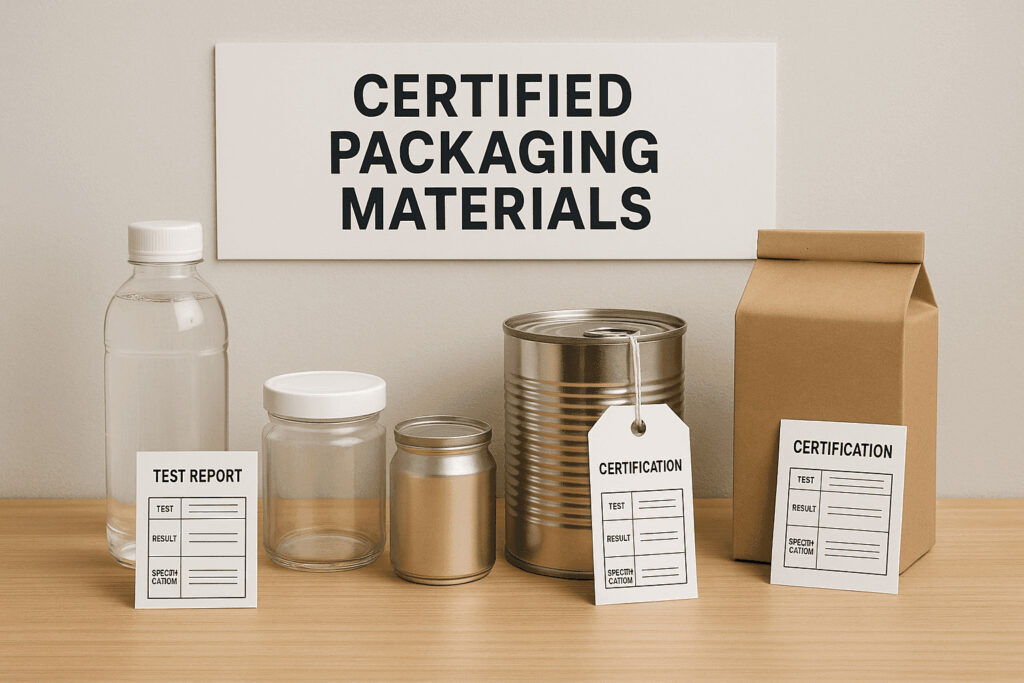
- Rigid and flexible plastic containers
- Films, pouches, laminates, multilayer structures, and liners
- Glass bottles, vials, jars, and specialty glass components
- Metal cans, closures, foils, and coated metal packaging
- Caps, seals, gaskets, elastomeric components, and adhesives
- Paints, inks, protective coatings, and functional surface layers
- Pharmaceutical, cosmetic, food-contact, consumer, and industrial packaging systems
- Deposits, residues, particles, and unknown materials associated with packaging
Common Packaging Investigations
- Why did a plastic bottle crack, haze, warp, or discolor?
- Is the product chemically interacting with the packaging?
- What is the unknown residue inside a container or on a closure?
- Why did a liner, coating, or multilayer structure delaminate?
- Are two packaging suppliers using analytically equivalent materials?
- What compounds may extract or leach from the packaging under defined conditions?
- What caused a glass container to fracture or develop a defect?
- Did storage, heat, sterilization, or product exposure change the packaging material?
Why Materials Metric?
Materials Metric combines polymer science, glass and metal characterization, chemical analysis, microscopy, extractables/leachables expertise, and failure investigation to evaluate packaging as a complete material system.
- Integrated analysis of plastics, glass, metals, coatings, seals, liners, adhesives, and multilayer packaging
- Chemical and materials characterization for product-container interaction questions
- Extractables and leachables analytical capability for appropriate packaging applications
- Failure analysis for cracks, fractures, delamination, discoloration, residues, and degradation
- Comparative testing for supplier changes, lot differences, aging, and reference-versus-problem samples
- Access to FTIR, Raman, SEM/EDS, GC-MS, LC-MS, ICP, DSC, TGA, XRF, and complementary techniques
- Customized testing strategies for pharmaceutical, cosmetic, food-contact, consumer, and industrial packaging
Frequently Asked Questions
What types of packaging materials can Materials Metric test?
Materials Metric can evaluate plastics, films, laminates, glass, metals, coatings, inks, adhesives, seals, liners, elastomers, closures, and other packaging components. The test plan depends on the packaging structure and whether the question involves identity, compatibility, failure, contamination, or migration.
Can you investigate product-packaging compatibility problems?
Yes. Product-container investigations may compare new and aged packaging, characterize the container and contacting product, identify residues or degradation products, and evaluate whether chemical or physical changes are associated with storage or contact conditions.
Do you offer extractables and leachables testing for packaging?
Yes. Materials Metric supports extractables and leachables studies using analytical techniques such as GC-MS, LC-MS, ICP-MS/OES, and FTIR. The extraction design and regulatory context should be defined based on the packaging application and intended use of the data.
Can you compare packaging from two suppliers?
Yes. Comparative analysis can evaluate polymer identity, additives, fillers, elemental composition, thermal transitions, layer structure, coatings, thickness, and other measurable characteristics to determine whether supplier materials differ analytically.
Discuss Your Packaging Material Project
To learn more about our capabilities or to discuss a specific testing, characterization, investigation, or R&D need, please contact Materials Metric using the form below. Our team can help define an appropriate analytical approach based on your sample, technical question, project stage, and intended use of the data.