
Micro & Nano Mechanical Testing (Nanoindentation)
Micro and nano mechanical testing evaluates how materials respond to precisely controlled mechanical loads applied at micron- and nanometer-scale depths. By probing localized regions, these techniques reveal mechanical properties that cannot be resolved through bulk testing, particularly where surface or subsurface behavior governs performance.
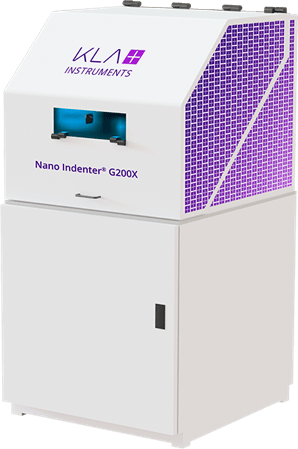
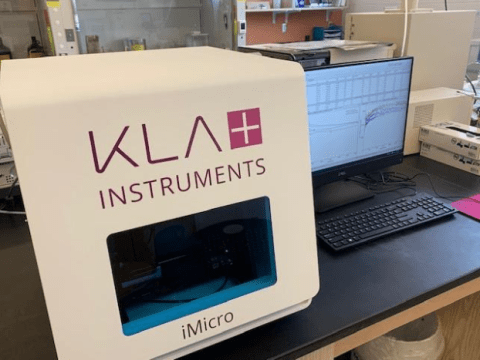
At Materials Metric, micro- and nano-scale mechanical testing, including nanoindentation is used to quantify hardness, elastic modulus, creep behavior, time-dependent deformation, plasticity, recovery, and local mechanical anisotropy. This testing is essential for thin films, surface coatings, microstructures, biological substrates, and small-volume material systems where localized mechanical integrity is critical to functionality and reliability.
Use of Nanoindentation & Micro-Mechanical Testing
This testing is used to:
• Characterize small-scale mechanical properties
• Evaluate thin-film hardness and modulus
• Assess coating durability and mechanical integrity
• Measure creep, viscoelasticity, and time-dependent response
• Compare mechanical behavior across microstructural regions
• Evaluate biomaterials, hydrogels, and engineered tissues
Applications
- Coatings & Thin Films: hardness, modulus, wear performance
- Biomaterials: hydrogel stiffness, tissue substrate mechanics
- Metals & Ceramics: grain-level mechanical properties
- Polymers: viscoelastic indentation response
- Composites: fiber/matrix micro-mechanics
- Microelectronics: film stack characterization
Sample Analysis Process
1. Submission & Objective Review
- Define indentation depth, load range, and mapping needs
- Provide film thickness or substrate information if applicable
2. Sample Preparation
- Surfaces polished or leveled to ensure smooth indentation
- Thin films mounted for stable support
- Soft or hydrated materials stabilized in controlled environments
3. Mechanical Testing
- Indentation performed at controlled loading rates
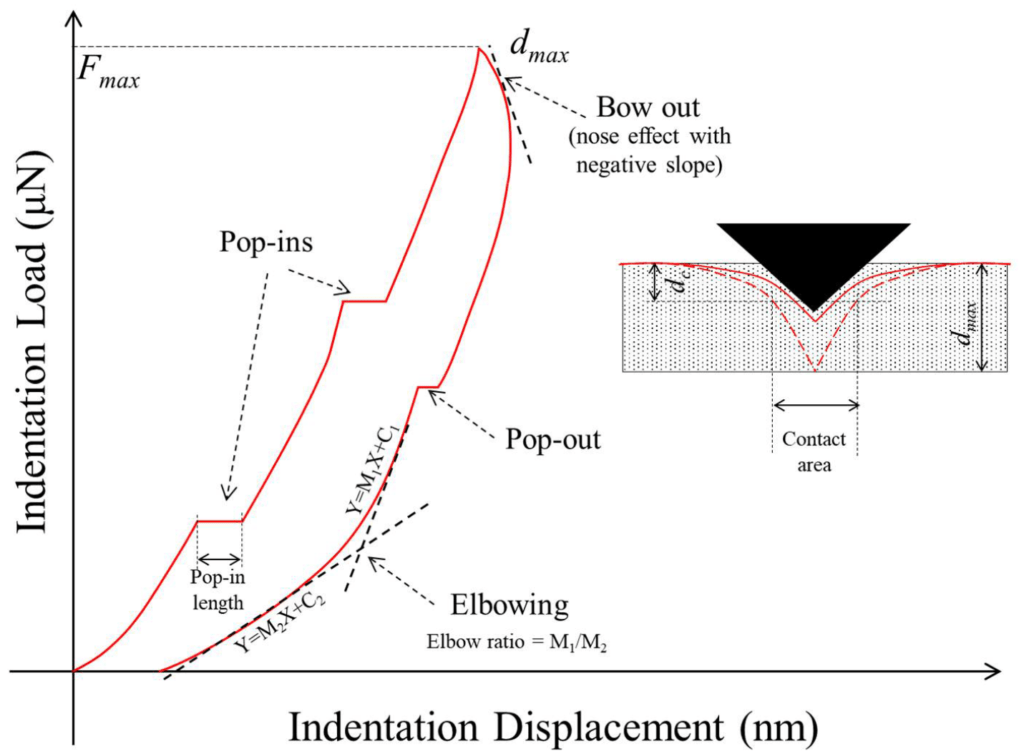
- Load–displacement curves recorded
- Creep or hold segments added when needed
- Grid or array indentation available for mapping
4. Data Processing & Reporting
- Hardness (H) and modulus (E)
- Creep rate and time-dependent deformation
- Residual depth and recovery
- Load–displacement curves
- Interpretation connecting results to durability and structure
Why Choose Materials Metric for Micro/Nano Mechanical Testing
Materials Metric provides precision micro- and nano-scale mechanical characterization for advanced materials and surfaces.
Our services offer:
- High-resolution measurement of modulus, hardness, and creep
- Capability for spatial mapping across films and microstructures
- Expertise in polymers, biomaterials, thin films, ceramics, and composites
- Integration with surface imaging (SEM, profilometry) for failure interpretation
- Clear reporting with engineering analysis for R&D, quality control, and product qualification
We help you understand the mechanical behavior of materials where traditional testing cannot reach.