Four-Point Probe Analysis
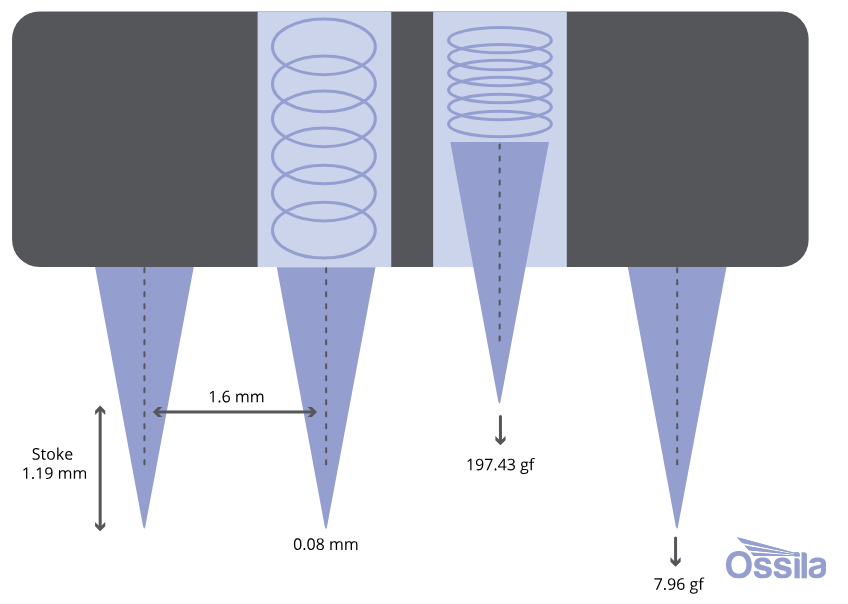
Four-Point Probe Analysis is an electrical characterization technique used to measure resistivity and conductivity by applying current through two outer probes while measuring voltage across two inner probes. This configuration eliminates contact resistance effects, enabling highly accurate and repeatable electrical measurements.
At Materials Metric, four-point probe testing is applied to evaluate thin films, semiconductor materials, electrode materials, conductive polymers, and functional coatings. These measurements support electrical performance assessment, materials optimization, quality control, and verification of conductive behavior in advanced material systems.
Use of Four-Point Probe Analysis
The technique is used to:
• Measure sheet resistance (Ω/sq)
• Determine resistivity and conductivity
• Evaluate uniformity of conductive coatings
• Compare processing or formulation effects
• Characterize electrodes and battery materials
• Assess performance of printed electronics

Applications of Four-Point Probe
- Electronics & Semiconductors: wafer mapping, doped layers
- Energy Materials: battery electrodes, conductive films
- Printed Electronics: carbon inks, metallic inks
- Polymers & Composites: conductive polymer blends
- Metals & Coatings: surface conductivity and resistivity
Sample Analysis Process
1. Submission & Objective Review
- Provide material composition and thickness (if known)
- Select locations for resistivity mapping
2. Sample Preparation
- Samples tested as solids; no dissolution
- Surfaces cleaned to remove oils or dust
- Must be flat and stable for accurate probe contact
- Very rough surfaces may require light polishing
- No solvents or liquid prep required
3. Four-Point Probe Measurement
- Current applied through outer probes
- Voltage measured through inner probes
- Resistivity, conductivity, and sheet resistance calculated
4. Data Processing & Reporting
- Sheet resistance (Ω/sq)
- Resistivity and conductivity calculations
- Uniformity maps (if multiple points tested)
- Interpretation aligned with electronic or material requirements
Why Choose Materials Metric for Your Four-Point Probe Analysis
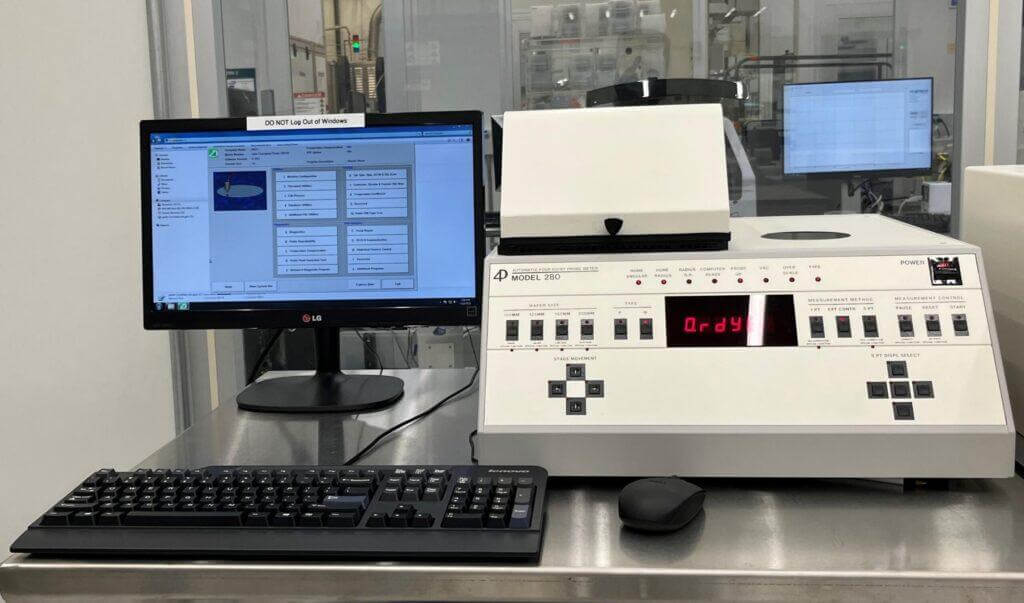
Materials Metric provides high-precision electrical property measurement supported by deep expertise in conductive materials, coatings, and electronic components.
Our services include:
- Accurate, repeatable resistivity and conductivity measurements
- Uniformity mapping across films, wafers, or coatings
- Compatibility with metals, conductive polymers, carbon films, and battery electrodes
- Interpretation linking electrical performance to processing, formulation, and stability
- Clear, engineering-focused reporting suitable for R&D, QC, and product qualification
We help you validate conductive performance, material reliability, and device functionality with confidence.
Related services