Food-Contact Material & Packaging Analysis
Analytical Characterization of Food-Contact Packaging, Containers & Materials
Food and beverage packaging systems use plastics, glass, metals, coatings, inks, adhesives, seals, liners, and multilayer structures that can change during processing, filling, storage, transport, or contact with the packaged product. Material identity, degradation, contaminants, and product-packaging interactions can affect quality and technical performance.
Materials Metric provides food-contact material and packaging analysis focused on material composition, chemical characterization, contaminants, product-container interactions, extractables/leachables, degradation, unknown particles, and packaging failure. This page is intentionally focused on materials and packaging rather than routine food microbiology or nutritional testing.
Industry Risks & Technical Challenges
Common technical challenges may include:
- Chemical migration or extractables/leachables from packaging components
- Unknown particles, fibers, residues, flakes, or deposits
- Container cracking, delamination, discoloration, swelling, or deformation
- Polymer degradation or chemical incompatibility with the packaged product
- Glass fracture, defects, stress, or contamination
- Coating, liner, seal, cap, adhesive, or closure failures
- Metal contamination, corrosion, or elemental impurities
- Supplier or material changes affecting packaging composition or performance

Our Analytical Approach to Food-Contact Material Testing
Food-contact investigations may require characterization of both the packaging and the contacting product or residue. Materials Metric can use complementary methods to identify materials, characterize migrants or contaminants, compare packaging lots, and investigate physical or chemical changes.
- FTIR and Raman for polymers, coatings, adhesives, residues, and material identification
- GC-MS, LC-MS/HPLC, and related methods for organic extractables, additives, residuals, and unknown compounds
- ICP-MS/OES and XRF for metals, elemental impurities, pigments, fillers, and contamination
- SEM/EDS and microscopy for particles, defects, cross-sections, layer structure, fracture, and deposits
- DSC and TGA for polymer transitions, filler/volatile content, thermal history, and degradation
- Extractables and leachables studies designed around defined contact and extraction conditions when appropriate
- Glass, coating, surface, and packaging-failure analysis
- Comparative testing of control versus affected containers, suppliers, lots, or storage conditions
Regulatory & Method Considerations
Food-contact testing requirements vary by material, intended use, contact conditions, temperature, food type, market, and regulatory pathway. Testing plans may be designed with reference to applicable FDA food-contact requirements, EU frameworks, ASTM/ISO methods, or client specifications where appropriate. Regulatory suitability should be established for the intended market before finalizing the test program.

Materials & Components We Evaluate
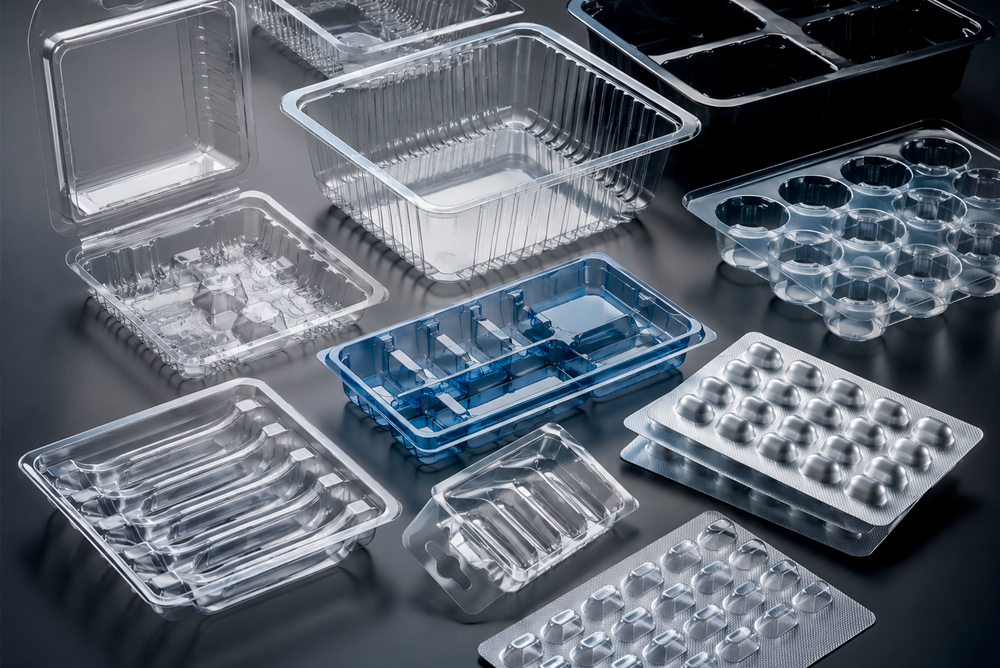
- Plastic bottles, tubs, films, pouches, and closures
- Glass bottles, jars, and containers
- Metal cans, lids, foils, and coated metal components
- Coatings, inks, adhesives, liners, and multilayer materials
- Caps, seals, gaskets, and elastomeric components
- Unknown particles, residues, and foreign materials associated with packaging
- Reference and aged packaging used in compatibility or migration investigations
Common Food-Contact Material Investigations
- What is the unknown particle or residue associated with the package?
- Did the food or beverage interact chemically with the container?
- Did storage or processing change the polymer or coating?
- Are two packaging suppliers using equivalent materials?
- What extractable or leachable compounds are detectable under defined conditions?
- Why did a container crack, deform, delaminate, or discolor?
- Is metal contamination associated with the packaging system?
- What analytical methods can characterize a packaging complaint or field issue?
Why Materials Metric?
Materials Metric provides a materials-science and analytical-chemistry approach to food-contact packaging questions, combining polymer, glass, metal, coating, contaminant, and migration-related expertise in one investigation.
- Specialized focus on food-contact materials and packaging rather than generic food testing
- Polymer, glass, metal, coating, seal, liner, and multilayer packaging characterization
- GC-MS, LC-MS, ICP, FTIR, Raman, SEM/EDS, XRF, DSC, TGA, and complementary analytical capabilities
- Extractables/leachables and contaminant investigations for appropriate packaging systems
- Unknown-particle and residue identification using microscopy and chemical analysis
- Failure analysis for cracking, delamination, discoloration, degradation, and product-container interaction
- Customized projects designed around the packaging material, contact conditions, intended market, and technical question
Frequently Asked Questions
What is food-contact material testing?
Food-contact material testing evaluates packaging and other product-contact materials for composition, contaminants, chemical migration, degradation, physical changes, and compatibility with the packaged product. The appropriate methods depend on the material, contact conditions, intended market, and purpose of the data.
Can you test food packaging for extractables and leachables?
Yes. Materials Metric supports extractables and leachables analysis using techniques such as GC-MS, LC-MS, ICP-MS/OES, and FTIR. Study design should reflect the packaging material, expected migrants, extraction conditions, contact scenario, and regulatory context.
Can you identify a foreign particle found in food packaging?
Often, yes. Microscopy, SEM/EDS, FTIR, Raman, XRD, and other methods can help determine whether a particle is polymeric, mineral, metallic, glass-like, coating-related, organic, or another material type.
Do you provide routine food microbiology or nutritional testing?
This service is focused on food-contact materials, containers, packaging, contaminants, and product-packaging interactions. If a project requires routine food microbiology, nutrition labeling, or another specialized compliance test, that need should be discussed during scoping so the appropriate pathway can be identified.
Discuss Your Food-Contact Material Project
To learn more about our capabilities or to discuss a specific testing, characterization, investigation, or R&D need, please contact Materials Metric using the form below. Our team can help define an appropriate analytical approach based on your sample, technical question, project stage, and intended use of the data.