Polymer Testing Laboratory & Plastic Failure Analysis
Chemical, Thermal, Mechanical & Microscopic Characterization of Polymers
Polymers, plastics, and elastomers are used throughout medical devices, packaging, automotive systems, aerospace, consumer products, electronics, construction, energy, and industrial manufacturing. Their performance depends on resin chemistry, molecular structure, additives, fillers, crystallinity, thermal history, processing, environmental exposure, and aging.
Materials Metric provides polymer testing laboratory services for raw materials, molded components, films, coatings, elastomers, adhesives, finished products, residues, and failed parts. Our work supports polymer identification, quality control, deformulation, supplier verification, product development, degradation studies, and plastic failure analysis.
Industry Risks & Technical Challenges
Common technical challenges may include:
- Brittleness, cracking, crazing, warpage, or unexpected deformation
- Thermal degradation, oxidation, hydrolysis, UV aging, or chemical attack
- Incorrect resin, blend, grade, filler, or additive package
- Supplier changes and lot-to-lot material variability
- Environmental stress cracking or solvent incompatibility
- Plasticizer loss, migration, swelling, softening, or tackiness
- Elastomer degradation, seal failure, or compression-related changes
- Contamination, inclusions, black specks, residues, or foreign particles
- Adhesion, coating, or polymer-interface failures


Our Analytical Approach to Polymer Characterization
No single instrument provides a complete polymer identity or failure explanation. Materials Metric combines spectroscopic, thermal, chromatographic, microscopic, elemental, mechanical, and surface methods to characterize resin chemistry, fillers, additives, transitions, morphology, and degradation.
- FTIR and Raman spectroscopy for polymer identity, oxidation, degradation, coatings, and chemical fingerprints
- DSC for glass transition, melting, crystallization, cure behavior, and comparative thermal history
- TGA for decomposition, filler or ash content, volatile fractions, and compositional differences
- GC-MS, LC-MS/HPLC, and related methods for additives, plasticizers, residuals, and organic components
- SEM/EDS for morphology, fillers, inclusions, fracture features, particles, and elemental mapping
- XRF, ICP-MS/OES, and XRD for inorganic fillers, pigments, metals, and crystalline phases where applicable
- Mechanical, rheological, surface, and adhesion testing based on product function
- Deformulation and good-versus-bad comparison workflows for complex formulations and failed products
Standards & Technical Frameworks
Polymer projects may use recognized ASTM, ISO, client, or application-specific methods for thermal, mechanical, chemical, rheological, and physical characterization. Where standard methods are not sufficient, Materials Metric can develop a custom investigation focused on the material change or failure mechanism.
Polymers & Product Types We Evaluate
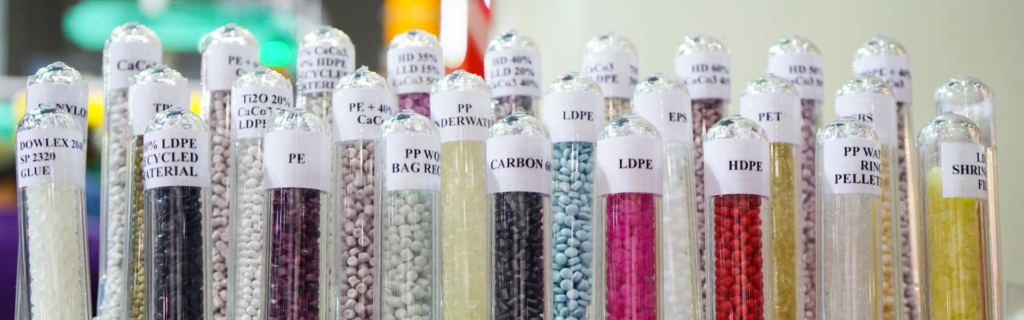
- Thermoplastics and thermosets
- Polyethylene, polypropylene, PVC, nylon, polycarbonate, ABS, PET, PEEK, PMMA, and engineering polymers
- Silicones, polyurethanes, rubbers, and specialty elastomers
- Adhesives, sealants, coatings, films, and multilayer polymer systems
- Filled and reinforced polymers
- Medical, packaging, automotive, consumer, construction, and industrial plastic components
- Unknown polymer residues, particles, contaminants, and degraded materials
Common Polymer Investigations
- What polymer or polymer blend is this sample?
- Why did a plastic component crack or become brittle?
- Did the resin grade, additive package, or filler content change?
- Is the failed component chemically or thermally different from a control?
- What caused discoloration, odor, tackiness, swelling, or residue formation?
- Can we estimate filler, ash, volatile, or inorganic content?
- What additives or formulation differences are detectable between products?
- How did heat, sterilization, solvent exposure, or aging affect the polymer?
Why Materials Metric?
Materials Metric approaches polymer characterization as a multi-technique problem, combining chemistry, thermal behavior, microstructure, and mechanical performance to produce a more complete explanation of material identity and failure.
- Broad polymer testing capability spanning FTIR, Raman, DSC, TGA, GC-MS, LC-MS, SEM/EDS, XRF, ICP, rheology, and mechanical methods
- Experience with thermoplastics, thermosets, elastomers, coatings, adhesives, filled systems, and complex polymer products
- Plastic failure analysis that compares composition, fracture features, processing indicators, and degradation evidence
- Deformulation and reverse-engineering support for product development and supplier verification
- Custom comparative testing for good-versus-bad parts, aging studies, supplier changes, and field failures
- Independent scientific interpretation connecting molecular and material changes with observed performance
- Flexible projects for R&D, quality, manufacturing, legal, and individual-client investigations
Frequently Asked Questions
How do you identify an unknown plastic?
Polymer identification often begins with FTIR or Raman spectroscopy and may be supplemented by DSC, TGA, microscopy, elemental analysis, or chromatography. Multiple techniques are especially useful for filled polymers, blends, multilayer products, coatings, or materials containing significant additives.
Can Materials Metric determine why a plastic part failed?
Yes. Plastic failure analysis may examine fracture morphology, polymer identity, thermal transitions, filler content, oxidation, chemical exposure, contamination, and mechanical behavior. Comparison with a known-good part can be particularly informative.
Can you compare two polymer suppliers or production lots?
Yes. Side-by-side testing can compare chemical fingerprints, thermal transitions, filler levels, additives, elemental composition, microstructure, and other relevant properties. The methods are selected based on the expected difference and the product requirement.
Can you reverse engineer a polymer product?
Materials Metric can perform polymer deformulation and comparative composition analysis using complementary analytical methods. The achievable level of detail depends on formulation complexity, component concentration, available reference standards, sample amount, and the analytical question.
Discuss Your Polymer Testing Project
To learn more about our capabilities or to discuss a specific testing, characterization, investigation, or R&D need, please contact Materials Metric using the form below. Our team can help define an appropriate analytical approach based on your sample, technical question, project stage, and intended use of the data.