Fused Deposition Modeling (FDM) Services
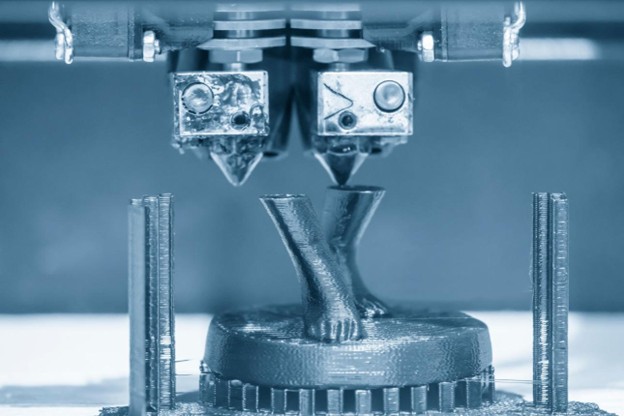
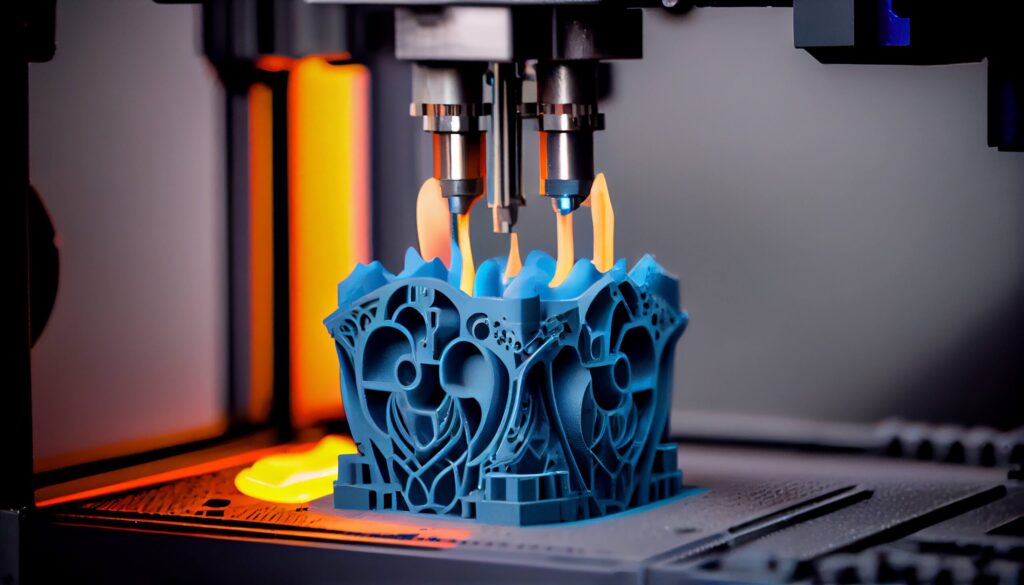
Fused Deposition Modeling (FDM) is a widely used additive manufacturing technique that fabricates components layer-by-layer using thermoplastic filaments. While FDM offers flexibility, rapid prototyping capability, and cost efficiency, achieving consistent part quality requires careful control of material properties, processing conditions, and layer adhesion.
Materials Metric provides FDM-focused evaluation and validation services to ensure reliable performance of printed components. Our work supports optimization of material selection, print parameters, and structural integrity for both prototyping and functional end-use applications.
Our Approach
We apply a structured framework that connects material behavior and process parameters to final part performance:
- Material Evaluation to assess filament properties and consistency
- Process Optimization to refine printing parameters for repeatability
- Performance Validation to evaluate mechanical and structural integrity
This approach ensures that FDM-printed components are not only manufacturable but also meet defined engineering and application requirements.
Key Capabilities
- Thermoplastic filament evaluation (PLA, ABS, PETG, Nylon, engineering polymers)
- Layer adhesion and interlayer bonding assessment
- Anisotropy evaluation in printed components
- Process parameter optimization (temperature, speed, layer height)
- Warping, shrinkage, and dimensional accuracy analysis
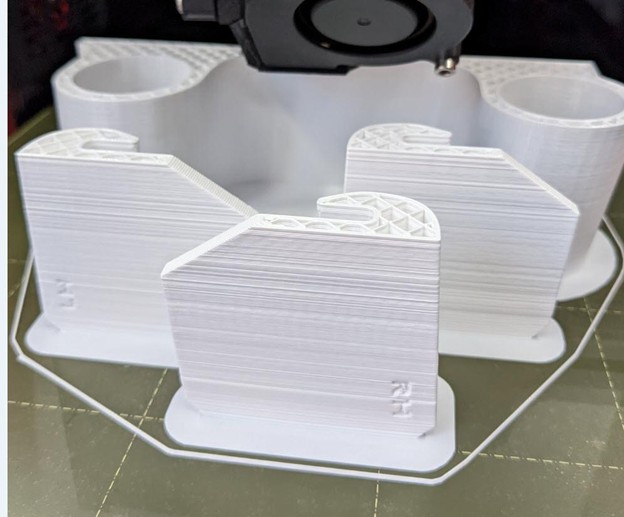
- Surface finish and defect evaluation
- Mechanical testing of printed parts
- Repeatability and batch consistency assessment
Applications
These services support a range of applications, including:
• Rapid prototyping and product development
• Functional end-use components
• Jigs, fixtures, and tooling
• Engineering and industrial parts
• Research and development applications
Why Choose Materials Metric
Materials Metric delivers scientifically rigorous, ISO 9001:2015–aligned evaluation and optimization services for additive manufacturing processes, supporting consistent part quality, material performance, and engineering validation.
- Methods tailored specifically for thermoplastics and engineering polymers used in FDM and related additive manufacturing processes
- Data-driven process optimization supported by material characterization, mechanical testing, and structural analysis
- Precise evaluation of print parameters, layer adhesion, and anisotropy to ensure reliable and reproducible performance
- Transparent communication and collaborative project planning aligned with development and production goals
- End-to-end support from material selection and feasibility through process validation and performance testing
- Your additive manufacturing process will not only produce parts, but will deliver components that meet engineering requirements, perform reliably in application, and withstand technical and quality scrutiny
Related services
- Stereolithography (SLA) / DLP Services
- Selective Laser Sintering (SLS) Services
- Powder Bed Fusion (Metal AM) Services
- Material Characterization Services
- Mechanical Testing Services