
Quantitative Systems Pharmacology (QSP) & Mechanistic Modeling
Quantitative Systems Pharmacology (QSP) and mechanistic modeling integrate biology, pharmacology, and mathematics to explain how therapeutic agents interact with biological systems. These models capture pathways, cellular behavior, molecular mechanisms, and whole-system dynamics, allowing deeper understanding of drug action, biomaterial interactions, regenerative processes, immune responses, and controlled-release platforms.
Materials Metric supports QSP and mechanistic modeling to help predict therapeutic outcomes, identify key drivers of response, evaluate delivery strategies, optimize dosing, and anticipate variability before preclinical or clinical testing. These approaches guide decision-making for drug delivery systems, biomaterial platforms, implantable devices, and complex biological interfaces.
Core Capabilities
Mechanistic Modeling
• Pathway-based models describing signaling, inflammation, and healing
• ODE/PDE models of molecular, cellular, and tissue dynamics
• Biophysical transport modeling (diffusion, convection, degradation)
• Drug release and absorption modeling for biomaterials and devices
• Simulation of immune activation, fibrosis, remodeling, and integration
Quantitative Systems Pharmacology (QSP)
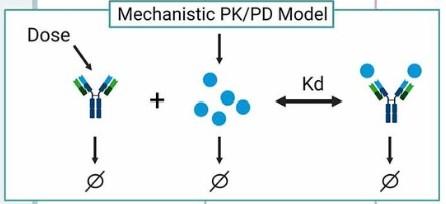
• Integrated PK/PD + systems biology frameworks
• Exposure–response and mechanism-of-action modeling
• Cytokine, signaling, and immune network modeling
• Virtual populations to capture patient variability
• Scenario testing for dosing, delivery routes, or material design decisions
Material-Integrated QSP Models
• Controlled release from hydrogels, scaffolds, polymers, coatings, and implantable devices
• Modeling of mineralization, osseointegration, cartilage repair, and soft-tissue remodeling
• Inflammation, wound healing, and foreign-body response pathways
• Biofilm inhibition and antimicrobial mechanism modeling
• Integration with histology, imaging, and bio-interface datasets


Applications We Support
• Oncology, immunology, and metabolic diseases
• Regenerative medicine
• Drug-device systems
• Biomaterials and controlled-release systems
• Controlled-release drug delivery and depot platforms
• Tissue engineering and scaffold design
• Dental and orthopedic implant integration
• Wound healing and immune modulation
• Bone, cartilage, and soft-tissue regeneration
• Antimicrobial coatings and biofilm inhibition
• Cell therapy and biologic delivery models
Model Development & Analysis Workflow
• Define mechanisms, pathways, and system boundaries
• Build structured models using ODE/PDE or hybrid approaches
• Estimate parameters using experimental, imaging, or literature-derived data
• Perform sensitivity, uncertainty, and identifiability analysis
• Simulate scenarios for dosing, delivery strategies, and material design
• Provide clear, actionable predictions for R&D or regulatory planning
Why Choose Materials Metric
Materials Metric delivers mechanistic clarity through robust modeling frameworks built by experts in biology, pharmacology, and computational sciences.
We provide:
• High-fidelity QSP models
• ISO 9001:2015 aligned data workflows
• Integration with PK, toxicology, and biomarker data
• Predictive analytics for clinical decision-making
Related services