X-ray Fluorescence (XRF) Spectroscopy
X-ray Fluorescence (XRF) spectroscopy is a non-destructive analytical technique used to identify and quantify the elemental composition of bulk materials, powders, and thin films. When a sample is exposed to X-rays, constituent elements emit fluorescent radiation at characteristic energies, enabling rapid and accurate elemental identification without altering the material.
At Materials Metric, XRF is applied for compositional analysis, alloy verification, contamination screening, and raw material validation across metals, ceramics, glass, minerals, composites, and advanced materials. Our XRF workflows provide reliable elemental profiles that support materials selection, quality control, failure analysis, and regulatory documentation.
Use of XRF
XRF is used to:
• Perform rapid elemental screening
• Verify alloy and ceramic composition
• Measure filler content in composites
• Evaluate raw materials for quality control
• Detect contamination or foreign materials
• Analyze thin-film elemental makeup
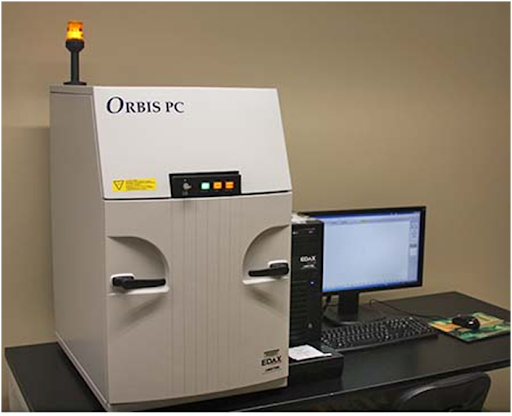
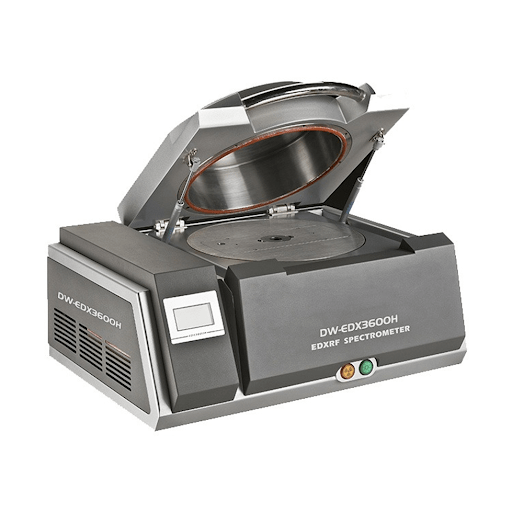
Applications of XRF
• Metals/Alloys: composition verification and sorting
• Ceramics & Glass: elemental purity and quality control
• Polymers & Composites: filler analysis (CaCO₃, TiO₂, etc.)
• Industrial Materials: mining, minerals, pigments
• Coatings/Thin Films: elemental monitoring
Sample Analysis Process
1. Sample Submission & Review
- Provide sample form (powder, solid, film)
• Define elements of interest
2. Sample Preparation
- Minimal preparation needed
• Powders pressed or loaded into cups
• Bulk materials analyzed directly
3. XRF Measurement
- Non-destructive X-ray excitation
• Multi-element detection
• Spectral deconvolution and calibration
4. Data Processing & Reporting
- Elemental identification and quantification
• Comparison to specification or expected values
• Clear final report
Why Choose Materials Metric for Your XRF Analysis
Materials Metric provides fast and reliable XRF testing with:
- Non-destructive elemental analysis
• Coverage of major and minor elements
• Bulk, powder, and thin-film compatibility
• Ideal for metals, ceramics, composites, and raw materials
• Rapid turnaround with clear, validated results
By combining XRF with ICP–MS, XRD, and AAS, Materials Metric provides comprehensive elemental and structural characterization for both R&D and quality assurance.