
ICP-MS testing — inductively coupled plasma mass spectrometry — is the gold-standard method for detecting and quantifying trace elements and heavy metals at ultra-low concentrations in virtually any material. At Materials Metric, we apply ICP-MS testing across pharmaceuticals, medical devices, environmental samples, and advanced materials to deliver sub-parts-per-trillion sensitivity that no other routine technique can match.
Furthermore, regulatory frameworks worldwide increasingly mandate elemental impurity data. Consequently, ICP-MS testing has become a core requirement for pharmaceutical release, medical device biocompatibility, and environmental compliance. Engineers, quality managers, and scientists rely on it to catch contaminants that other methods simply cannot detect at relevant concentrations.
Moreover, this guide explains how ICP-MS testing works, when to use it, which regulations demand it, and how to interpret the results. Furthermore, it compares ICP-MS to alternative techniques so you can select the right method for your specific analytical challenge.
Key Takeaways
- ICP-MS testing detects elements at parts-per-trillion (ppt) concentrations — far below what ICP-OES or XRF can reliably reach.
- Regulations such as USP General Chapter <232> Elemental Impurities and ISO 10993-18 Chemical Characterization explicitly recommend ICP-MS for elemental impurity testing.
- The technique measures over 70 elements simultaneously in a single analytical run.
- Proper sample preparation — digestion, dilution, and matrix matching — is just as critical as instrument performance.
- Method validation under USP <233> or ICH Q3D guidelines is essential for regulated industries.
- ICP-MS complements other techniques such as XRF Analysis, GC-MS Analysis, and HPLC Analysis.
ICP-MS testing: an elemental analysis technique that uses an inductively coupled argon plasma to atomize and ionize a sample, then separates and quantifies the resulting ions by their mass-to-charge ratio using a mass spectrometer, enabling detection of more than 70 elements at concentrations as low as parts per trillion in a single measurement run.
Key fact: ICP-MS is widely recognized as the most sensitive routine elemental analysis technique available, routinely achieving detection limits in the parts-per-trillion range — several orders of magnitude lower than classical wet chemistry or X-ray fluorescence methods.
What Is ICP-MS Testing and How Does It Work?
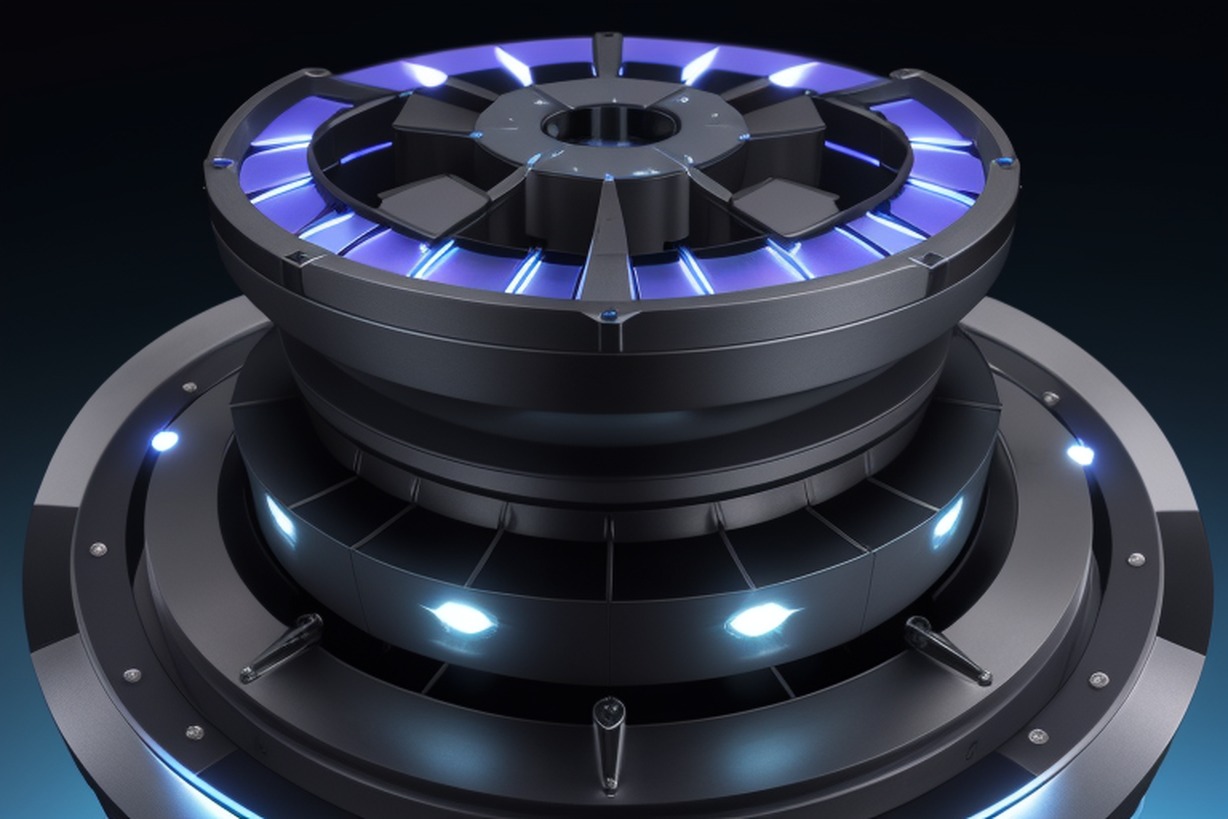
In addition, ICP-MS testing combines two powerful analytical tools: an inductively coupled plasma source and a mass spectrometer. Together, they ionize every element in a sample and then separate those ions by mass. The result is a precise elemental fingerprint across the entire periodic table.
However, understanding the instrument’s core steps helps engineers and quality teams interpret reports correctly. Moreover, it clarifies why certain sample types require special preparation before analysis begins.
Step 1 — Sample Introduction and Nebulization
Therefore, liquid samples enter the instrument through a peristaltic pump and reach a nebulizer. Consequently, the nebulizer converts the liquid into a fine aerosol mist. Subsequently, a spray chamber removes larger droplets, and only the finest particles pass into the plasma torch.
As a result, solid samples require digestion first. Specifically, microwave-assisted acid digestion is the most common approach, dissolving the solid matrix into an aqueous solution that the nebulizer can handle. For more context on complementary surface and bulk techniques, see our Chemical & Elemental Characterization service page.
Step 2 — Plasma Ionization
Notably, the aerosol travels into an argon plasma burning at approximately 6,000–8,000 Kelvin. Importantly, this extreme temperature atomizes every molecule in the sample and strips electrons from atoms to create positively charged ions. Importantly, this process ionizes nearly all elements in the periodic table with high efficiency.
The plasma’s high temperature is also why ICP-MS testing handles complex matrices — biologics, polymers, metals, and soils — with comparable effectiveness. By contrast, lower-energy techniques such as atomic absorption spectrometry often struggle with refractory elements like tungsten or boron.
Step 3 — Mass Separation and Detection
Meanwhile, ions extracted from the plasma pass through a series of ion lenses into a mass analyzer. By contrast, most modern instruments use a quadrupole mass filter, though high-resolution systems use a magnetic sector. The analyzer separates ions by their mass-to-charge (m/z) ratio.
For example, a detector — typically a discrete dynode detector or a Faraday cup — counts arriving ions. In particular, the instrument plots ion counts against m/z values, producing a spectrum. Furthermore, isotope-ratio measurements allow the analyst to confirm element identity and correct for spectral interferences.
Why Is ICP-MS Testing the Method of Choice for Trace Elements?
Several analytical techniques measure elemental composition: ICP-OES, XRF, atomic absorption spectrometry (AAS), and classical wet chemistry. However, ICP-MS testing outperforms all of them in sensitivity, multi-element speed, and dynamic range. For a direct technical comparison, see our article on ICP-MS vs ICP-OES.
The technique’s unique advantages make it indispensable in regulated industries where nanogram or picogram contamination levels can cause patient harm or product failure.
Unmatched Detection Limits
ICP-MS testing routinely achieves detection limits of 0.001–1 µg/L (parts per billion) for most elements, and often reaches sub-ppt for elements like cesium, thallium, and iridium. By comparison, ICP-OES typically delivers detection limits in the 1–100 µg/L range. Consequently, ICP-MS is the only practical choice when regulations set permitted daily exposures in the nanogram-per-day range.
For example, USP <232> sets oral permitted daily exposures as low as 3 µg/day for arsenic. Therefore, pharmaceutical manufacturers need ICP-MS to verify compliance reliably. Our USP 232 and 233 testing article covers these requirements in full detail.
Multi-Element Coverage in a Single Run
A single ICP-MS testing run can quantify more than 70 elements simultaneously in under three minutes of instrument time. This efficiency dramatically reduces cost per data point compared to AAS, which measures one element per analysis. Moreover, simultaneous multi-element data eliminates timing errors when element ratios matter.
This capability proves especially valuable in Chemical Purity & Contaminant Screening, where unknown contamination sources demand a comprehensive survey rather than a targeted single-element check.
Isotopic Measurement Capability
Unlike ICP-OES or XRF, ICP-MS testing resolves individual isotopes of each element. Isotope ratio analysis enables isotope dilution quantification — one of the most accurate quantitative methods in analytical chemistry. In addition, isotope ratios can reveal contamination sources and verify authenticity of raw materials.
Isotopic data also underpins speciation studies when coupled with chromatographic separation. For instance, arsenic speciation distinguishes toxic inorganic As(III) and As(V) from relatively benign organic arsenobetaine — a clinically critical distinction in food and pharmaceutical analysis.
What Sample Types Can ICP-MS Testing Analyze?
ICP-MS testing handles an extraordinary range of sample matrices. Broadly, samples fall into three categories: liquids and solutions, solids requiring digestion, and gases or vapors collected on filters or in solution traps.
Each matrix introduces unique challenges. Proper preparation removes or dilutes the matrix so it does not suppress or enhance the plasma signal. Our Chemical & Analytical Testing team evaluates each sample type individually to select the optimal preparation protocol.
Pharmaceutical and Biopharmaceutical Samples
Drug products, excipients, active pharmaceutical ingredients (APIs), and packaging leachables all require ICP-MS testing for elemental impurity compliance under ICH Q3D and USP <232>/<233>. Parenteral products face the strictest limits because intravenous administration bypasses the gut’s natural protective barrier. Therefore, analytical sensitivity must be highest for injectable dosage forms.
Biopharmaceuticals present additional challenges. Protein matrices can cause severe signal suppression. As a result, analysts often use protein precipitation, microwave digestion, or dilution-and-shoot protocols depending on the target elements and required detection limits. For related biocompatibility considerations, our Biocompatibility & Toxicity Testing service integrates ICP-MS data directly into risk assessments.
Medical Device Extracts and Leachables
Medical devices that contact patients must undergo chemical characterization under ISO 10993-18 Chemical Characterization. ICP-MS testing of device extracts identifies metallic leachables from alloys, coatings, solders, and adhesives. Notably, even implant-grade stainless steel or titanium alloys can release trace nickel, chromium, or vanadium over a device’s lifetime.
Extract preparation follows standardized protocols using physiologically relevant solvents — typically saline, serum simulant, or polar/non-polar solvent pairs. Analysts then analyze these extracts directly by ICP-MS, often supplementing findings with XPS Analysis to characterize surface oxidation states of the released metals.
Environmental and Industrial Samples
Soil, water, air particulates, and industrial process streams all benefit from ICP-MS testing. Environmental regulations routinely require detection of lead, mercury, cadmium, arsenic, and chromium at ppb or sub-ppb concentrations. Consequently, ICP-MS has become the standard instrument for compliance monitoring in water treatment, mining, and industrial discharge programs.
Industrial alloys, coatings, and electronic components also undergo ICP-MS testing to verify material purity and detect cross-contamination between production batches. For a deeper look at heavy metal contamination risks across industries, our article on trace metal contamination provides practical guidance and case examples. Additionally, complementary techniques such as SEM Analysis can localize metallic contamination particles that ICP-MS detects in bulk solution.
How Do Analysts Prepare Samples for ICP-MS Testing?
Sample preparation is often the most critical — and most error-prone — step in ICP-MS testing. Even the most advanced instrument cannot compensate for a poorly digested or contaminated sample. Therefore, analysts follow rigorously controlled preparation workflows to minimize blank contamination and ensure complete dissolution.
Acid Digestion Methods
Microwave-assisted acid digestion uses concentrated nitric acid, hydrochloric acid, or hydrofluoric acid in sealed Teflon vessels under high pressure and temperature. This approach fully dissolves most inorganic and organic matrices within 30–45 minutes. Furthermore, closed-vessel digestion prevents volatile element loss — a serious problem with open-vessel hotplate digestion for mercury, arsenic, and selenium.
Some samples — particularly high-silica matrices like ceramics or geological samples — require hydrofluoric acid to dissolve silicate minerals completely. However, HF digestion demands special instrument components and rigorous safety protocols. Our Wet Chemistry & Classical Analytical Methods team integrates appropriate digestion chemistry into every ICP-MS testing workflow.
Dilution, Blanks, and Internal Standards
After digestion, analysts dilute samples to a matrix-matched concentration that falls within the instrument’s linear dynamic range. Internal standards — elements not present in the sample, such as rhodium, indium, or bismuth — are added to every solution. These standards correct for instrument drift and matrix-induced signal suppression in real time.
Procedural blanks — reagents processed through the full preparation workflow without any sample — measure background contamination from acids, vessels, and the laboratory environment. Consequently, ultra-clean laboratory conditions, Teflon labware, and high-purity reagents are non-negotiable for reliable ICP-MS testing at ppt levels. For a detailed look at how we validate these workflows, visit our Method Development & Validation service page.
Speciation and Chromatographic Coupling
Standard ICP-MS testing measures total elemental concentration. However, the toxicity of many elements depends strongly on their chemical form — their “species.” Arsenic, chromium, selenium, and mercury all have species with dramatically different toxicological profiles. Therefore, speciation analysis requires coupling ICP-MS with a separation technique.
High-performance liquid chromatography (HPLC) is the most common front-end separation, making hyphenated HPLC-ICP-MS a powerful speciation tool. Ion chromatography and gas chromatography also couple effectively with ICP-MS for specific applications. Our HPLC Analysis capabilities integrate seamlessly with ICP-MS detection for full speciation workflows. For related organic speciation work, GC-MS Analysis handles volatile and semi-volatile organometallic species effectively.
How Do Regulatory Frameworks Govern ICP-MS Testing?
Regulatory agencies worldwide have embedded ICP-MS testing requirements into binding guidelines. Understanding which frameworks apply to your product prevents costly compliance gaps late in development. Moreover, early engagement with these requirements shapes method selection and validation scope from the start.
Pharmaceutical Regulations: ICH Q3D and USP <232>/<233>
The ICH Q3D guideline establishes permitted daily exposures (PDEs) for 24 elemental impurities across oral, parenteral, and inhalation routes. USP Elemental Impurities chapters <232> and <233> translate these PDEs into concentration limits and prescribe ICP-MS or ICP-OES as the acceptable quantitative methods. Consequently, any drug product entering the US market must demonstrate compliance through validated elemental testing.
ICH Q3D classifies impurities into three classes based on toxicological risk. Class 1 elements — arsenic, cadmium, lead, and mercury — carry the highest concern. Meanwhile, Class 2 elements such as cobalt, nickel, and vanadium vary by route of administration. By contrast, Class 3 elements pose lower risk but still require risk-based assessment. Our article on USP 232 and 233 testing explains each class and its limits in full detail.
Medical Device Regulations: ISO 10993-18
ISO 10993-18 requires chemical characterization of all patient-contacting device materials. ICP-MS testing identifies and quantifies metallic extractables from device components under physiologically relevant extraction conditions. Importantly, results feed directly into the toxicological risk assessment that regulators expect in a 510(k) or Technical File submission.
Devices with long-term implant contact face the most rigorous scrutiny. Therefore, analysts must demonstrate detection limits well below the toxicological threshold of concern — a level ICP-MS reaches reliably. Our Biocompatibility & Toxicity Testing service integrates ICP-MS data into full ISO 10993 biocompatibility packages.
Environmental Regulations and Industrial Standards
Environmental agencies such as the US EPA specify ICP-MS methods — notably EPA Method 200.8 for water and EPA Method 6020B for solid waste — as approved procedures for compliance monitoring. These methods define specific quality control requirements, including continuing calibration verification, matrix spikes, and duplicate analyses.
Industrial standards from ASTM and ISO also reference ICP-MS testing for alloy verification, electronic component analysis, and food safety testing. For research-level methodological guidance, ScienceDirect publishes peer-reviewed ICP-MS method developments covering emerging matrices and novel interference correction approaches.
How Does ICP-MS Testing Compare to Alternative Elemental Techniques?
Selecting the right analytical technique depends on detection limits required, number of elements targeted, sample throughput, and budget. ICP-MS testing delivers the highest sensitivity, but other techniques suit different scenarios well. The table below summarizes the key distinctions.
| Technique | Detection Limit | Elements per Run | Isotopic Data | Best Use Case |
|---|---|---|---|---|
| ICP-MS | 0.001–1 µg/L (ppt range) | >70 simultaneously | Yes | Ultra-trace, regulatory compliance |
| ICP-OES | 1–100 µg/L (ppb range) | >70 simultaneously | No | Major/minor elements, high-matrix samples |
| AAS (GFAAS) | 0.01–1 µg/L | 1 per analysis | No | Single-element trace work, low throughput |
| XRF Analysis | 1–100 mg/kg (ppm range) | >70 simultaneously | No | Solid screening, non-destructive bulk analysis |
| Wet Chemistry | 0.1–10 mg/L (ppm range) | 1–3 per test | No | Simple matrices, low-cost confirmatory testing |
For a thorough technical breakdown of sensitivity, cost, and application differences, see our dedicated article comparing ICP-MS vs ICP-OES. Furthermore, our Chemical & Elemental Characterization service combines multiple techniques when no single method covers all project requirements.
Quality Assurance Best Practices for ICP-MS Testing
Producing defensible ICP-MS data requires rigorous quality assurance at every stage. Instrument performance, sample preparation integrity, and data review processes must all meet defined acceptance criteria. Therefore, a well-designed quality system is as important as the instrument itself.
Quick note: Even a single contaminated blank can invalidate an entire analytical batch. Using ultra-high-purity reagents, dedicated Teflon labware, and a positive-pressure clean room significantly reduces this risk in ICP-MS testing workflows.
Instrument Calibration and Performance Checks
Analysts calibrate ICP-MS instruments using multi-element standard solutions traceable to certified reference materials (CRMs). Calibration curves typically span three to five concentration levels across the expected sample range. Furthermore, continuing calibration verification (CCV) standards run every 10–15 samples to confirm instrument stability throughout a batch.
Daily performance checks include mass calibration, resolution verification, oxide formation ratios (CeO⁺/Ce⁺ <2%), and doubly charged ion ratios (Ce²⁺/Ce⁺ <3%). These checks confirm the plasma and ion optics operate within specification before any sample data are collected.
Reference Materials and Spike Recoveries
Certified reference materials — matrices with known elemental concentrations certified by organizations such as NIST or NRCC — verify method accuracy. Analysts run CRMs within each batch and expect recoveries of 85–115% for most elements. Results outside this window trigger investigation before sample reports are released.
Matrix spike and matrix spike duplicate (MS/MSD) analyses assess interference effects specific to each sample type. Acceptable spike recoveries confirm that the sample matrix does not artificially suppress or enhance the measured signal. Our Method Development & Validation team builds these QC requirements into every new ICP-MS testing method from the outset.
Interference Correction Strategies
Polyatomic spectral interferences are a key challenge in ICP-MS testing. Common examples include ⁴⁰Ar¹⁶O⁺ interfering with ⁵⁶Fe⁺ and ³⁵Cl¹⁶O⁺ overlapping ⁵¹V⁺. Analysts address these using collision/reaction cell (CRC) technology, where hydrogen or helium gas reacts with or deflects interfering ions before they reach the detector.
High-resolution sector-field ICP-MS instruments resolve many interferences by mass — a more powerful but costlier approach. Mathematical interference correction equations also address minor overlaps when CRC is unavailable. Our Scientific & Technical Consulting team advises clients on the most appropriate interference strategy for their specific sample matrix and regulatory context.
Data Review and Reporting Standards
Raw ICP-MS data require a systematic review before issuing any certificate of analysis. Reviewers check calibration linearity, CCV drift, blank levels, CRM recoveries, and spike recoveries for every batch. Additionally, analysts flag any isotope ratios that deviate from natural abundance as a potential contamination or interference indicator.
Reports must clearly state detection limits, quantitation limits, and uncertainty estimates. For regulated pharmaceutical and medical device submissions, method validation data — linearity, accuracy, precision, specificity, and range — accompany the analytical results. This transparency allows regulatory reviewers to assess data quality independently. For further guidance on heavy metal reporting and risk thresholds, our article on heavy metal testing provides practical context.
Frequently Asked Questions About ICP-MS Testing
What detection limits does ICP-MS testing typically achieve?
ICP-MS testing routinely achieves detection limits of 0.001–1 µg/L for most elements in clean aqueous matrices. Some elements — including cesium, thallium, and iridium — reach sub-ppt detection limits under optimized conditions. By comparison, ICP-OES typically achieves detection limits 10–1000 times higher. Consequently, ICP-MS is the preferred choice whenever regulations set limits in the nanogram-per-day or parts-per-trillion range.
How long does an ICP-MS testing project typically take?
Turnaround time depends on sample complexity, required method validation, and the number of elements targeted. Routine elemental screening of aqueous samples can deliver results within 3–5 business days. However, pharmaceutical or medical device projects requiring full method validation under USP <233> typically take two to six weeks. Our Chemical & Analytical Testing team provides project-specific timelines during the initial consultation.
Can ICP-MS testing handle solid samples directly?
Standard ICP-MS systems require liquid samples. Therefore, solids undergo acid digestion — typically microwave-assisted — before analysis. However, laser ablation ICP-MS (LA-ICP-MS) couples a focused laser directly to the instrument, enabling direct solid surface analysis without chemical digestion. This approach provides spatially resolved elemental mapping at micrometer resolution. It is especially valuable for geological samples, ceramics, and thin-film coatings.
What is the difference between total elemental analysis and speciation by ICP-MS?
Total elemental analysis measures the combined concentration of all chemical forms of an element. Speciation analysis separates and quantifies individual chemical species — for example, As(III), As(V), monomethylarsonic acid, and arsenobetaine — before ICP-MS detection. Speciation requires coupling a chromatographic separation technique, most commonly HPLC, upstream of the ICP-MS instrument. Furthermore, speciation data are often essential for accurate toxicological risk assessment because different species carry vastly different hazard profiles.
How does ICP-MS testing support heavy metal compliance in pharmaceuticals?
Pharmaceutical manufacturers use ICP-MS testing to demonstrate that elemental impurity levels in drug products fall below PDEs defined in ICH Q3D and USP Elemental Impurities chapters <232> and <233>. Testing covers drug substances, excipients, container-closure systems, and manufacturing equipment as potential impurity sources. Validated ICP-MS methods generate the data that regulatory submissions and annual product reviews require. For a broader discussion of contamination risks, see our article on trace metal contamination.
Does ICP-MS testing require method validation, and what does that involve?
Yes — regulated industries require full method validation before ICP-MS results can support product release or regulatory submissions. Validation demonstrates that the method is accurate, precise, linear, specific, and robust for the intended matrix and analyte range. Key parameters include limit of detection, limit of quantitation, linearity across the calibration range, accuracy via spike recoveries, and intermediate precision across multiple analysts and days. Our Method Development & Validation service covers all ICH Q2(R1) and USP <233> validation requirements.
Conclusion
ICP-MS testing remains the most powerful and versatile technique available for trace elemental analysis. Its unmatched sensitivity, simultaneous multi-element coverage, isotopic measurement capability, and adaptability across complex matrices make it indispensable across pharmaceuticals, medical devices, environmental monitoring, and advanced materials research.
Regulatory frameworks — from ICH Q3D and USP <232>/<233> to ISO 10993-18 and EPA Methods — increasingly mandate or strongly prefer ICP-MS for elemental impurity quantification. Furthermore, emerging applications in speciation analysis, laser ablation mapping, and single-particle ICP-MS continue to expand the technique’s reach into new scientific and industrial domains.
Ultimately, the quality of ICP-MS data depends equally on instrument capability and the expertise applied to sample preparation, method validation, interference management, and data review. Partnering with an experienced laboratory ensures that every data point is defensible, traceable, and fit for regulatory purpose.
At Materials Metric, our team combines deep analytical expertise with a rigorous quality system to deliver ICP-MS testing results you can trust. Whether you need rapid elemental screening, full regulatory method validation, or expert interpretation of complex multi-element datasets, we are ready to support your project from sample receipt through final report.
To discuss your ICP-MS testing requirements and receive a tailored project proposal, please contact Materials Metric today. Our scientists are available to review your analytical challenge and recommend the most efficient and cost-effective path to compliance and confidence.
Related Posts from Materials Metric
Explore more insights from our team of materials scientists and analytical experts: