ISO 10993-1:2025 changes | Materials Metric | Compliance
The ISO 10993-1:2025 changes represent one of the most significant revisions to the foundational biocompatibility standard in over a decade. For medical device manufacturers, regulatory affairs professionals, and testing laboratories worldwide, understanding these updates is not simply advisable — it is essential for continued market access. Materials Metric closely monitors evolving regulatory frameworks so that our clients can navigate compliance with confidence and scientific rigor.
ISO 10993-1 serves as the master document governing the entire ISO 10993 series, establishing the overall framework for evaluating the biological safety of medical devices. Consequently, revisions to this standard cascade across virtually every aspect of biocompatibility assessment — from initial material characterization and chemical analysis to toxicological risk evaluation and clinical study design. The 2025 edition introduces updated risk assessment principles, refined endpoints, and greater emphasis on chemistry-first evaluation strategies that prioritize analytical data over reflexive animal testing.
Furthermore, these changes align closely with global regulatory convergence efforts, including guidance from the U.S. Food and Drug Administration, the European Medical Device Regulation (EU MDR 2017/745), and international harmonization bodies. As a result, manufacturers operating in multiple jurisdictions now have a clearer — though more demanding — path toward demonstrating device safety. This article provides a thorough, section-by-section analysis of the ISO 10993-1:2025 changes, practical compliance strategies, and guidance on the testing methodologies that support each new requirement.
Key Takeaways: ISO 10993-1:2025 Changes
Chemistry-first approach: The 2025 revision places greater emphasis on chemical characterization as the first step in biocompatibility evaluation, reducing reliance on in vivo testing where chemical data is sufficient.
Expanded risk assessment framework: A more structured, tiered risk assessment process is now required, integrating toxicological risk assessment (TRA) with physical and chemical data.
Updated biological endpoints: Several biological endpoints have been redefined or reorganized, with clearer guidance on when each endpoint must be addressed.
Greater alignment with MDR and FDA guidance: The 2025 edition harmonizes more closely with EU MDR requirements and the FDA’s 2016 guidance on biocompatibility evaluation.
Lifecycle and change management: New provisions address how to handle design changes, post-market surveillance data, and legacy devices within a biocompatibility framework.
Nanomaterials and novel materials: Explicit guidance for evaluating nanomaterials and other advanced material categories has been introduced.
Reduced animal testing: Consistent with global 3Rs (Replace, Reduce, Refine) principles, the standard further encourages alternatives to animal studies.
What Is ISO 10993-1 and Why Do the 2025 Changes Matter?
ISO 10993-1:2025 changes | Materials Metric | Compliance
ISO 10993-1 is the cornerstone of the ISO 10993 series — a comprehensive set of international standards governing the biological evaluation of medical devices. Specifically, Part 1 defines the overarching principles and processes that manufacturers must follow when assessing whether a device is safe for its intended use in contact with the human body. All subsequent parts of the 10993 series — covering everything from cytotoxicity to genotoxicity, chemical characterization to sterilization residuals — are subordinate to Part 1’s framework.
The previous major edition was published in 2018, and while it introduced important updates at the time, the pace of technological innovation in medical devices has accelerated dramatically. Novel biomaterials, combination products, additive manufacturing, and nanomaterial-based devices have created evaluation scenarios that the 2018 standard did not fully anticipate. Therefore, the ISO 10993-1:2025 changes were developed to address these gaps and provide regulators, manufacturers, and testing laboratories with more precise, scientifically grounded guidance.
Moreover, global regulatory authorities have increasingly emphasized risk-based and data-driven approaches to device approval. The European MDR, for example, imposes rigorous clinical evidence requirements and expects biocompatibility dossiers to reflect the current state of the art. Similarly, the FDA has signaled expectations that chemical characterization data — not just biological test results — should drive safety conclusions wherever possible. The 2025 revision formalizes these expectations at the international standard level.
The Scope and Application of ISO 10993-1:2025
ISO 10993-1:2025 applies to all medical devices that come into contact with the human body — whether directly (such as implants, catheters, or wound dressings) or indirectly (such as blood-contacting extracorporeal circuit components). The standard covers devices across all contact categories: surface-contacting, externally communicating, and implant devices, each further classified by contact duration: limited (<24 hours), prolonged (24 hours to 30 days), and permanent (>30 days).
However, the 2025 edition expands the conceptual scope of the standard in meaningful ways. It now more explicitly addresses in vitro diagnostic (IVD) devices, wearable technologies, and digital health adjuncts that incorporate physical materials in contact with patients. Furthermore, the standard provides clearer guidance for manufacturers of reusable devices, addressing how cleaning, sterilization cycles, and material degradation over time must factor into biocompatibility evaluations.
In addition, ISO 10993-1:2025 introduces a more explicit definition of the “biological evaluation plan” (BEP) and the “biological evaluation report” (BER). These documents now carry greater regulatory weight, and the standard specifies with more precision what each must contain. Consequently, manufacturers who rely on outdated templates or incomplete documentation frameworks will need to update their quality management systems to reflect the new requirements.
How ISO 10993-1:2025 Changes Relate to the Broader 10993 Series
Because Part 1 sets the governing framework, the ISO 10993-1:2025 changes effectively ripple through the entire series. For example, the revised emphasis on chemical characterization as a prerequisite to biological testing means that ISO 10993-18 Chemical Characterization — which details methodologies for extractable and leachable analysis — has become even more central to compliance programs. Manufacturers must now demonstrate that they have exhaustively characterized device chemistry before concluding that specific biological tests are unnecessary.
Similarly, updated guidance on toxicological risk assessment in Part 1 reinforces the methodologies described in ISO 10993-17 (toxicological risk assessment of medical device constituents). The 2025 revision creates tighter integration between the risk assessment principles in Part 1 and the specific test methods described in companion standards. As a result, a siloed approach — where chemical testing and biological testing are treated as independent workstreams — is no longer defensible under the updated framework.
Moreover, the standard’s updated guidance on biological endpoints has direct implications for parts covering specific endpoints such as cytotoxicity (ISO 10993-5), sensitization (ISO 10993-10), genotoxicity (ISO 10993-3), and hemocompatibility (ISO 10993-4). Specifically, the 2025 edition provides clearer criteria for when these tests can be waived based on chemical characterization data, and when they remain mandatory regardless of analytical findings. This clarity is genuinely valuable for manufacturers navigating complex device portfolios.
Major ISO 10993-1:2025 Changes: The Chemistry-First Evaluation Framework
Perhaps the most transformative aspect of the ISO 10993-1:2025 changes is the formal elevation of chemical characterization to the first and most critical step in biocompatibility evaluation. Under the updated framework, manufacturers are expected to perform a thorough chemical characterization of all device materials — including raw materials, processing aids, adhesives, colorants, and sterilization residuals — before determining which biological tests, if any, are required.
This chemistry-first philosophy reflects a growing scientific consensus that the biological effects of a medical device are ultimately determined by the chemical entities it can deliver to the body. Consequently, if a manufacturer can demonstrate through rigorous analytical chemistry that a device releases only known, well-characterized substances at concentrations well below established toxicological thresholds, then many traditional biological tests may be unnecessary. This approach can reduce both testing timelines and animal use, while simultaneously producing a richer, more scientifically defensible safety dossier.
Furthermore, the chemistry-first framework aligns with guidance from PubMed Central – Trace Metals Review and peer-reviewed toxicology literature, which consistently demonstrates that toxicological risk assessment driven by quantitative chemical data is more predictive and reproducible than endpoint-by-endpoint animal testing alone. The 2025 revision codifies this scientific consensus into regulatory expectations, raising the bar for what constitutes an acceptable biocompatibility dossier.
Chemical Characterization Requirements Under the 2025 Standard
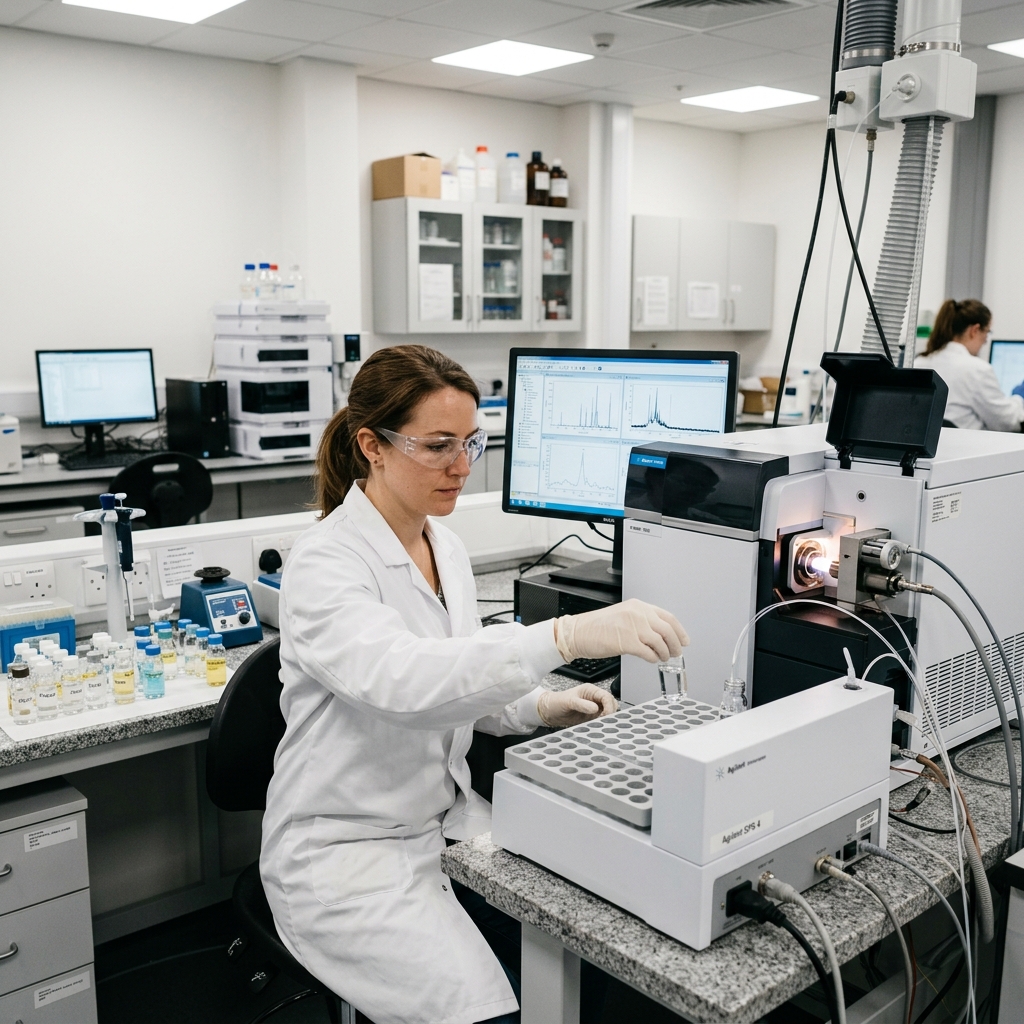
Under ISO 10993-1:2025, chemical characterization must address the full range of potentially leachable substances from a device under clinically relevant conditions. This includes both targeted analysis — where specific substances of concern are quantified — and non-targeted screening, which uses techniques such as gas chromatography-mass spectrometry (GC-MS), liquid chromatography-mass spectrometry (LC-MS), and inductively coupled plasma mass spectrometry (ICP-MS) to detect unexpected extractables.
Specifically, the standard emphasizes that extraction conditions must simulate or bracket the worst-case clinical exposure scenario. For implantable devices, this means considering the full implant duration and physiological environment. For externally communicating devices, it means accounting for the specific biological fluids the device contacts. Chemical & Analytical Testing services that employ clinically relevant extraction protocols are therefore directly aligned with the 2025 requirements.
In addition, the standard provides updated guidance on the analytical evaluation threshold (AET) — the minimum concentration that an analytical method must reliably detect and quantify. Substances detected above the AET must be identified and assessed toxicologically; substances below the AET may be considered analytically negligible. However, the 2025 revision clarifies that the AET must be scientifically justified based on the toxicological threshold of concern (TTC), not simply set at an arbitrary instrument detection limit. This distinction is critically important for laboratory method design and validation.
Extractables, Leachables, and Elemental Impurities
The ISO 10993-1:2025 changes give heightened attention to elemental impurities — metallic contaminants that may leach from device components, particularly those made from polymers, elastomers, metals, or metal alloys. This reflects growing regulatory alignment with USP General Chapter <232> Elemental Impurities, which establishes permitted daily exposure (PDE) limits for a range of potentially toxic elements.
For device manufacturers, this means that Chemical & Elemental Characterization must now be a standard component of every biocompatibility program — not an optional add-on. Elements such as arsenic, cadmium, chromium, cobalt, lead, mercury, and nickel require particular attention, especially in devices with metallic components or those that have undergone surface treatments. Furthermore, processing-related contaminants — such as residual catalysts or mold release agents — must be identified and assessed.
Moreover, Chemical Purity & Contaminant Screening has become an indispensable tool for compliance under the 2025 framework. Comprehensive screening using multi-element ICP-MS, combined with organic extractables profiling, provides the breadth of analytical coverage that the standard now demands. Laboratories that offer only targeted testing — without non-targeted screening capabilities — may not be able to support a fully compliant chemical characterization study under the updated requirements.
Updated Risk Assessment Framework in ISO 10993-1:2025
The ISO 10993-1:2025 changes introduce a significantly more structured and explicit risk assessment framework compared to the 2018 edition. At its core, the updated standard requires manufacturers to conduct a formal, documented toxicological risk assessment (TRA) as an integral part of the biological evaluation — not as an afterthought or supplementary exercise. This TRA must integrate data from chemical characterization, physical characterization, clinical literature, and any available biological test data into a coherent, quantitative safety argument.
Specifically, the 2025 revision clarifies the hierarchy of evidence that should inform risk assessment decisions. Chemical characterization data — particularly quantitative leachables data — should be the primary input wherever available. Biological test data serves to supplement or confirm chemical-based risk assessments, not to replace them. Consequently, manufacturers who have historically relied on a battery of biological tests without conducting rigorous chemical characterization may find that their approach is no longer considered best practice under the updated standard.
Furthermore, the risk assessment must now explicitly address the margin of safety (MoS) for each identified substance of toxicological concern. The MoS is calculated as the ratio of the tolerable exposure level (derived from toxicological literature or established regulatory limits) to the estimated patient exposure based on leachables data. A MoS greater than one indicates acceptable safety; a MoS less than one requires either additional risk mitigation or further justification. This quantitative approach introduces a new level of rigor — and auditability — to biocompatibility programs.
Toxicological Risk Assessment: Roles and Responsibilities
One of the clearest signals in the ISO 10993-1:2025 changes is the elevated role of qualified toxicologists in device safety evaluation. The standard explicitly states that toxicological risk assessments must be performed or reviewed by a toxicologist with relevant expertise. This is not merely a procedural checkbox — regulators, particularly in Europe under MDR, have scrutinized biocompatibility dossiers where TRAs lacked evident toxicological expertise, and have issued non-conformities as a result.
In practice, this means that device manufacturers — especially smaller companies without in-house toxicology resources — must engage qualified external toxicology professionals. Scientific & Technical Consulting services that include experienced regulatory toxicologists are therefore a critical resource for navigating the 2025 requirements. These professionals not only ensure that risk assessments are technically sound but also that they are documented in a format that will satisfy notified body and FDA reviewer expectations.
Additionally, the standard provides updated guidance on the use of read-across methodologies in toxicological risk assessment — the practice of extrapolating toxicological data from chemically similar substances when direct data on a specific compound is unavailable. The 2025 edition clarifies when read-across is acceptable, what level of structural similarity is required, and what documentation must support the justification. This guidance reflects broader developments in computational toxicology, as documented in ScienceDirect – Analytical Methods and related peer-reviewed literature.
Integrating Physical and Chemical Data into Risk Assessment
Beyond chemical leachables, the ISO 10993-1:2025 changes emphasize that physical characteristics of a device — including surface topography, particulate generation, and degradation behavior — must also be integrated into the risk assessment. For instance, a device that generates wear particles through mechanical action must account for the biological effects of those particles, which may differ substantially from the bulk material’s leachable chemistry.
This physical characterization dimension has important implications for analytical testing strategies. Techniques such as SEM Analysis can provide detailed morphological characterization of particles and surface features, while XRD Analysis can identify crystalline phases in ceramic or composite device materials that may have distinct toxicological properties. Incorporating these physical characterization data streams into the biological evaluation plan ensures that the risk assessment reflects the full range of patient exposure scenarios.
Furthermore, for devices with polymeric components, thermal characterization using DSC Testing can provide critical data on material stability, crystallinity, and degradation temperature — all of which influence the types and quantities of leachables that may be generated under use conditions. Similarly, FTIR Analysis remains an essential tool for confirming material identity, detecting surface contamination, and characterizing degradation products. Integrating these analytical data streams creates a holistic picture of device chemistry that supports a robust and defensible risk assessment under the 2025 framework.
ISO 10993-1:2025 Changes to Biological Endpoint Selection
A central theme of the ISO 10993-1:2025 changes is the refinement of biological endpoint selection — determining which specific biological tests a device requires based on its contact nature, duration, and the results of chemical characterization. The updated standard reorganizes the biological endpoint matrix and provides more explicit, decision-tree-style guidance to help manufacturers and their toxicologists make defensible endpoint selection decisions.
Under the 2025 framework, biological endpoints are grouped more clearly by their relevance to specific device-body contact scenarios. Moreover, the standard makes explicit that endpoints can be addressed through means other than dedicated in vivo or in vitro testing — including review of literature data, chemical characterization results, clinical experience data, and post-market surveillance information. This multi-source evidence approach is a significant evolution from earlier editions, which often implied that direct test data was always required.
However, the 2025 revision also introduces important restrictions. Specifically, certain endpoints — such as genotoxicity for devices with prolonged or permanent implant contact — cannot be waived based on chemical data alone if the device contains substances with known or suspected genotoxic potential. In these cases, targeted genotoxicity testing remains mandatory, regardless of leachables concentrations. Understanding these nuances is essential for manufacturers designing compliant biocompatibility programs.
Key Biological Endpoints and Updated Requirements
The ISO 10993-1:2025 changes provide updated guidance on the following key biological endpoints, each of which may be required depending on the device’s contact category and duration:
Cytotoxicity: Remains a standard first-tier test for most device categories. However, the 2025 edition provides clearer guidance on how to interpret cytotoxicity results in light of chemical characterization data, particularly for devices where cytotoxicity signals may be attributable to specific, well-characterized leachables.
Sensitization: Updated guidance addresses the selection of appropriate sensitization test methods, with greater emphasis on non-animal methods (such as the direct peptide reactivity assay, DPRA) where scientifically justified.
Genotoxicity: The 2025 edition provides a more structured approach to genotoxicity evaluation, including a tiered testing strategy that begins with in vitro assays and escalates to in vivo testing only when specific triggers are met.
Systemic toxicity: Updated requirements address both acute and subacute/subchronic systemic toxicity, with clearer guidance on how chemical characterization data can support waiving of animal-based systemic toxicity tests.
Implantation: Revised guidance for implantation testing emphasizes local tissue response assessment and provides updated criteria for test site selection and histopathological evaluation.
Hemocompatibility: Strengthened requirements for blood-contacting devices, with more explicit guidance on the battery of hemocompatibility tests required and the conditions under which in vitro hemocompatibility data is acceptable in lieu of in vivo studies.
Carcinogenicity and reproductive toxicity: The 2025 revision clarifies that these endpoints are typically addressed through chemical characterization and TRA rather than direct testing, unless specific concerns are identified during the evaluation process.
Degradation: Updated guidance integrates degradation assessment more explicitly into the biological evaluation framework, particularly for absorbable, biodegradable, and surface-degrading devices.
Leveraging Biocompatibility Testing Services for Endpoint Compliance
Navigating the updated biological endpoint requirements demands both scientific expertise and access to a comprehensive suite of validated testing capabilities. Biocompatibility & Toxicity Testing services that span from cytotoxicity and sensitization through genotoxicity and hemocompatibility provide manufacturers with the end-to-end support needed to execute a complete biological evaluation plan under the 2025 standard.
Equally important is the quality of the analytical underpinning. Wet Chemistry & Classical Analytical Methods — including gravimetric analysis, titrimetry, and colorimetric methods — continue to play a role in quantifying specific extractables categories, particularly inorganic species and polymer additives. These classical methods, when properly validated, provide a reliable quantitative foundation for toxicological calculations and margin-of-safety determinations.
Furthermore, the increasing complexity of method requirements under the 2025 standard makes Method Development & Validation a critical investment for testing laboratories and in-house analytical teams. Methods used to generate data for biocompatibility dossiers must be fit-for-purpose, appropriately validated for the matrix and analyte in question, and documented in a manner that satisfies regulatory scrutiny. As noted in Nature Reviews Methods Primers, robust method validation is not merely a regulatory formality — it is the scientific foundation upon which the reliability of all downstream data and risk conclusions depends.
Analytical Techniques Supporting ISO 10993-1:2025 Changes: A Technical Deep Dive
The ISO 10993-1:2025 changes do not prescribe specific analytical instruments — but they do demand analytical data of sufficient sensitivity, specificity, and scientific rigor to support defensible toxicological conclusions. As a result, the choice of analytical methodology has become a strategic decision in biocompatibility program design, not merely a technical one. Understanding which techniques are best suited to different device materials and leachables profiles is essential for generating compliant, regulator-ready data.
Modern Chemical & Analytical Testing programs for biocompatibility draw on a diverse toolkit of instrumental methods. Specifically, these include inductively coupled plasma mass spectrometry (ICP-MS), inductively coupled plasma optical emission spectrometry (ICP-OES), atomic absorption spectrometry (AAS), gas chromatography-mass spectrometry (GC-MS), and liquid chromatography coupled with high-resolution mass spectrometry (LC-HRMS). Each technique offers distinct advantages, and optimal compliance programs frequently employ multiple methods in combination to achieve the breadth and depth of characterization the 2025 standard demands.
Furthermore, the growing complexity of modern medical device materials — composites, coatings, biodegradable polymers, antimicrobial agents, drug-eluting components — means that no single analytical technique can provide complete chemical characterization on its own. Consequently, testing laboratories must demonstrate not only instrument capability but also the scientific judgment to select and integrate appropriate methods for each unique device chemistry scenario.
ICP-MS and ICP-OES for Elemental Impurity Profiling
Inductively coupled plasma mass spectrometry (ICP-MS) remains the gold standard for elemental impurity analysis in the context of medical device biocompatibility. Its extraordinary sensitivity — capable of detecting most elements at parts-per-trillion (ppt) concentrations — makes it uniquely suited to meeting the low analytical evaluation thresholds required under the 2025 framework. Moreover, ICP-MS can simultaneously quantify dozens of elements in a single analytical run, enabling comprehensive elemental profiling with high throughput efficiency.
Specifically, ICP-MS is the preferred technique for quantifying Class 1 and Class 2A elemental impurities as defined by USP Elemental Impurities guidance, including arsenic, cadmium, lead, and mercury — elements with the lowest permitted daily exposure limits and the most severe toxicological profiles. For device manufacturers, ensuring that extractables data for these elements meets method detection limits well below the corresponding analytical evaluation thresholds is a fundamental compliance requirement under ISO 10993-1:2025.
ICP-OES, while generally less sensitive than ICP-MS, offers advantages for quantifying higher-concentration elemental species such as chromium, cobalt, iron, nickel, and titanium — elements commonly encountered in metallic implant alloys. Additionally, ICP-OES provides excellent matrix tolerance and linear dynamic range, making it particularly well-suited to complex device extract matrices. Chemical & Elemental Characterization programs that deploy both ICP-MS and ICP-OES in complementary roles can achieve comprehensive elemental coverage across the full concentration range relevant to device biocompatibility.
GC-MS and LC-HRMS for Organic Extractables Profiling
Organic extractables — volatile, semi-volatile, and non-volatile organic compounds that may migrate from device materials — represent a critical and often complex category of leachables concern. GC-MS is the primary technique for volatile and semi-volatile organics, offering both non-targeted screening capability and quantitative precision. Its combination of chromatographic separation and mass spectral library matching enables tentative identification of unknown extractables, which is a direct requirement of the ISO 10993-1:2025 chemistry-first framework.
However, many device-relevant extractables are non-volatile, thermally labile, or of high molecular weight — categories where GC-MS is technically limited. LC-HRMS addresses this gap elegantly. High-resolution mass spectrometry platforms, such as Orbitrap or quadrupole time-of-flight (QTOF) instruments, deliver exceptional mass accuracy that enables molecular formula determination for unknown compounds. This capability is invaluable for characterizing polymer additives, oligomers, plasticizers, antioxidants, and other non-volatile organic species commonly found in elastomeric, thermoplastic, and silicone device components.
Research published through ScienceDirect consistently highlights LC-HRMS as a transformative tool for extractables and leachables characterization, particularly when coupled with advanced data processing software capable of non-targeted screening workflows. Incorporating these sophisticated analytical strategies into biocompatibility programs ensures alignment with the scientific state-of-the-art that regulators now expect under the 2025 standard.
Complementary Techniques: AAS, TEM, and Spectroscopic Methods
While ICP-MS, ICP-OES, and LC-HRMS form the core of most biocompatibility analytical programs, several complementary techniques play important supporting roles under the ISO 10993-1:2025 framework. Atomic absorption spectrometry (AAS) — including both flame (FAAS) and graphite furnace (GFAAS) variants — continues to provide reliable, cost-effective quantification for specific elements when full multi-element ICP-based profiling is not required. GFAAS in particular retains value for trace-level determination of elements such as lead and cadmium in small-volume device extracts.
For devices that generate nanoscale particles or have nanostructured surface features, TEM Analysis provides essential morphological and compositional characterization at atomic resolution. Transmission electron microscopy, combined with energy-dispersive X-ray spectroscopy (EDS), enables direct visualization of particle size, shape, crystallinity, and elemental composition — all of which are critical inputs to the nanoparticle risk assessment framework that ISO 10993-1:2025 now explicitly addresses.
Additionally, FTIR Analysis and Raman spectroscopy continue to serve as essential identity confirmation and surface characterization tools throughout the biocompatibility evaluation process. These techniques are particularly valuable for verifying material identity at incoming inspection, detecting surface contamination or processing residues, and confirming the chemical identity of isolated extractables fractions. Together, these complementary methods ensure that analytical characterization programs are truly comprehensive — as the 2025 standard demands.
Lifecycle Considerations and Change Management Under ISO 10993-1:2025
One of the more practically demanding aspects of the ISO 10993-1:2025 changes is the expanded treatment of lifecycle management and device change control within the biocompatibility framework. The 2025 edition makes explicit what was previously implied: biocompatibility evaluation is not a one-time exercise conducted at initial device development but a living, dynamic process that must respond to design changes, material substitutions, manufacturing process modifications, and post-market experience throughout the device’s commercial life.
For manufacturers with established device portfolios, this lifecycle perspective introduces new documentation burdens — but also new opportunities to strengthen safety arguments using accumulated post-market data. Specifically, the standard now provides clearer guidance on how clinical complaint data, post-market surveillance reports, and real-world adverse event information should be integrated into the biological evaluation report during periodic review. This evidence-based approach to lifecycle management ultimately supports more robust and nuanced safety conclusions than could be achieved from pre-market testing alone.
Moreover, the 2025 revision introduces more explicit criteria for determining when a design or material change triggers the need for a revised or supplemental biocompatibility evaluation. Consequently, manufacturers must establish formal change impact assessment procedures within their quality management systems — procedures that include biocompatibility-specific decision logic for material changes, supplier changes, sterilization changes, and packaging changes.
Handling Legacy Devices and Predicate Device Arguments
Legacy devices — those that were designed, tested, and approved under earlier editions of ISO 10993-1 — present particular compliance challenges in the context of the 2025 changes. Regulatory authorities, particularly European notified bodies under MDR, have signaled that legacy device documentation must be updated to reflect current standards, even if the devices themselves have not materially changed. This creates a substantial documentation backlog for many manufacturers.
The 2025 standard provides some relief by allowing manufacturers to leverage existing data — including historical biological test results, clinical experience, and literature-based safety assessments — as inputs to an updated biological evaluation report. However, the standard is clear that gaps identified during the gap assessment must be addressed, either through additional testing or through documented scientific justification. Scientific & Technical Consulting resources with regulatory expertise in ISO 10993 compliance can be invaluable for manufacturers working through this gap remediation process efficiently and effectively.
Furthermore, predicate device arguments — where a manufacturer justifies biocompatibility by demonstrating material equivalence to a previously approved device — remain permissible under the 2025 framework. However, the evidence standard for equivalence claims has been raised. Manufacturers must now provide detailed material composition data, processing history comparisons, and, where applicable, extractables data for both the subject device and the predicate, rather than relying solely on declarations of equivalence from suppliers.
Post-Market Surveillance Integration and Periodic Review
The ISO 10993-1:2025 changes formally integrate post-market surveillance (PMS) data into the biological evaluation lifecycle in a more structured way than previous editions. Manufacturers are now expected to establish a systematic process for reviewing PMS data — including vigilance reports, complaints, literature updates, and clinical follow-up data — against the biocompatibility assumptions made in the original biological evaluation report.
When PMS data reveals new information that was not available at the time of initial evaluation — such as unexpected adverse tissue reactions, newly published toxicological data on device constituents, or emerging evidence of material degradation in service — the biological evaluation report must be updated accordingly. This requirement for responsive, evidence-driven updates represents a meaningful evolution in how biocompatibility is managed across the device lifecycle. Manufacturers who have not established formal biocompatibility review processes within their PMS procedures should prioritize doing so as part of their ISO 10993-1:2025 compliance planning.
Comparison: ISO 10993-1:2018 vs ISO 10993-1:2025 — Key Framework Differences
Evaluation Dimension
ISO 10993-1:2018 Approach
ISO 10993-1:2025 Approach
Chemical Characterization
Recommended as a first step; some flexibility on extent
Mandatory first step; non-targeted screening explicitly required
Toxicological Risk Assessment
Required but less prescriptive on structure and documentation
Possible with some justification; criteria were less explicit
Explicit decision criteria provided; evidence hierarchy defined
Analytical Evaluation Threshold (AET)
Concept introduced; limited guidance on AET setting
Requires scientific justification linked to TTC; more prescriptive
Nanomaterials
Limited specific guidance; general principles applied
Explicit evaluation framework introduced for nanomaterial-containing devices
Legacy Devices and Change Control
Addressed generally; limited specific criteria
Explicit criteria for change impact assessment and periodic review
Post-Market Surveillance Integration
Mentioned as a data source; limited integration guidance
Formal integration into BER periodic review process required
Animal Testing (3Rs)
3Rs encouraged; alternatives acceptable where validated
Stronger language against animal testing where alternatives exist; alternatives preferred
Quality Assurance and Best Practices for ISO 10993-1:2025 Compliance
Achieving and maintaining compliance with the ISO 10993-1:2025 changes requires more than simply executing the right tests — it demands a systematic quality assurance infrastructure that ensures data integrity, method appropriateness, documentation completeness, and ongoing regulatory awareness. Manufacturers and testing laboratories that treat biocompatibility as a quality system process, rather than a standalone regulatory exercise, are best positioned to achieve durable compliance.
Central to this quality infrastructure is the development and maintenance of a comprehensive biological evaluation plan (BEP). Under the 2025 standard, the BEP must be a living document — established early in device development, updated as the device design evolves, and reviewed whenever significant changes occur. Specifically, the BEP must articulate the rationale for each endpoint decision, reference the specific analytical and biological test methods to be used, and identify the qualified toxicologist responsible for TRA oversight.
Furthermore, laboratories conducting chemical characterization and biological testing for biocompatibility purposes must operate under a quality management system consistent with ISO/IEC 17025 accreditation requirements. Method validation — including demonstration of appropriate selectivity, sensitivity, linearity, accuracy, and precision for each specific device extract matrix — is not optional. Regulators increasingly scrutinize the analytical underpinning of biocompatibility dossiers, and unsupported or insufficiently validated methods have been a source of significant regulatory delays.
Method Validation Strategies for Biocompatibility Studies
Effective Method Development & Validation for biocompatibility applications demands a fit-for-purpose philosophy. Methods must be validated for the specific combination of analyte, extraction solvent, device extract matrix, and target concentration range relevant to the biocompatibility study in question. A method validated for aqueous extracts of a silicone catheter may not be directly transferable to organic extracts of a polyurethane implant without further validation work.
Key validation parameters for biocompatibility extractables methods include selectivity (freedom from matrix interference), limit of detection (LOD) and limit of quantification (LOQ) relative to the AET, accuracy (expressed as percent recovery from spiked matrix samples), precision (intraday and interday reproducibility), and linearity across the expected concentration range. Importantly, the 2025 standard’s requirement that the AET be scientifically linked to the toxicological threshold of concern means that LOQ values must often be pushed significantly lower than those typically required for quality control applications.
In addition, non-targeted screening methods — which do not have pre-defined analyte lists — require a different validation philosophy. For these methods, validation focuses on demonstrating adequate analytical coverage of compound classes of interest, reproducibility of compound detection across replicate analyses, and robustness of the data processing workflow used to generate compound lists for subsequent toxicological assessment. Establishing clear standard operating procedures for non-targeted data review and reporting is essential for ensuring that non-targeted screening results are scientifically defensible and consistently produced.
Building a Compliant Biocompatibility Documentation Framework
Documentation quality is a frequent point of regulatory scrutiny in biocompatibility dossier reviews. The ISO 10993-1:2025 changes raise the documentation standard in several important ways. The biological evaluation report (BER) must now include a more structured narrative that explicitly links chemical characterization findings to toxicological conclusions, documents the basis for each endpoint decision, and demonstrates that the overall weight-of-evidence supports a conclusion of biocompatibility for the device’s intended use.
Practically, this means that BERs must be authored — or at minimum reviewed — by qualified professionals with expertise in both analytical chemistry and toxicology. Documents that consist primarily of tables of test results without accompanying scientific interpretation are no longer sufficient. Regulators expect to see integrated, reasoned arguments that reflect genuine scientific analysis of the available data. Engaging Biocompatibility & Toxicity Testing providers who offer expert report writing and dossier review services — in addition to laboratory testing — can substantially reduce the risk of documentation-related regulatory findings.
Quick Note: Under ISO 10993-1:2025, both the Biological Evaluation Plan (BEP) and the Biological Evaluation Report (BER) carry significantly greater regulatory weight than under previous editions. Manufacturers should treat these documents as core quality system records — not simply as testing summaries — and ensure they are authored, reviewed, and approved by qualified professionals with relevant analytical chemistry and toxicology expertise.
Frequently Asked Questions About ISO 10993-1:2025 Changes
What is the key difference between ISO 10993-1:2018 and ISO 10993-1:2025?
The most significant difference is the formalization of the chemistry-first evaluation philosophy. While the 2018 edition recommended chemical characterization as a starting point, the 2025 revision makes it a mandatory prerequisite to biological endpoint selection. Additionally, the 2025 edition introduces a more structured toxicological risk assessment framework — requiring explicit margin-of-safety calculations and oversight by a qualified toxicologist — and provides more explicit lifecycle management requirements, including criteria for change control, legacy device remediation, and post-market surveillance integration into the biological evaluation report.
Do the ISO 10993-1:2025 changes require manufacturers to repeat all existing biological tests?
Not necessarily. The 2025 standard allows manufacturers to leverage existing biological test data, provided it was generated using appropriate methods and remains scientifically valid for the current device configuration. However, manufacturers must conduct a gap assessment comparing their existing biocompatibility documentation against the new standard’s requirements. Where gaps are identified — such as missing chemical characterization data, incomplete toxicological risk assessments, or undocumented endpoint justifications — these must be addressed either through additional testing or through documented scientific justification. Engaging experienced Scientific & Technical Consulting resources early in the gap assessment process can help manufacturers prioritize remediation efforts efficiently.
How do the ISO 10993-1:2025 changes affect small medical device manufacturers?
The impact on small manufacturers is substantial, particularly in areas requiring specialized expertise — qualified toxicologists, advanced analytical instrumentation, and regulatory documentation capabilities — that small companies may not have in-house. Specifically, the requirement for toxicologist oversight of TRAs, combined with the heightened expectations for chemical characterization depth and documentation quality, means that small manufacturers will increasingly need to rely on external testing and consulting partners. However, the flip side is that a well-executed chemistry-first program may ultimately reduce overall testing costs by enabling endpoint waivers, eliminating unnecessary biological tests, and building more efficient regulatory submission dossiers. Partnering with experienced service providers for both Chemical & Analytical Testing and regulatory strategy support is therefore a sound investment for small manufacturers navigating the 2025 changes.
When does the ISO 10993-1:2025 standard become mandatory, and how should manufacturers transition?
ISO standards themselves do not have mandatory effective dates — their regulatory force is derived from how they are referenced in regulatory guidance documents, notified body expectations, and market access requirements. In the European Union, notified bodies under MDR are already applying the 2025 edition (or transitional versions) to technical file reviews, meaning that manufacturers with active MDR submissions should treat the 2025 requirements as current expectations. In the United States, the FDA typically references harmonized ISO standards in its guidance and expects submissions to reflect the current edition. Manufacturers should conduct a formal gap assessment against the 2025 standard immediately and develop a transition plan that prioritizes the most critical gaps — particularly chemical characterization depth, TRA documentation, and qualified toxicologist oversight — within their existing quality management system frameworks.
What role does non-targeted extractables screening play under ISO 10993-1:2025?
Non-targeted extractables screening has become a cornerstone of compliant chemical characterization under the 2025 framework. The standard’s emphasis on exhaustive chemical characterization — before biological endpoint decisions are made — implicitly requires that manufacturers not limit their analysis to only known or anticipated substances. Non-targeted screening using GC-MS and LC-HRMS enables the detection and tentative identification of unexpected extractables, which might otherwise remain undetected in targeted-only approaches. Substances identified through non-targeted screening must then be assessed toxicologically; only if all detected substances are below the analytical evaluation threshold or demonstrate acceptable margins of safety can the manufacturer conclude that the device’s leachables profile is toxicologically acceptable. Laboratories that offer robust non-targeted screening capabilities — with validated data processing workflows and toxicological interpretation support — are therefore essential partners for ISO 10993-1:2025 compliance programs.
How do the ISO 10993-1:2025 changes address nanomaterials in medical devices?
The 2025 edition introduces explicit evaluation guidance for nanomaterial-containing devices — a significant advancement over earlier editions, which offered limited specific direction. Manufacturers of devices incorporating engineered nanomaterials must now address nanoparticle-specific considerations in their biological evaluation plans, including characterization of particle size distribution, surface chemistry, dissolution behavior, and biopersistence. The risk assessment for nanomaterials must consider that nanoscale particles may exhibit different toxicological properties than the same material in bulk form — a principle well-established in the scientific literature and referenced in standards such as ISO 10993-18 for chemical characterization of nanoparticle-releasing devices. Techniques such as TEM analysis, dynamic light scattering (DLS), and nanoparticle tracking analysis (NTA) are among the characterization methods recommended for this purpose, and manufacturers should ensure their analytical partners have demonstrated competency in nanomaterial characterization specifically.
Conclusion
The ISO 10993-1:2025 changes represent a landmark evolution in the science and practice of medical device biocompatibility evaluation. By formalizing the chemistry-first approach, elevating the role of qualified toxicologists, strengthening analytical evaluation requirements, and explicitly addressing lifecycle management, nanomaterials, and post-market integration, the 2025 standard sets a new benchmark for what constitutes a rigorous, defensible, and regulatory-ready biocompatibility program.
For manufacturers, the path forward requires honest gap assessment against the new requirements, strategic investment in advanced analytical capabilities, and access to qualified toxicology and regulatory expertise. Importantly, the 2025 revision should not be viewed purely as a compliance burden. Approached thoughtfully, it is an opportunity to build biocompatibility programs that are more scientifically robust, more efficient in their use of biological testing resources, and more persuasive to regulatory reviewers — ultimately accelerating rather than impeding market access.
Furthermore, the convergence of the 2025 standard with EU MDR expectations and FDA guidance signals that manufacturers who invest in chemistry-first, toxicologist-led biocompatibility programs today are positioning themselves for durable regulatory compliance across all major global markets. The analytical and toxicological rigor demanded by ISO 10993-1:2025 is not a temporary regulatory trend — it reflects a permanent shift in how the international regulatory community expects device safety to be demonstrated.
At Materials Metric, our integrated team of analytical chemists, toxicologists, and regulatory specialists is fully equipped to support every aspect of ISO 10993-1:2025 compliance — from chemical characterization and extractables screening through toxicological risk assessment, biological evaluation report preparation, and ongoing lifecycle management support. Whether you are initiating a new device program, remediating gaps in an existing biocompatibility dossier, or managing the transition of a legacy device portfolio to current standards, our expertise and analytical capabilities are aligned with exactly the requirements the 2025 standard imposes.
To discuss your specific biocompatibility compliance needs and learn how Materials Metric can support your program, we invite you to contact Materials Metric today. Our team is ready to provide the scientific expertise, analytical depth, and regulatory insight your program requires to succeed under the ISO 10993-1:2025 framework.
Related Posts from Materials Metric
Explore more insights from our team of materials scientists and analytical experts: