
Independent Battery & Energy Materials Testing & Characterization
Battery & Energy Materials Testing
Energy storage and power systems rely on chemically stable, thermally resilient, and compositionally controlled materials to ensure safety and performance. From lithium-ion battery cathodes to solid electrolytes and conductive coatings, materials-level behavior directly impacts cycle life, energy density, and system reliability.
Battery materials testing plays a critical role in product development, contamination control, safety validation, and failure investigation.
Materials Metric provides independent analytical characterization to support battery developers, materials suppliers, and energy system manufacturers.
Industry Risks & Technical Challenges
Battery and energy materials are highly sensitive to trace contamination, compositional variation, and thermal instability. Even small deviations can significantly affect electrochemical performance and safety.
Common challenges include:
- Trace metal impurities affecting electrochemical performance
• Phase instability in cathode materials
• Electrolyte decomposition under thermal stress
• Binder degradation affecting electrode integrity
• Separator instability under elevated temperatures
• Thermal runaway risk associated with material instability
Early chemical and thermal characterization reduces uncertainty during development and improves safety validation.
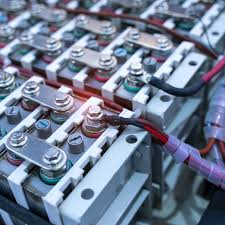
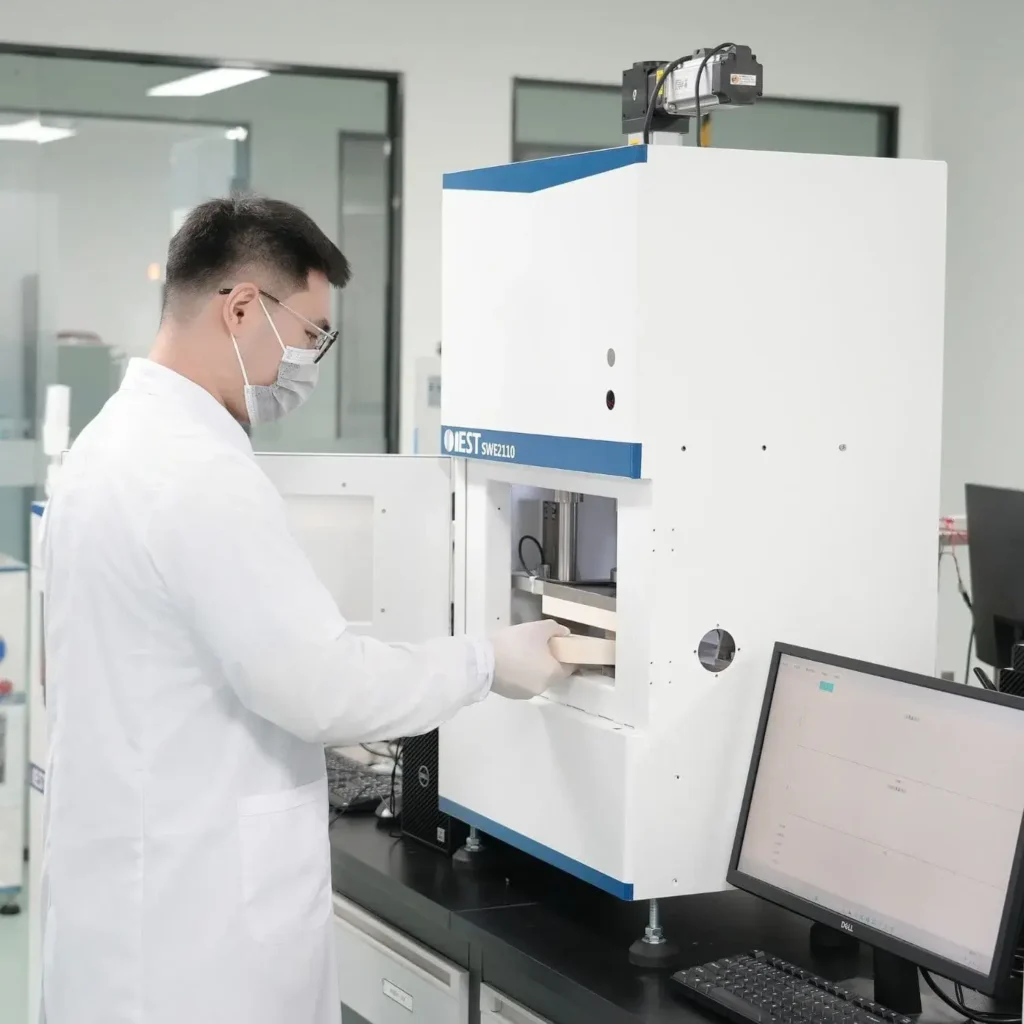
Our Analytical Approach to Energy Materials Testing
Our approach focuses on compositional verification, impurity profiling, and thermal performance evaluation to support energy storage validation and materials qualification.
Our services include:
- ICP-OES Elemental Impurity Analysis to quantify trace metals and contaminant levels
• Thermogravimetric Analysis (TGA) to assess thermal stability and decomposition onset
• Differential Scanning Calorimetry (DSC) to evaluate phase transitions and reaction behavior
• SEM/EDS Microstructural Analysis for electrode morphology evaluation
• Oxidation and Degradation Studies under controlled thermal conditions
• Density and Structural Evaluation for performance modeling inputs
As an independent laboratory, we provide objective data to support battery validation, supplier qualification, and investigative analysis.
Applicable Standards & Regulatory Frameworks
Testing may reference industry standards and evaluation frameworks depending on system requirements.
Relevant standards may include:
- ASTM E1131 – Thermogravimetric Analysis
- ASTM E1269 – Specific Heat Capacity
- IEC battery testing frameworks (application dependent)
- UN 38.3 transport safety considerations (context dependent)
Our analytical data supports technical documentation and performance validation efforts.
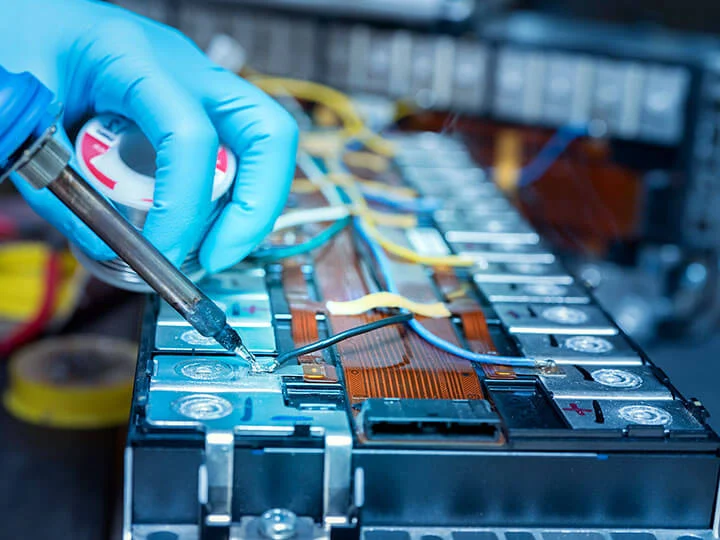
Materials We Evaluate
Energy systems incorporate advanced electrochemical and polymeric materials designed for high-performance operation.
Common materials include:
• Lithium nickel manganese cobalt oxide (NMC)
• Lithium iron phosphate (LFP)
• Graphite and silicon-based anodes
• Solid electrolytes
• Separator polymers
• Conductive carbon coatings
• Binder systems
Common Failure Investigations We Support
We frequently assist in identifying root causes of performance degradation and safety events.
Typical investigations include:
- Capacity fade linked to impurity contamination
- Cathode phase instability
- Electrolyte thermal decomposition
- Binder breakdown and structural delamination
- Trace metal contamination impacting performance
Root cause identification at the materials level strengthens safety validation and corrective action.
Why Independent Materials Testing Matters
Independent battery materials testing strengthens validation documentation and reduces development uncertainty. Early compositional and thermal analysis supports safe system design and long-term reliability.
Materials Metric supports manufacturers seeking rigorous, defensible energy materials characterization.