
Fluorescence Spectroscopy
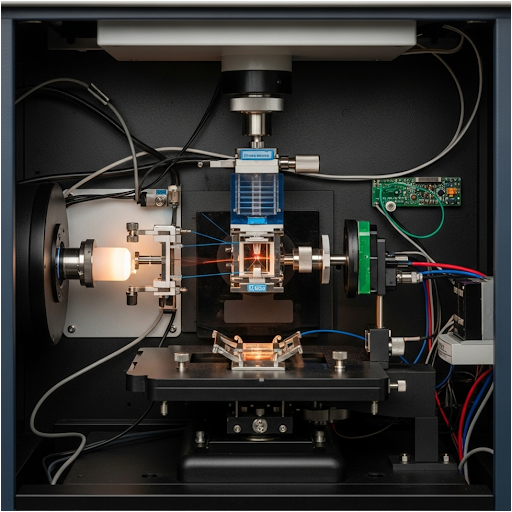
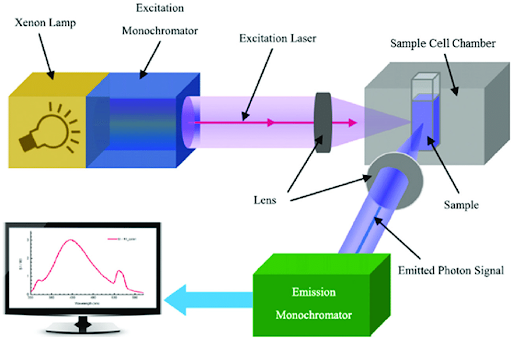
Fluorescence Spectroscopy is a highly sensitive analytical technique that measures light emitted by fluorescent molecules after excitation by a specific wavelength. When a fluorophore absorbs energy, it emits light at a longer wavelength—producing an emission spectrum that reveals molecular structure, interactions, concentration, and environmental effects.
This technique is widely used for trace-level detection, biological labeling, polymer characterization, and nanomaterial tracking, making it a powerful tool for research and quality evaluation.
Use of Fluorescence Spectroscopy
Fluorescence Spectroscopy allows researchers to:
• Detect and quantify fluorescent molecules, dyes, proteins, and tags
• Measure molecular interactions (binding, quenching, conformational changes)
• Monitor degradation, oxidation, or chemical modifications
• Evaluate fluorescent probes in polymers, coatings, and hydrogels
• Analyze biological fluorophores in cells, tissues, and biofilms
• Track drug penetration, nanoparticles, or functionalized materials
Applications of Fluorescence Spectroscopy
- Biological & Pharmaceutical: protein assays, biomolecule tracking, drug-binding studies
- Biomaterials & Tissue Engineering: fluorescent labeling of scaffolds and hydrogels
- Nanotechnology: quantum dot characterization, nanoparticle uptake analysis
- Environmental & Chemical Testing: detection of pollutants and organics
- Polymers & Coatings: fluorescent additives, crosslinking, diffusion studies
Sample Analysis Process
1. Submission & Review
- Provide sample type, known fluorophores, and testing objectives
- Determine optimal excitation/emission ranges
2. Sample Preparation
- Dilution, labeling, buffer preparation, or adding fluorescent tracers
- Optional filtration or sample cleanup
3. Fluorescence Measurement
- Excitation/emission scans
- Intensity quantification
- Multi-wavelength analysis
- Optional time-resolved fluorescence
4. Data Processing & Reporting
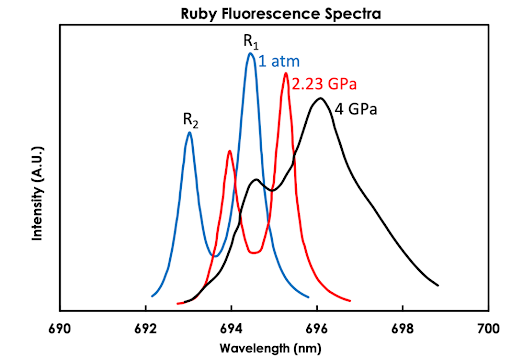
- Emission spectra and intensity plots
- Concentration curves (if applicable)
- Peak interpretation and comparative analysis
- Annotated report summarizing results
Why Choose Materials Metric for Your Fluorescence Spectroscopy Analysis
Materials Metric provides precise, high-sensitivity fluorescence measurements combined with expert interpretation for biological, polymeric, and nanomaterial systems.
Our fluorescence spectroscopy services offer:
- Sensitive detection of trace-level compounds and weak fluorophores
• Multi-channel excitation and emission scanning for complex samples
• Quantitative fluorescence intensity and concentration analysis
• Support for biological, chemical, and material-based samples
• Specialized workflows for hydrogels, biomaterials, polymers, and nanoparticles
• Clear, annotated reports aligned with your research or product-development goals
By integrating fluorescence spectroscopy with HPLC, CLSM, AFM, and chemical analysis, Materials Metric provides comprehensive insight into molecular behavior, structural changes, and material performance.