Elemental Mapping & Surface Composition Profiling
(EDS, EPMA, WDS)
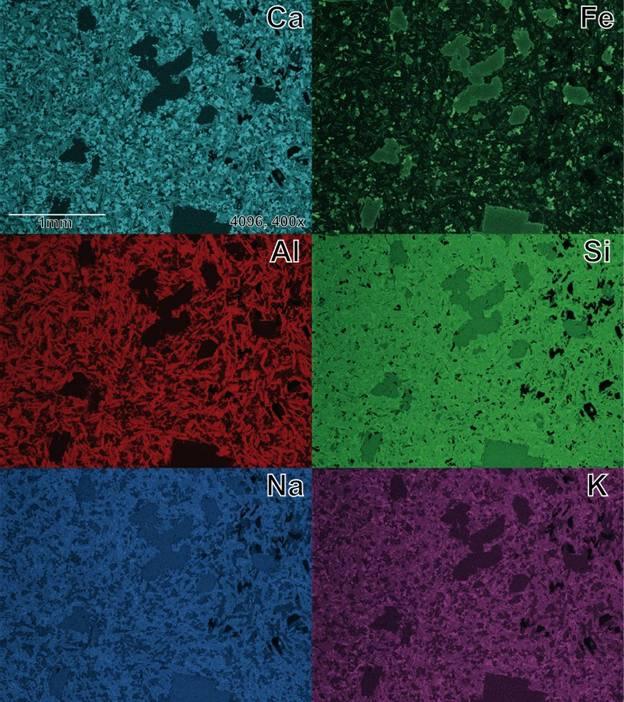
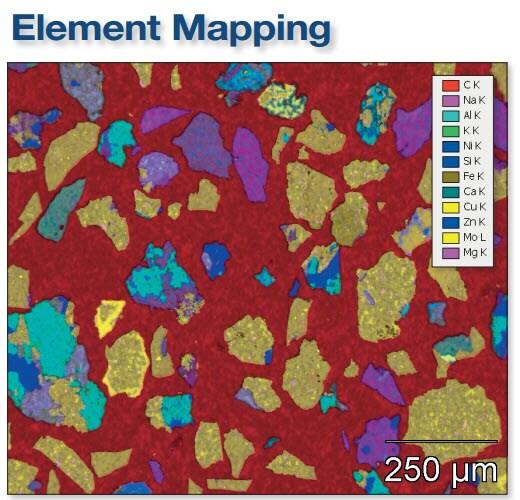
Elemental mapping and surface composition profiling determine the type, concentration, and spatial distribution of elements across material surfaces, interfaces, and cross-sections. By resolving elemental variations at micro- to nanoscale resolution, these analyses reveal how composition changes with depth, processing conditions, or environmental exposure.
At Materials Metric, elemental mapping leverages techniques such as EDS (Energy Dispersive X-ray Spectroscopy), EPMA, WDS, and micro-analytical X-ray methods to investigate contamination, diffusion, oxidation, coating integrity, interfacial reactions, and microstructural defects. This spatially resolved chemical insight is essential for failure analysis, quality control, material qualification, and regulatory documentation.
Uses of Elemental Mapping & Surface Composition Profiling
• Detect elemental contamination or foreign inclusions
• Analyze coating and thin-film uniformity
• Assess diffusion, corrosion, and oxidation behavior
• Map filler and additive distribution in polymers/composites
• Evaluate material interfaces and bonding regions
• Support failure, fracture, and delamination analysis
• Verify batch consistency and supplier quality
Applications
• Medical device materials and surface treatments
• Polymers, composites, elastomers
• Metals, alloys, and ceramics
• Coatings, thin films, and surface modifications
• Battery, catalyst, and energy materials
• Packaging & food-contact materials
Sample Analysis Process
1. Objective Definition
- Identify target elements and analysis depth
- Define regions of interest or suspected defects
2. Sample Preparation
- Surface cleaning, mounting, or cross-sectioning
- Polishing for EPMA when needed
- Conductive coating (if required)
3. Elemental Mapping
- EDS mapping for rapid, multi-element visualization
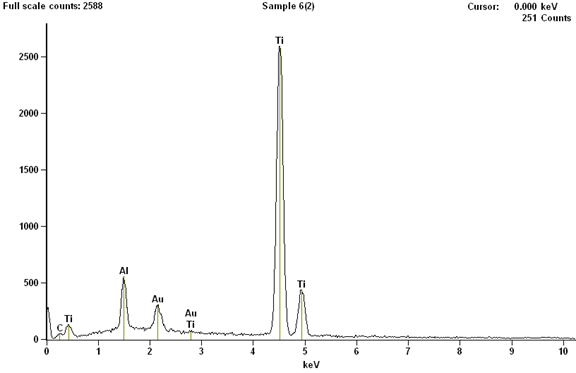
- EPMA/WDS for high-accuracy, high-sensitivity elemental profiles
- Line scans & point analysis for compositional gradients
- Depth and interface mapping for coating systems
4. Reporting
- Element distribution maps
- Quantitative or semi-quantitative elemental data
- Interface, defect, or contamination interpretation
- Recommendations for corrective actions or processing adjustments
Why Choose Materials Metric for Elemental Mapping
Materials Metric provides high-resolution elemental insight using advanced micro-analytical platforms and expert scientific interpretation.
We offer:
• Precision EDS, EPMA, and WDS mapping for accurate composition profiling
• Deep expertise in coatings, interfaces, and microstructural defects
• Ability to detect trace elemental deviations impacting performance
• Audit-ready documentation for FDA, ISO, and quality systems
• Correlation with mechanical, thermal, and chemical data for complete understanding
Materials Metric delivers clear, actionable elemental intelligence essential for material qualification, failure resolution, and product optimization.
Related services