What Is Exhaustive Extraction — and Why Does It Matter in Chemical Analysis?
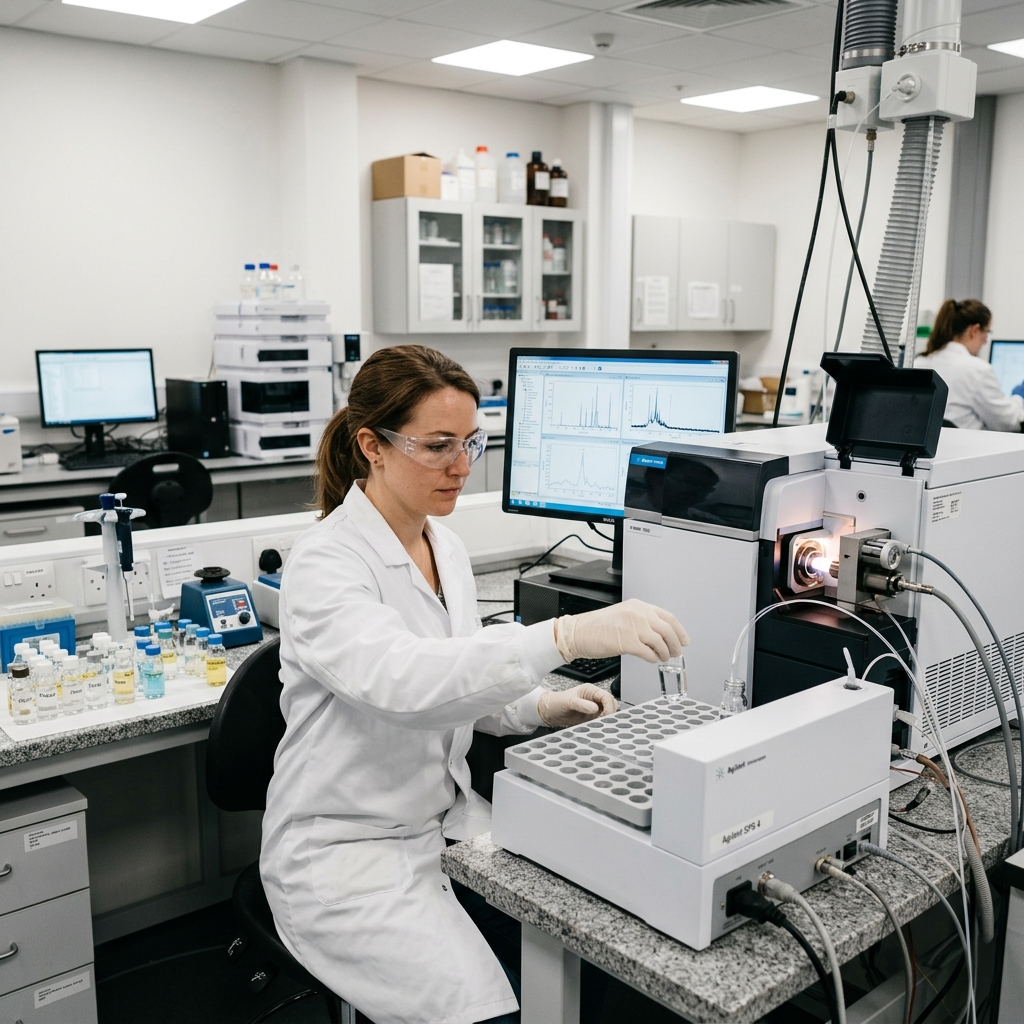
Furthermore, Exhaustive extraction is a sample preparation technique that removes virtually all target analytes from a solid, liquid, or semi-solid material by repeatedly exposing it to a solvent or extraction medium until no further analyte is recovered. Moreover, for engineers, chemists, and regulatory professionals, this approach provides the most complete chemical profile of a material — making it essential for safety testing, regulatory compliance, and quality control. At Materials Metric, exhaustive extraction forms the backbone of many advanced characterization workflows.
In addition, understanding when and how to apply exhaustive extraction can determine whether a product passes or fails regulatory scrutiny. Furthermore, the technique directly informs risk assessments for medical devices, pharmaceutical packaging, industrial components, and consumer goods. Incomplete extraction leaves residual analytes undetected — consequently exposing manufacturers to liability, product recalls, and patient harm.
Moreover, global standards such as ISO 10993-18 Chemical Characterization and USP General Chapter <232> Elemental Impurities explicitly reference exhaustive extraction protocols as the basis for conservative worst-case chemical characterization. Therefore, laboratories that master this methodology deliver data that regulators, auditors, and safety assessors can trust without reservation.
Key Takeaways
- Exhaustive extraction maximizes analyte recovery from a material, ensuring the most complete chemical profile.
- Regulatory frameworks including ISO 10993-18 and USP <232> require exhaustive or exaggerated extraction for worst-case safety assessments.
- Common methods include Soxhlet extraction, pressurized solvent extraction, microwave-assisted extraction, and reflux extraction.
- Proper solvent selection, temperature control, and extraction duration are critical variables that determine data reliability.
- Exhaustive extraction works alongside analytical techniques such as GC-MS Analysis, HPLC Analysis, and NMR Spectroscopy to identify and quantify extractable compounds.
- Method development and validation are essential steps before exhaustive extraction data can support regulatory submissions.
Exhaustive Extraction: A sample preparation strategy that applies repeated or continuous solvent contact to a material until analyte recovery reaches a plateau, ensuring that virtually all extractable chemical species are captured and quantified for safety and characterization purposes.
Key Fact: Exhaustive extraction is widely recognized as one of the most critical steps in chemical characterization workflows for medical devices and pharmaceutical packaging — because incomplete extraction routinely understates a material’s true chemical burden, potentially masking compounds that exceed regulatory safety thresholds.
What Is Exhaustive Extraction and How Does It Work?
Exhaustive extraction systematically drives analytes out of a material matrix by saturating it with solvent, then refreshing or recirculating that solvent until the analyte concentration in each subsequent fraction drops to a negligible level. However, in practice, laboratories track recovery across multiple extraction cycles. Consequently, they stop the process only when successive fractions show no meaningful additional yield — a point often called “extraction to exhaustion.”
This approach contrasts sharply with simpler single-pass or time-limited extraction methods. Those shorter protocols may capture only a fraction of the total extractable load. Therefore, exhaustive extraction becomes necessary whenever regulations demand a worst-case or conservative chemical profile.
Core Principles Behind Exhaustive Extraction
At its core, exhaustive extraction relies on thermodynamic partitioning. Analytes migrate from the solid or semi-solid matrix into the solvent phase based on their solubility, polarity, and molecular affinity for the chosen medium. Increasing temperature, agitation, or surface area accelerates this migration. However, the process only reaches a true endpoint when the partition equilibrium has been fully exploited across enough cycles or a long enough extraction window.
Importantly, exhaustive extraction is not a single method — it is a performance goal. Various techniques can achieve it, including continuous Soxhlet extraction, pressurized liquid extraction, and extended reflux procedures. The selection depends on the matrix type, analyte volatility, and the downstream analytical instrument receiving the extract.
Exhaustive Extraction vs. Partial or Simulated-Use Extraction
Regulatory guidance distinguishes clearly between extraction types. Simulated-use extraction mimics realistic patient or consumer contact conditions — for example, soaking a catheter in saline at body temperature for 24 hours. By contrast, exhaustive extraction applies far more aggressive conditions to capture every possible leachable, regardless of how the product is actually used.
Similarly, partial or time-limited extractions serve screening purposes. They work well for routine quality checks. However, they cannot replace exhaustive extraction when regulators demand a full chemical inventory of a material’s extractable burden. Specifically, ISO 10993-18 Chemical Characterization classifies exhaustive extraction as the appropriate technique when conducting chemical characterization studies intended to support biological safety evaluations.
Why Exhaustive Extraction Is Essential for Regulatory Compliance
Regulatory agencies worldwide — including the FDA, EMA, and ISO technical committees — increasingly demand comprehensive chemical data before approving medical devices, drug packaging, and food-contact materials. Exhaustive extraction provides the chemical inventory these agencies require. Furthermore, it demonstrates that a manufacturer has made every reasonable effort to identify harmful compounds before placing a product on the market.
In addition, the extractables profile generated by exhaustive extraction feeds directly into toxicological risk assessments. Toxicologists use the resulting data to calculate the analytical evaluation threshold (AET), apply safety margins, and determine whether any compound exceeds a threshold of toxicological concern (TTC). Without exhaustive extraction data, these calculations lack the foundational completeness regulators expect.
ISO 10993-18 and Exhaustive Extraction Requirements
ISO 10993-18 defines the chemical characterization framework for medical devices. Specifically, it requires laboratories to select extraction conditions — including solvents, temperature, and duration — that maximize analyte yield from the device material. Exhaustive extraction satisfies this requirement by design.
Moreover, the standard asks laboratories to demonstrate that extraction is complete. Therefore, teams must show that the final extraction fraction contains analyte concentrations at or near the detection limit. This fraction-by-fraction verification distinguishes a rigorous exhaustive extraction study from a simple soak-and-test approach. Our Method Development & Validation service builds this documentation systematically into every study protocol.
USP <232> and Elemental Impurities: The Role of Exhaustive Extraction
For pharmaceutical manufacturers, USP General Chapter <232> Elemental Impurities sets legally enforceable limits on elemental contaminants in drug products. Exhaustive extraction of container-closure systems and drug-contact polymers forms the basis for demonstrating that elemental contributions from packaging stay within permissible daily exposure (PDE) limits.
Notably, the standard specifies that extraction conditions must be “worst-case” — meaning they should release the maximum possible elemental burden from the material. Exhaustive extraction fulfills this criterion more reliably than any other approach. Our Chemical Purity & Contaminant Screening service applies these protocols to support USP <232> submissions with complete, defensible datasets.
FDA Expectations for Extractables Studies
The FDA’s guidance for combination products, drug-device combinations, and container-closure systems all reference extractables and leachables (E&L) studies. For the extractables phase, exhaustive extraction defines the upper bound of what a material can possibly release. Consequently, regulators treat exhaustive extraction data as the most conservative and protective dataset available.
Additionally, the FDA expects laboratories to justify their extraction conditions with scientific rationale. Poorly documented or incomplete extraction studies frequently trigger data deficiency letters during the review process. By contrast, well-validated exhaustive extraction studies accelerate approval timelines by preemptively addressing agency concerns. Our Chemical & Analytical Testing team designs every study with this regulatory defensibility in mind.
Common Exhaustive Extraction Methods and Their Applications
Several proven techniques achieve exhaustive extraction across different material types and analyte classes. Choosing the right method depends on the material matrix, the target analytes’ chemical properties, and the downstream analytical platform. In addition, method selection must account for solvent compatibility, thermal stability of the material, and any regulatory preferences for specific extraction approaches.
Below is a comparison table summarizing the most widely used exhaustive extraction techniques, their operating principles, and their primary applications.
| Method | Operating Principle | Best For | Key Advantage |
|---|---|---|---|
| Soxhlet Extraction | Continuous solvent cycling through a thimble containing the solid sample | Polymers, rubbers, waxes, solid matrices | High exhaustiveness; well-documented in pharmacopoeias |
| Pressurized Liquid Extraction (PLE) | Elevated temperature and pressure accelerate solvent penetration into the matrix | Environmental samples, dense polymer matrices | Faster extraction; reduced solvent volume |
| Microwave-Assisted Extraction (MAE) | Microwave energy heats the solvent and matrix simultaneously | Polar analytes, biological tissue, food matrices | Rapid heating; high throughput |
| Reflux Extraction | Solvent boils, condenses, and continuously re-contacts the sample | Medical device components, elastomers, adhesives | Simple setup; compatible with ISO 10993-18 protocols |
| Ultrasonic (Sonication) Extraction | Ultrasound waves create cavitation that disrupts the matrix and releases analytes | Fragile materials, pharmaceutical coatings | Gentle on thermolabile compounds |
Soxhlet Extraction: The Classic Exhaustive Method
Soxhlet extraction has served as the reference standard for exhaustive extraction for over a century. The technique continuously cycles fresh solvent through a sample thimble, ensuring that the concentration gradient driving analyte migration is always maximized. Furthermore, the condensed solvent repeatedly contacts the material — sometimes for 12 to 48 hours — making it one of the most thorough approaches available.
Regulators and pharmacopoeias reference Soxhlet extraction frequently because its performance is well-characterized and reproducible. However, it requires relatively large solvent volumes and long extraction times. Therefore, many modern laboratories complement Soxhlet extraction with faster alternatives for routine work, reserving it for method validation or worst-case regulatory studies.
Pressurized Liquid Extraction and Microwave-Assisted Approaches
Pressurized liquid extraction (PLE), also called accelerated solvent extraction (ASE), applies heat and pressure simultaneously. As a result, solvent viscosity drops and analyte diffusivity increases — dramatically cutting extraction time without sacrificing recovery. Moreover, PLE’s automated fraction collection simplifies the process of verifying extraction completeness by comparing analyte content across successive fractions.
Microwave-assisted extraction offers similar speed advantages. Specifically, microwave energy heats polar solvents rapidly and uniformly, disrupting the matrix and releasing analytes efficiently. Meanwhile, both methods require careful temperature optimization to avoid degrading thermolabile target compounds. Our Wet Chemistry & Classical Analytical Methods team selects and validates the appropriate technique for each unique material and analyte combination.
Selecting the Right Solvent for Exhaustive Extraction
Solvent selection profoundly influences exhaustive extraction outcomes. A solvent must match the polarity of the target analytes and penetrate the material matrix effectively. In addition, it must be compatible with the downstream analytical method — for example, GC-MS requires volatile solvents that evaporate cleanly, while HPLC tolerates a broader range of aqueous and organic media.
Regulatory guidance recommends using multiple solvents with different polarity profiles — typically a non-polar solvent like hexane, a mid-polarity solvent like isopropanol, and a polar solvent like water — to capture the full spectrum of extractable compounds. Consequently, a single-solvent exhaustive extraction may miss entire classes of chemicals. Our Chemical & Elemental Characterization experts design multi-solvent extraction strategies that maximize chemical coverage across diverse material types.
Quick Note: When selecting solvents for exhaustive extraction, always consider the material’s thermal stability, the analyte’s vapor pressure, and the sensitivity of your downstream detector. A mismatch between any of these factors can result in incomplete recovery or instrument contamination — both of which compromise data integrity and regulatory defensibility.
Analytical Techniques That Work With Exhaustive Extraction
Exhaustive extraction generates a concentrated chemical profile — but the value of that profile depends entirely on the analytical method used to interrogate it. Therefore, laboratories pair exhaustive extraction with powerful instrumental techniques that can detect, identify, and quantify analytes at trace and ultra-trace levels. Selecting the right instrument for the extract type is as critical as the extraction itself.
Furthermore, different analytical platforms excel at different compound classes. Organic extractables require separation-based methods. Elemental impurities demand atomic spectroscopy. In addition, structural confirmation often requires spectroscopic techniques that provide molecular fingerprints rather than simple concentration data.
ICP-MS and ICP-OES for Elemental Analysis
Inductively coupled plasma mass spectrometry (ICP-MS) and ICP-OES are the dominant techniques for measuring elemental impurities in exhaustive extraction studies. ICP-MS offers exceptional sensitivity — detecting elements at parts-per-trillion levels. Consequently, it satisfies the stringent detection requirements set by USP Elemental Impurities guidelines for pharmaceutical applications.
ICP-OES provides excellent precision across a wide dynamic range and handles complex matrices reliably. Moreover, both techniques analyze multiple elements simultaneously, making them highly efficient for screening extracts from polymer components, elastomers, and metal alloys. Our Chemical & Elemental Characterization service routinely applies these platforms to exhaustive extraction studies requiring defensible elemental data.
GC-MS and HPLC for Organic Extractables
Organic extractables — including plasticizers, antioxidants, residual monomers, and processing aids — require chromatographic separation before detection. GC-MS Analysis excels at volatile and semi-volatile organics, delivering both retention-time identification and mass spectral confirmation. Specifically, it remains the gold standard for identifying unknown compounds in exhaustive extraction studies targeting polymer additives.
For non-volatile or thermally labile compounds, HPLC Analysis provides a complementary separation mechanism. By contrast, GC requires compounds to vaporize without degrading — a requirement that many pharmaceutical excipients and oligomers cannot meet. Therefore, a comprehensive exhaustive extraction program typically employs both GC-MS and HPLC together to achieve full organic coverage.
Complementary Spectroscopic Confirmation Techniques
When chromatographic data alone cannot confirm a compound’s identity, spectroscopic techniques step in. FTIR Analysis rapidly identifies functional groups in concentrated extracts. Furthermore, NMR Spectroscopy provides definitive structural elucidation for unknown extractables, even at low concentrations when combined with solvent suppression techniques.
Additionally, Raman Spectroscopy complements FTIR by characterizing inorganic fillers, pigments, and surface coatings that may contribute to an extract’s chemical load. Together, these spectroscopic tools transform a raw exhaustive extraction dataset into a fully annotated chemical inventory — which regulators and toxicologists require for complete safety evaluations.
Industry-Specific Applications of Exhaustive Extraction
Exhaustive extraction applies across a remarkably broad range of regulated industries. Each sector brings unique material types, contact conditions, and regulatory frameworks. However, the underlying goal remains consistent: generate the most complete chemical dataset possible before a product reaches end users.
The table below summarizes how exhaustive extraction applies across four major industries, highlighting the key drivers and primary analytical methods used in each context.
| Industry | Primary Materials Tested | Regulatory Driver | Key Analytical Methods |
|---|---|---|---|
| Medical Devices | Polymers, elastomers, adhesives, coatings | ISO 10993-18 | GC-MS, HPLC, ICP-MS, NMR |
| Pharmaceutical Packaging | Container-closure systems, stoppers, films | USP <232>, ICH Q3D | ICP-MS, ICP-OES, GC-MS, HPLC |
| Aerospace & Defense | Composite materials, lubricants, sealants | Material qualification specifications | GC-MS, FTIR, XRF, ICP-OES |
| Environmental & Food Contact | Plastics, packaging films, coatings | EU 10/2011, FDA 21 CFR | GC-MS, HPLC, ICP-MS |
Medical Devices and Biocompatibility Testing
Medical device manufacturers depend on exhaustive extraction to generate the chemical inventory required for biological safety evaluations. Specifically, the extractables data feeds into ISO 10993-1 risk assessments, where toxicologists evaluate every identified compound against established safety thresholds. Our Biocompatibility & Toxicity Testing service integrates exhaustive extraction data directly into these evaluations.
Moreover, the stakes are exceptionally high in this sector. Devices that contact blood, tissue, or implantation sites face the most rigorous scrutiny. Consequently, laboratories conducting exhaustive extraction for medical devices must demonstrate not only recovery completeness but also analytical coverage across both organic and inorganic compound classes.
Pharmaceutical Packaging and Container-Closure Systems
Pharmaceutical manufacturers face a dual challenge: ensuring the drug product remains stable and ensuring that packaging materials do not contribute harmful extractables. Exhaustive extraction of stoppers, vial closures, syringe barrels, and film laminates reveals every compound capable of migrating into a drug formulation.
In addition, the analytical data supports threshold calculations for the analytical evaluation threshold (AET). Laboratories must detect compounds at concentrations well below the AET — which, for many drug products, falls in the low parts-per-billion range. Therefore, exhaustive extraction must pair with highly sensitive detection platforms such as ICP-MS and high-resolution LC-MS. Published research available through ScienceDirect continues to advance method development in this technically demanding field.
Aerospace, Environmental, and Consumer Product Applications
Aerospace manufacturers use exhaustive extraction to qualify sealants, composite matrices, and lubricant residues on flight-critical components. Notably, trace organic contamination on aerospace surfaces can cause adhesion failures or sensor degradation — making chemical completeness a safety issue, not just a compliance issue.
For environmental and food-contact applications, exhaustive extraction quantifies migrants from plastic packaging before products enter regulated markets. Furthermore, consumer product safety programs use exhaustive extraction data to verify compliance with regulations restricting heavy metals, phthalates, and other hazardous substance classes. Our Chemical & Analytical Testing team supports clients across all these sectors with fit-for-purpose extraction and analysis programs.
Quality Assurance and Best Practices in Exhaustive Extraction Studies
Exhaustive extraction data only has regulatory value if the laboratory can demonstrate that it was generated under controlled, validated, and documented conditions. Therefore, quality assurance practices are not optional additions — they are foundational requirements that every credible extraction study must satisfy.
Specifically, laboratories must control variables including solvent purity, extraction vessel cleanliness, temperature uniformity, and sample preparation protocols. Each uncontrolled variable introduces a potential source of bias that could either overstate or understate the true extractable burden of a material.
Method Development and Validation for Exhaustive Extraction
No two materials are chemically identical — consequently, no single exhaustive extraction method suits every project. Effective method development starts with a material characterization review that considers the polymer type, processing history, and intended use environment. Our Method Development & Validation team constructs extraction protocols that address these variables systematically.
Validation then confirms that the method achieves acceptable accuracy, precision, linearity, and recovery across the analyte range of interest. Furthermore, spike recovery experiments verify that the extraction process releases spiked analytes quantitatively — a direct measure of method exhaustiveness. Without this validation evidence, regulatory agencies have no basis for trusting the completeness of the resulting chemical profile.
Demonstrating Extraction Completeness: Fraction-by-Fraction Monitoring
Proving extraction completeness is one of the defining challenges in exhaustive extraction studies. The most rigorous approach collects multiple sequential fractions and analyzes each separately. Importantly, the process continues until the analyte concentration in each new fraction drops to at or below the method’s limit of quantification.
This fraction-by-fraction strategy generates a depletion curve — a visual and quantitative record showing that analyte recovery is genuinely exhausted. Regulators and auditors respond well to this evidence because it directly demonstrates the laboratory’s commitment to conservative, worst-case characterization. By contrast, studies that terminate extraction based on time alone, rather than demonstrated analyte depletion, face increased scrutiny during regulatory review.
Avoiding Common Pitfalls in Exhaustive Extraction Studies
Several recurring errors undermine otherwise well-designed exhaustive extraction programs. Below are the most critical pitfalls and how to avoid them:
- Insufficient solvent polarity range: Using a single solvent misses entire compound classes. Always apply at least two solvents covering polar and non-polar analytes.
- Premature extraction termination: Stopping before analyte depletion is confirmed leaves residual extractables undetected and the data incomplete.
- Contaminated labware: Trace-level analytes require scrupulously clean glassware and reagent-grade or better solvents to avoid false positives.
- Poor sample surface area preparation: Cutting or grinding materials to increase surface area accelerates extraction significantly; failure to standardize this step introduces variability.
- Inadequate analytical sensitivity: If the detection limit exceeds the analytical evaluation threshold, the method cannot confirm safety — rendering the entire study non-compliant.
- Missing method validation documentation: Regulatory submissions without validation data risk outright rejection, regardless of extraction quality.
Our Scientific & Technical Consulting team regularly assists organizations in identifying and correcting these issues before they reach regulatory review — saving significant time and cost in the submission process.
Frequently Asked Questions About Exhaustive Extraction
What is the difference between exhaustive extraction and simulated-use extraction?
Exhaustive extraction applies aggressive solvent conditions — high temperature, long duration, and multiple solvents — to recover virtually all chemical species a material can release. Simulated-use extraction, by contrast, mimics realistic contact conditions such as body temperature, physiological fluids, and expected contact duration. Regulators use exhaustive extraction to establish the absolute worst-case chemical inventory and simulated-use extraction to estimate real-world patient exposure. Both study types often appear together in a complete extractables and leachables (E&L) program.
How do laboratories verify that an exhaustive extraction is truly complete?
Laboratories verify completeness by collecting sequential extraction fractions and measuring analyte concentration in each one. The extraction process reaches a genuine endpoint when successive fractions show analyte concentrations at or near the method’s limit of quantification. Furthermore, some protocols require that the final fraction contains less than a specified percentage — often 1–5% — of the total analyte recovered across all fractions combined. This fraction-by-fraction monitoring provides documented, defensible evidence of extraction exhaustiveness.
Which solvents are most commonly used in exhaustive extraction for medical devices?
ISO 10993-18 recommends using solvents that bracket the polarity range of likely extractables. In practice, laboratories typically apply isopropanol or ethanol as mid-polarity solvents, hexane or heptane for non-polar extractables, and water or acidified water for polar and ionic species. Moreover, some protocols add dimethyl sulfoxide (DMSO) for materials with particularly high chemical complexity. Using multiple solvents ensures that both hydrophilic and lipophilic compounds receive adequate coverage in the final chemical inventory.
Is exhaustive extraction required for all medical device submissions?
Not every device requires exhaustive extraction — regulatory requirements scale with patient risk. Devices with brief, external contact may satisfy regulators with simulated-use extraction alone. However, implantable devices, long-term contact devices, and those contacting blood or cerebrospinal fluid almost always require exhaustive extraction to support a complete biological safety evaluation under ISO 10993-18. Therefore, manufacturers should consult their regulatory strategy early to determine which extraction approach their specific device classification demands.
Can exhaustive extraction detect both organic and inorganic extractables?
Yes — but achieving comprehensive coverage requires using separate analytical platforms for each compound class. Organic extractables are best captured using GC-MS and HPLC, while inorganic elemental impurities require ICP-MS or ICP-OES. Consequently, a complete exhaustive extraction study routes extract fractions to multiple instruments. Additionally, techniques such as FTIR and NMR provide structural confirmation for unknowns that chromatographic retention time alone cannot definitively identify. This multi-technique approach is standard practice for regulatory-grade exhaustive extraction programs.
How long does an exhaustive extraction study typically take?
Study timelines vary considerably based on material complexity, the number of solvents used, extraction technique, and analytical method selection. A straightforward Soxhlet extraction may run 24–48 hours continuously, while a full multi-solvent exhaustive extraction program with subsequent analytical testing, data processing, and report generation often requires two to six weeks end-to-end. Furthermore, method development and validation — required before a study can support regulatory submissions — can add several additional weeks. Early engagement with your testing laboratory and clear scope definition significantly reduce overall project timelines.
Conclusion
Exhaustive extraction remains one of the most powerful and regulatory-critical tools available to materials scientists, product safety teams, and quality engineers. By systematically driving every recoverable chemical species out of a material matrix, it delivers the comprehensive chemical inventory that modern regulatory frameworks demand. Furthermore, it establishes the scientific foundation for toxicological risk assessment, safety thresholds, and ultimately, product approval.
Mastering exhaustive extraction requires far more than simply soaking a sample in solvent. Consequently, it demands expert method development, rigorous validation, careful solvent selection, and sophisticated multi-technique analytical follow-through. Each variable — from extraction temperature to fraction collection intervals — influences the completeness and regulatory defensibility of the resulting dataset.
At Materials Metric, our integrated approach combines extraction expertise with a full suite of analytical capabilities — including GC-MS Analysis, HPLC Analysis, Chemical & Elemental Characterization, and Biocompatibility & Toxicity Testing — to deliver complete, submission-ready extractables datasets. Moreover, our method development scientists design every exhaustive extraction protocol specifically for your material, your regulatory pathway, and your timeline.
Whether you are developing a new medical device, qualifying pharmaceutical packaging, or assessing an industrial material for chemical compliance, exhaustive extraction is too important to leave to chance. Specifically, incomplete or poorly documented extraction studies cost manufacturers time, money, and market access — outcomes that expert support can reliably prevent.
Ready to discuss your extraction and characterization needs? Contact Materials Metric today to speak with our analytical and regulatory specialists. Our team will help you design a fit-for-purpose exhaustive extraction program that meets your specific regulatory requirements and delivers results you can defend with confidence.
Related Posts from Materials Metric
Explore more insights from our team of materials scientists and analytical experts:
- Medical device extractables and leachables | Materials Metric
- Extractables vs leachables | Materials Metric | Chem Lab
- 510k testing requirements | Materials Metric | Compliance
- Supplier change risk assessment | Materials Metric