Why the TEM Fluorescent Screen Matters for Microscopy
A TEM fluorescent screen is a critical component in Transmission Electron Microscopy that converts invisible electron beams into visible light, allowing operators to observe and focus images in real time. Here’s what you need to know:
Core Function:
- Converts electron intensity into visible light contrast through cathodoluminescence
- Enables direct viewing of TEM images and diffraction patterns
- Acts as a beam shutter when raised, protecting detectors during image acquisition
Key Materials:
- Typically made of zinc sulfide (ZnS) phosphor powder coated on an aluminum plate
- Doped with copper (Cu), aluminum (Al), or europium (Eu) for optimal light emission
- Selected for high luminous efficiency and ~100 ms persistence time
Modern Role:
- Historically the primary viewing method, now supplemented by digital cameras
- Still essential for alignment, focusing, and navigation in modern TEMs
- Viewed through a lead glass window that shields operators from X-rays
Despite the shift toward digital detectors and computer displays, the fluorescent screen remains a fundamental tool for TEM operation. It provides the intuitive, real-time feedback that operators rely on when setting up complex imaging conditions or navigating samples at the nanoscale.
At Materials Metric, our experts use advanced TEM systems equipped with both traditional fluorescent screens and modern digital detectors to deliver precise analytical data for R&D professionals tackling complex material challenges. Our team understands how every component—from the TEM fluorescent screen to the latest electron detectors—contributes to high-quality microscopy results.
How a TEM Fluorescent Screen Works: From Electrons to Photons
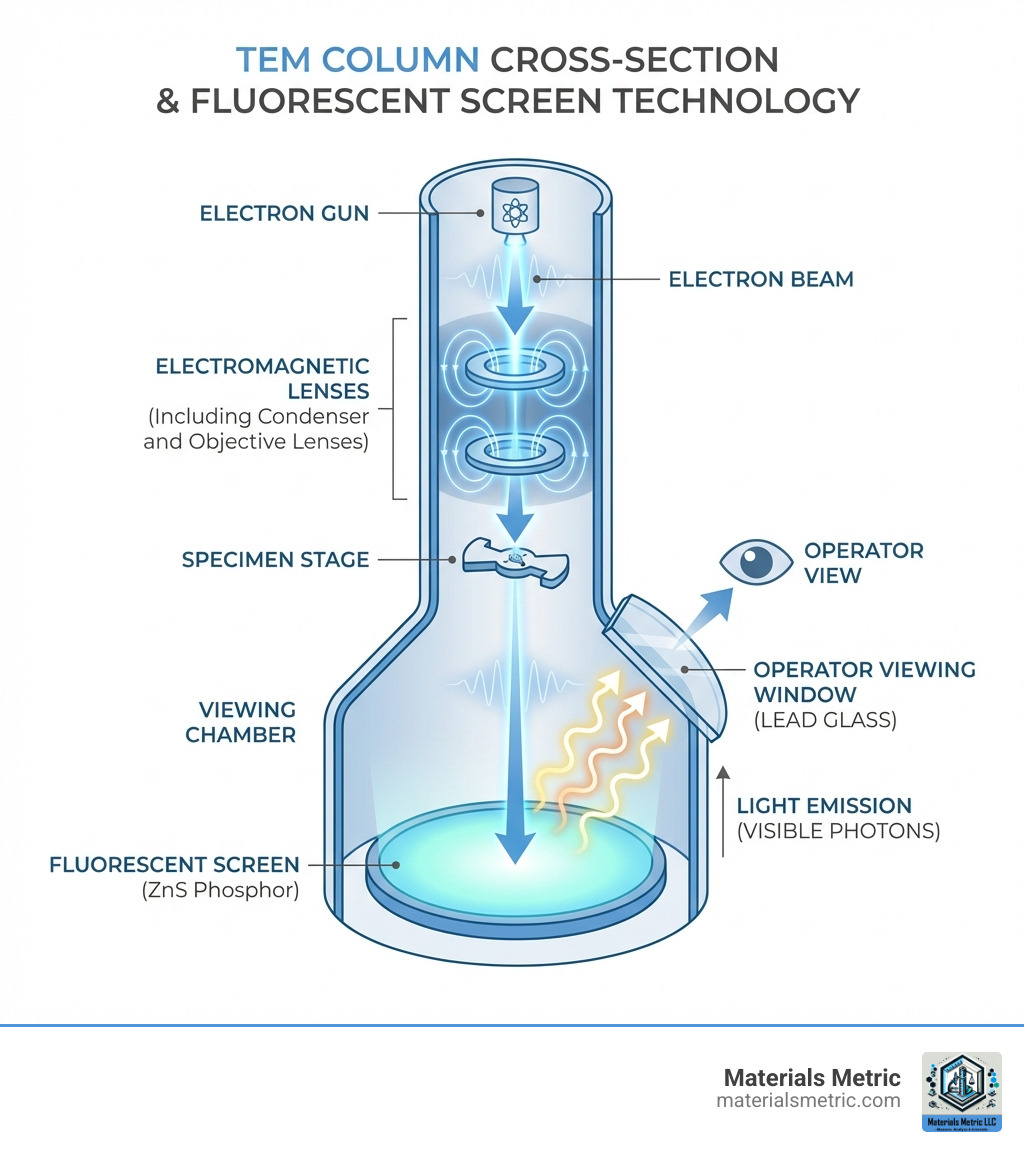
Imagine trying to see something that’s invisible to the naked eye. That’s essentially the challenge in Transmission Electron Microscopy (TEM), where a beam of high-energy electrons passes through a sample to form an image. The TEM fluorescent screen acts as our translator, taking these invisible electrons and converting them into something we can actually see: light!
This magical conversion happens through a process called cathodoluminescence. When the energetic electrons from the TEM beam strike the screen, they transfer their energy to the atoms within the screen’s material. This ‘excites’ these atoms, kicking their electrons into higher energy states. But excited states are unstable, and these electrons quickly fall back to their original, lower energy levels. As they do, they release the excess energy in the form of photons – tiny packets of visible light. This is the essence of electron-to-photon conversion.
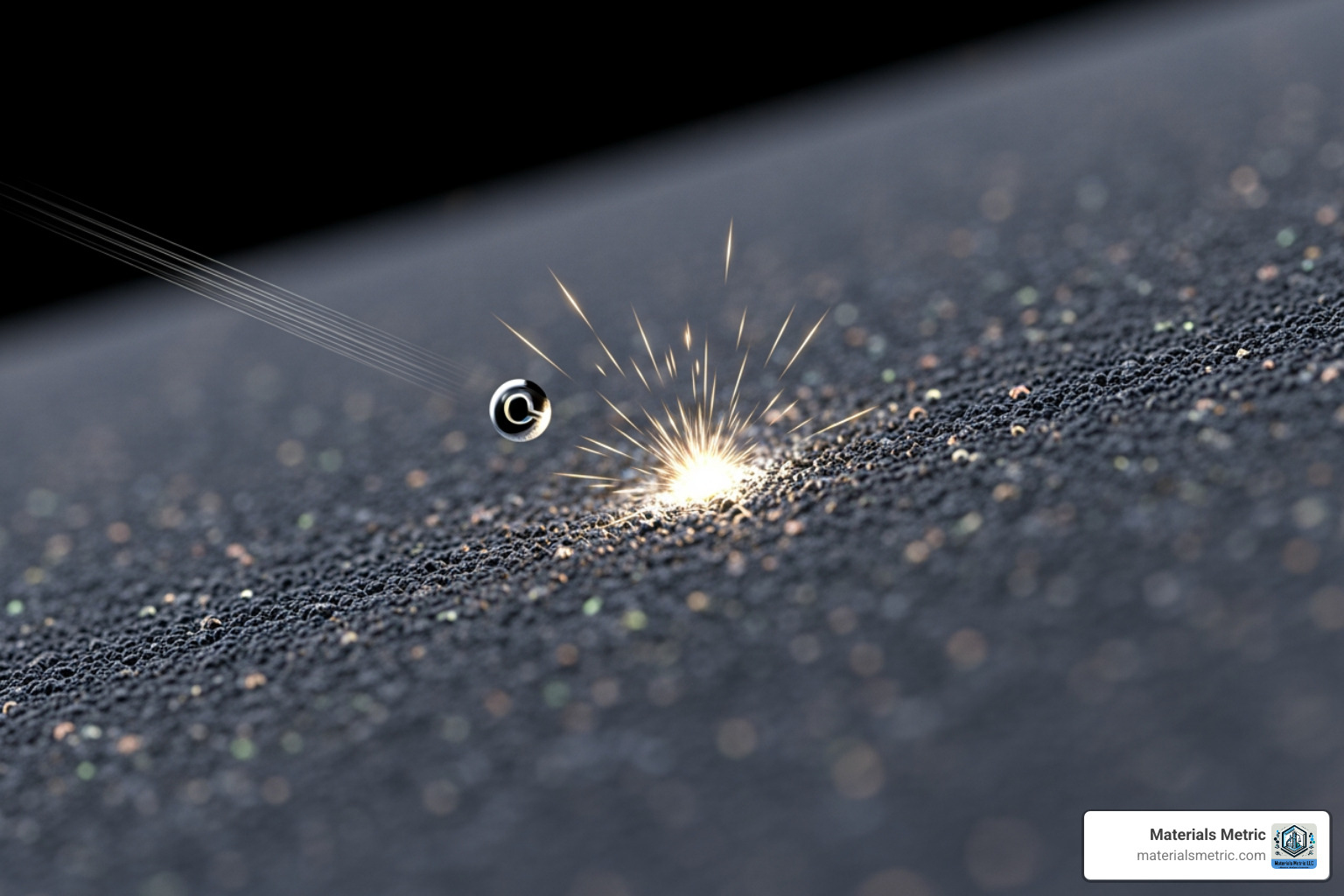
The heart of this process lies in the specific phosphor materials used. The fluorescent screen plate in TEM is typically made of aluminum coated with a fine powder of zinc sulfide (ZnS). Zinc sulfide is a workhorse in phosphors because of its excellent luminescent properties. To fine-tune the light emission – things like its color, brightness, and how long it glows – small amounts of dopants are added. Common dopants include copper (Cu), aluminum (Al), or europium (Eu). These carefully chosen impurities create specific energy levels within the ZnS crystal structure, influencing the exact wavelength (color) and efficiency of the emitted light.
For a TEM fluorescent screen to be truly useful, it needs a couple of key properties. First, it must have high luminous efficiency, meaning it converts a significant portion of the electron energy into visible light. A dim screen wouldn’t be very helpful, would it? Second, it needs a specific persistence – how long the light continues to glow after the electron beam moves away. For TEM applications, a persistence of approximately 100 milliseconds (~100 ms) is ideal. This short glow ensures that the image doesn’t flicker uncomfortably but also doesn’t blur too much if the beam is scanning or the image is changing. It’s a delicate balance!
For more in-depth information on the fascinating world of phosphor materials and their applications, you can explore the scientific research on Phosphor Screens.
How a TEM Fluorescent Screen Visualises Images
So, we have electrons hitting the screen and turning into light. But how does this create a meaningful image or diffraction pattern? It all comes down to electron intensity variation. As the electron beam passes through your sample in the TEM, different parts of the sample will scatter or absorb electrons differently. Areas that are thicker, denser, or contain heavier elements will scatter more electrons, meaning fewer electrons reach the TEM fluorescent screen below. Conversely, thinner, less dense, or lighter element areas will allow more electrons to pass through.
This variation in the number of electrons hitting the screen translates directly into varying light intensities. Where many electrons strike, the screen glows brightly. Where few electrons strike, it appears darker. This creates the familiar light and dark contrast that forms the TEM image. It’s a direct correspondence: more electrons, more light; fewer electrons, less light.
This process provides invaluable real-time feedback to the operator. As we adjust lenses, tilt the sample, or change magnification, we can immediately see the effect on the image on the fluorescent screen. This allows for quick observing images vs. diffraction patterns, enabling us to switch between viewing the magnified structure of our sample and analyzing its crystallographic information. It’s like having an instant visual dashboard for controlling the microscope.
For those eager to dive deeper into the cutting-edge methods of visualizing the unseen, find More info about Advanced Imaging Microscopy.
The Role and Function of the TEM Fluorescent Screen
The TEM fluorescent screen isn’t just a fancy light bulb; it’s a fundamental part of the microscope’s viewing system. It typically resides at the bottom of the electron column, within the viewing chamber component, making it accessible for the operator. In many TEMs, operators can look directly down at the screen through a binocular viewer, which often magnifies the image slightly and helps reduce eye strain. This direct view offers an intuitive, immediate connection to the electron beam’s interaction with the sample.
However, operating a TEM involves high voltages and the generation of X-rays, which can be harmful. That’s why safety is paramount. The viewing window, through which the operator observes the TEM fluorescent screen, is not just any piece of glass. It’s made of specialized lead glass, which serves as a crucial X-ray shielding component. This lead glass effectively absorbs the hard X-rays generated when the high-energy electron beam interacts with the microscope’s components, protecting the operator from radiation exposure. As accelerating voltages in TEMs have increased, so has the thickness of this protective lead glass, ensuring operator safety.
The Screen as a Beam Shutter
Beyond its primary role as a visual display, the TEM fluorescent screen has a clever dual functionality: it also acts as a beam shutter. When we’re simply observing the sample, aligning the microscope, or roughly focusing, the screen is in the ‘down’ position, allowing us to see the image. But when it’s time to capture a high-quality, permanent image using a dedicated camera (either photographic film in older systems or digital detectors in modern ones), the screen is mechanically raised.
This mechanical operation of raising the screen serves two critical purposes:
- Exposing the camera or film: With the screen out of the way, the electron beam can now directly hit the more sensitive recording medium (film or digital detector) located just below the screen.
- Protecting the detector: While the screen itself is robust, continuous exposure to the high-intensity electron beam could degrade certain sensitive digital detectors or even fog photographic film unnecessarily. Raising the screen acts as a physical barrier, ensuring the detector is only exposed when an image is actively being acquired.
This simple yet effective mechanism ensures that our image acquisition is precise and our sensitive detectors are preserved. To dig deeper into the intricate workings of the entire TEM system, explore More info about Transmission Electron Microscopy TEM.
Evolution and Modern Alternatives to the Fluorescent Screen
The TEM fluorescent screen holds immense historical significance. In the early days of TEM, it was the only way to visualize the electron-generated image. Operators would peer through the lead glass, often in darkened rooms, to observe the faint green glow, carefully adjusting the microscope to achieve focus and alignment. These early TEM models relied entirely on the screen for real-time interaction.
However, as technology advanced, electron microscopy began a significant shift to digital imaging. The limitations of direct visual observation—such as eye strain, difficulty in quantifying images, and the inability to easily share or process data—became apparent. This led to the integration of modern alternatives.
Today, while the fluorescent screen is still present for quick observation and alignment, the ultimate high-quality images are typically captured by sophisticated digital cameras. Computer displays have largely replaced direct viewing for detailed analysis and image capture. These systems often employ TV cameras (like a scintillator coupled to a CCD) or more advanced CCD and CMOS detectors (Charge-Coupled Devices and Complementary Metal-Oxide-Semiconductor sensors) that convert the electron signal into digital data. The cutting edge now includes direct electron detectors, which are even more sensitive and can record electrons directly without an intermediate light conversion step, offering superior resolution and speed.
So, while the TEM fluorescent screen has evolved from being the primary display to a supporting role, its foundational importance in the historical development and continued operation of TEM cannot be overstated.
Advantages and Disadvantages of the TEM Fluorescent Screen
Despite the rise of digital detectors, the TEM fluorescent screen hasn’t vanished. It persists because it offers unique benefits, even while having clear limitations compared to its digital counterparts. Understanding these pros and cons helps us appreciate its enduring, albeit changed, role.
| Feature | Fluorescent Screen (Pros) | Digital Detectors (Pros) |
|---|---|---|
| Real-time Feedback | Intuitive, immediate visual response for alignment/focus. | High frame rates, but often with delay due to processing. |
| Cost | Relatively inexpensive to manufacture and replace. | Higher initial investment, but long-term savings on consumables. |
| Durability | Robust, less susceptible to beam damage from direct exposure. | More sensitive, requires beam blanking during setup. |
| Simplicity | No complex software or data processing required for viewing. | Advanced software for image processing, quantification, archiving. |
| Intuition | Direct, analog feel; easy for beginners to grasp. | Requires understanding of digital parameters, pixel size, etc. |
| Image Quality | Limited by human eye, phosphor grain size, and light scatter. | Superior resolution, dynamic range, and signal-to-noise ratio. |
| Sensitivity | Lower sensitivity, especially at high magnifications/low dose. | Much higher sensitivity, enabling low-dose imaging of sensitive samples. |
| Quantification | Qualitative observation only. | Quantitative data for precise measurements and analysis. |
| Archiving | Requires external photography (film) or digital capture. | Digital files easily stored, shared, and analyzed. |
| Beam Damage | Can withstand direct beam for longer periods. | Requires careful beam management to prevent damage. |
Q: What are the advantages and disadvantages of using a fluorescent screen compared to computer displays for observing TEM images?
As we can see from the table, the TEM fluorescent screen excels in providing an intuitive, real-time, and robust interface for initial microscope adjustments. It’s the “old reliable” that lets us quickly get our bearings. However, for serious data collection, precise measurements, or imaging beam-sensitive samples, digital detectors are undeniably superior due to their quantitative capabilities, higher sensitivity, and ability to capture much more detailed information. It’s a classic case of specialized tools for specialized jobs!
Factors Affecting Fluorescent Screen Performance
The performance of a TEM fluorescent screen isn’t static; several factors can significantly influence how well it displays an image. One of the most important relationships is its connection to image contrast. As discussed, the light and dark areas we see directly correspond to the electron intensity that passes through the sample. If the screen itself isn’t performing optimally, this crucial contrast can be degraded, making it harder to discern fine details.
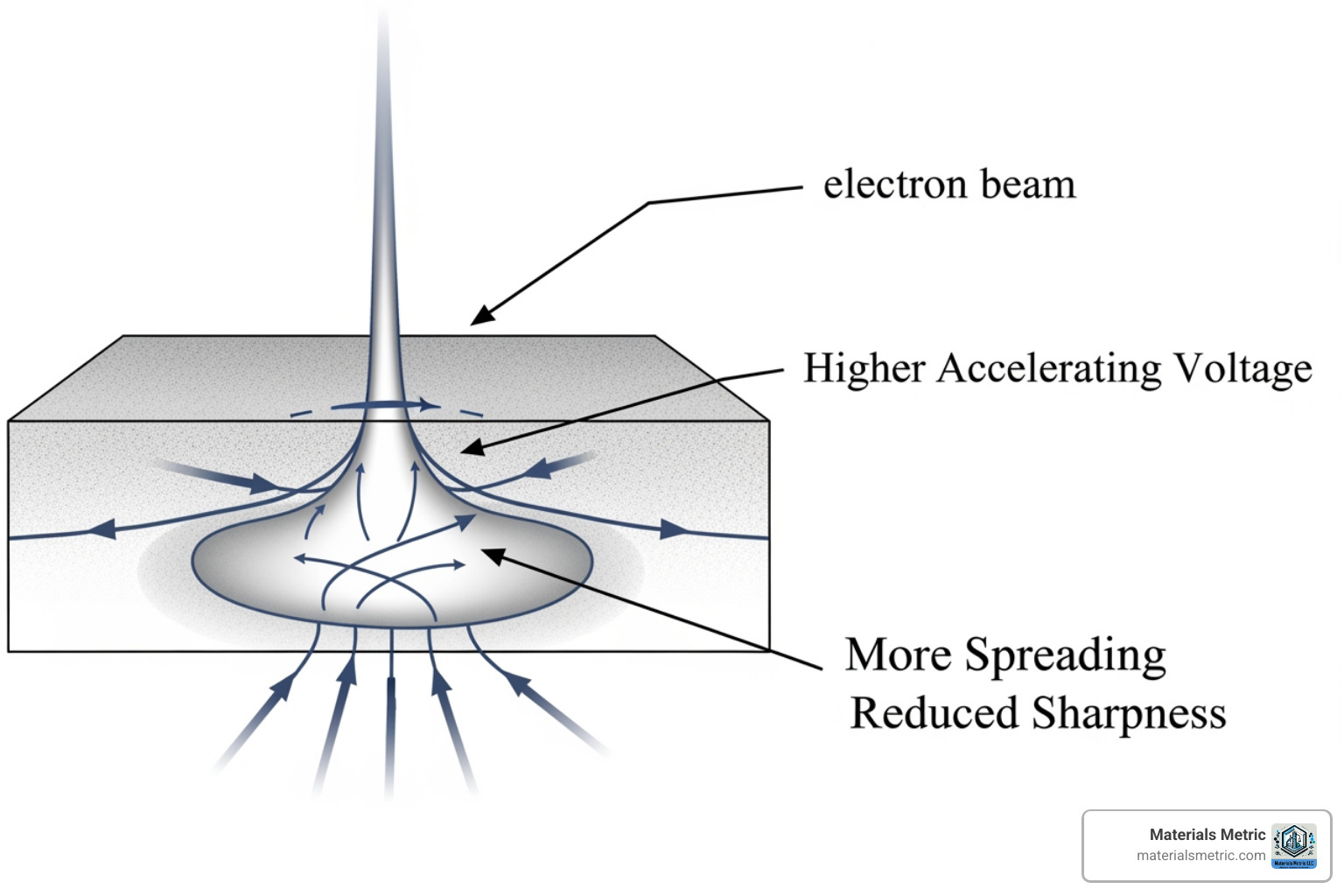
One major factor is the accelerating voltage impact of the electron beam. TEMs can operate at a wide range of voltages, from tens to hundreds of kilovolts (kV). While higher voltages can offer better resolution and penetration through thicker samples, they present challenges for the fluorescent screen. The response of a fluorescent screen actually decreases as the accelerating voltage of the incident electrons increases. This means the screen glows less brightly for the same electron dose at higher voltages.
To compensate for this, especially in high-voltage TEMs, a thicker fluorescent screen is often required. Why? Because at higher energies, electrons are more likely to pass right through a thinner screen without depositing enough energy to generate sufficient light. For example, a thickness increase of about four times is needed for a fluorescent screen when going from 120 keV to 800 keV. However, a thicker screen introduces its own problems. It can lead to image blurring because the electrons spread out more laterally within the thicker phosphor layer before generating light. This lateral electron spreading essentially smears the image, reducing sharpness and fine contrast.
Another related issue stemming from high accelerating voltages is the thickness of the lead glass window. To protect operators from the increased generation of hard X-rays at higher voltages, the lead glass must be made thicker. While essential for safety, this thicker glass can also make it more difficult to observe fine contrast through the screen directly, as it can absorb or distort some of the emitted light. This is one reason why in modern, high-voltage TEMs, a television (TV) camera is often installed below the camera chamber to capture and display the image on a computer monitor, rather than relying solely on direct viewing through the thick lead glass.
Q: What is the relationship between the fluorescent screen and image contrast in TEM?
The fluorescent screen directly translates variations in electron intensity into visible light and dark contrast. A screen with good luminous efficiency and minimal blurring ensures that the electron intensity variations are accurately represented as clear image contrast.
Q: How does the accelerating voltage of the electron beam affect the performance of a fluorescent screen?
Higher accelerating voltages lead to a decreased response from the fluorescent screen, requiring thicker screens to capture enough energy. This, in turn, can cause image blurring due to increased lateral electron spreading within the phosphor layer. Additionally, thicker lead glass for X-ray shielding can further reduce the clarity of direct observation.
Frequently Asked Questions about TEM Fluorescent Screens
We often get questions about the specific choices made in designing and using TEM fluorescent screens. Let’s shine a light on some of the most common ones.
Why are specific phosphors like Zinc Sulfide used?
The choice of phosphor for a TEM fluorescent screen is not arbitrary; it’s a carefully considered decision based on several critical properties:
- High Luminous Efficiency: Zinc sulfide (ZnS) phosphors, especially when doped with elements like copper, aluminum, or europium, are excellent at converting the energy from incident electrons into visible light. We need a bright image, not a dim glow!
- Appropriate Persistence Time: As mentioned earlier, a persistence of about 100 milliseconds is ideal. This ensures the image is stable without excessive afterglow that would cause blurring in dynamic observations.
- Green Light Emission: Many ZnS phosphors emit light in the green spectrum. This is particularly advantageous because the human eye is most sensitive to green light, making the image appear brighter and easier to perceive for the operator.
- Stability Under Electron Bombardment: These materials must withstand constant bombardment by high-energy electrons without quickly degrading or losing their luminescent properties.
Q: Are there specific types of phosphors chosen for fluorescent screens, and why?
Yes, primarily zinc sulfide (ZnS) with various dopants (Cu, Al, Eu) is chosen for its high luminous efficiency, optimal persistence (~100 ms), and often green light emission to match human eye sensitivity, all while maintaining stability under electron beam exposure.
How does accelerating voltage affect what the operator sees?
The accelerating voltage of the electron beam plays a dual role in impacting what an operator perceives on the TEM fluorescent screen:
- X-ray Protection: Higher accelerating voltages generate more intense and harder X-rays. To ensure operator safety, the lead glass viewing window must be significantly thicker to provide adequate shielding. This thicker glass, while protective, can unfortunately dim and distort the view, making subtle details harder to spot.
- Phosphor Response: As the electron beam energy increases, the phosphor’s efficiency in converting that energy into light can decrease. This means a decreased phosphor response at very high voltages, resulting in a less bright image. Combined with the thicker lead glass, this makes direct viewing of fine contrast difficult, often necessitating the use of a TV camera system for clearer observation.
Is the image on the fluorescent screen the final result?
No, emphatically no! Think of the TEM fluorescent screen as a highly effective workbench or a drafting board, not the final masterpiece. Its primary role is as a tool for navigation, focusing, and alignment. We use it to quickly get our bearings, find areas of interest, make rough adjustments, and ensure the electron beam is properly aligned.
However, for capturing the highest quality data—the images destined for publication, detailed analysis, or quantitative measurements—the image on the screen is rarely the final product. Instead, final high-quality images are captured digitally by cameras below the screen (like CCD, CMOS, or direct electron detectors) or, in older systems, on photographic film. These dedicated detectors offer superior sensitivity, dynamic range, and the ability to record quantitative data, far surpassing what the human eye can discern from the fluorescent screen. The screen gets us ready; the digital detectors capture the science.
To understand how these captured images are then processed and analyzed for deep material insights, explore More info about Integrated Chemical Microscopy Characterization.
Conclusion: The Enduring Legacy of the Fluorescent Screen
The TEM fluorescent screen is a fascinating example of how foundational technology can evolve yet remain indispensable. From its humble beginnings as the sole window into the nanoscale world, it has adapted alongside more sophisticated digital detectors. While no longer the primary means of image acquisition, its role as a real-time, intuitive interface for microscope alignment, focusing, and navigation is still crucial. It serves as that vital bridge between the electron beam and the human eye, allowing operators to interact directly with the invisible world of electrons.
Its importance in both historical and modern TEM operation underscores its clever design and practical utility. Even with advanced digital imaging systems, the feel of a direct, glowing image helps experienced operators “read” the microscope’s behavior. At Materials Metric, we appreciate the synergy between these classic and cutting-edge components. Our experts leverage a comprehensive suite of advanced microscopy tools, including the insights gained from direct observation on the TEM fluorescent screen, to ensure the highest precision in our analytical testing and materials characterization services. Whether it’s for biomedical, pharma, aerospace, energy, or manufacturing sectors, we combine the best of both worlds to deliver ISO 9001:2015-aligned data and expert interpretation.
Learn more about our Transmission Electron Microscopy services and how our integrated, end-to-end research infrastructure can support your most challenging material science needs.