Raman Spectroscopy
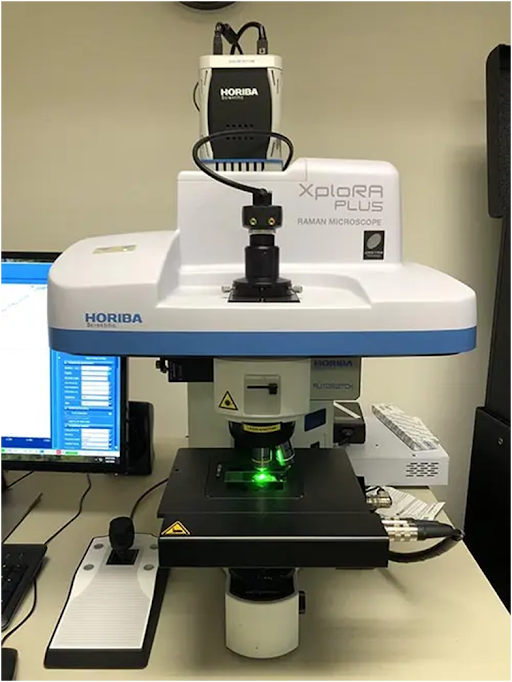
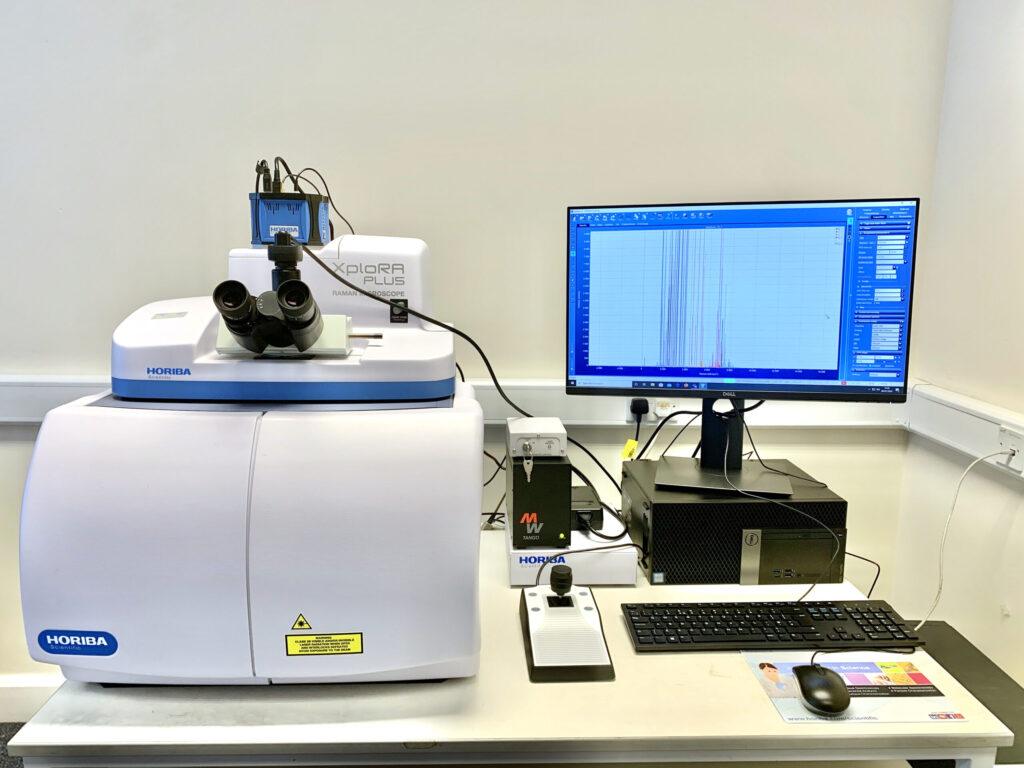
Raman spectroscopy is a vibrational spectroscopy technique that probes molecular structure, chemical bonding, and crystallinity by measuring the inelastic scattering of monochromatic light, typically from a laser source. The resulting Raman shifts provide detailed insight into vibrational modes that are often complementary to FTIR, enabling comprehensive structural characterization.
At Materials Metric, Raman spectroscopy is applied as a non-destructive method requiring minimal sample preparation, making it ideal for solids, powders, thin films, polymers, carbon-based materials, nanomaterials, inorganic phases, and biological samples. Our Raman workflows support materials identification, phase analysis, defect evaluation, and structure–property studies for research, development, and quality control.
Use of Raman Spectroscopy
Raman is used to:
• Identify chemical structures and functional groups
• Differentiate crystalline, amorphous, and polymorphic phases
• Characterize carbon materials (graphene, CNTs, graphite)
• Assess polymer structure, additives, and degradation
• Detect contaminants or unexpected chemical species
• Map chemical distribution across surfaces (Raman mapping)
Applications of Raman Spectroscopy
• Polymers & Plastics: crystallinity, degradation, additive verification
• Biomaterials & Hydrogels: structural changes, crosslinking analysis
• Nanomaterials: graphene quality (D/G ratio), CNTs, nanoparticles
• Pharmaceuticals: polymorphs, excipient interactions, formulation quality
• Ceramics & Inorganics: phase identification, lattice disorder
• Coatings & Thin Films: chemical composition and uniformity
Sample Analysis Process
1. Submission & Objective Review
- Specify sample type and analytical goals
• Identify expected components or suspected contaminants
• Determine whether point analysis or Raman mapping is required
2. Sample Preparation
- Raman is non-destructive and requires no dissolution
• Solids, powders, films, fibers, and pellets analyzed directly
• Powders placed on slides or metal-free substrates
• Films mounted flat to allow uniform focus
• Moisture-sensitive or fluorescent materials handled carefully to minimize interference
3. Raman Measurement
- Laser excitation at 532 nm, 633 nm, or 785 nm (varies by sample requirements)
• Spectra collected from selected regions of interest
• Optional Raman mapping for chemical distribution
• Baseline correction and fluorescence suppression applied when needed
4. Data Processing & Reporting
- Peak assignment and functional-group interpretation
• Phase identification and crystallinity assessment
• Carbon material analysis (D/G/A2 bands if applicable)
• Comparison to reference spectra or expected structural profiles
• Annotated spectral report with expert interpretation
Why Choose Materials Metric for Your Raman Analysis
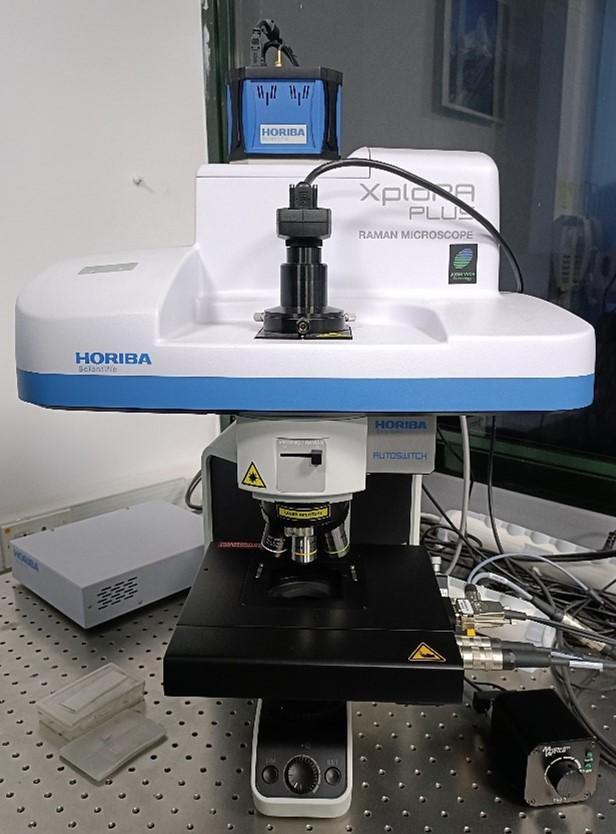
Materials Metric provides high-resolution Raman spectroscopy supported by deep expertise in polymers, biomaterials, carbon systems, pharmaceuticals, and nanomaterials.
Our Raman services include:
- Precise chemical and structural identification across organic and inorganic systems
• Advanced Raman mapping for spatial chemical distribution
• Expertise in carbon materials, phase transitions, and crystalline disorder
• Sensitive detection of polymer degradation, crosslinking, and additives
• Clear, annotated spectral reporting suitable for R&D, quality control, and regulatory documentation
We ensure your Raman data delivers clear, actionable structural and chemical insights for material selection, troubleshooting, product development, and validation.