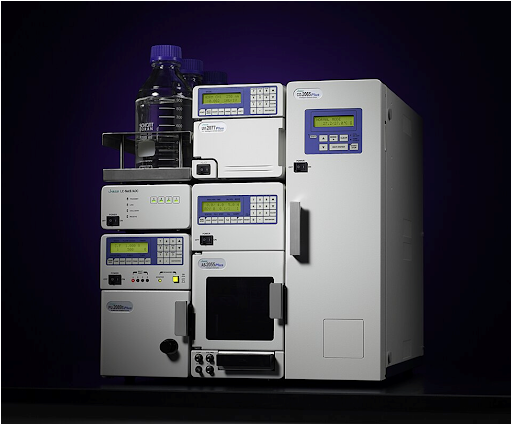
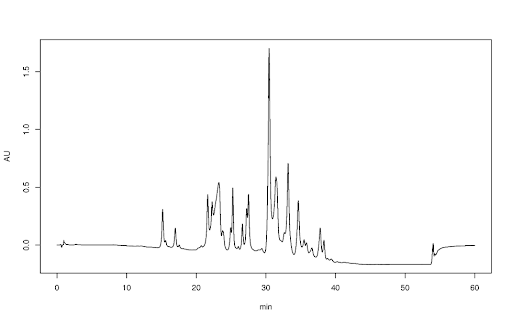
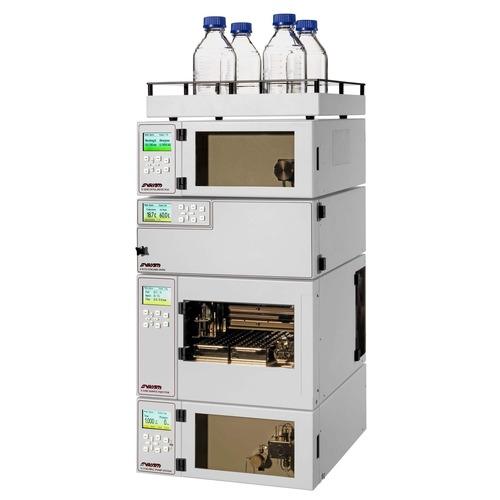
High-Performance Liquid Chromatography (HPLC) is a separation and quantification technique used to analyze components in liquid samples by driving a solution through a chromatographic column under high pressure. It enables precise identification and measurement of target compounds, supporting accurate assessment of purity, concentration, impurities, and degradation products.
At Materials Metric, we apply HPLC using validated, application-specific methods to support polymers, pharmaceuticals, biomolecules, additives, and complex chemical formulations. Our chromatographic workflows deliver reproducible retention profiles and reliable quantitative data, supporting research, formulation development, quality control, stability studies, and regulatory documentation.
Use of HPLC
• Quantification of active compounds • Detection of impurities and residual monomers • Polymer degradation and additive analysis • Drug release and stability studies • Leachables and extractables analysis
Why Choose Materials Metric for Your HPLC Analysis
• Accurate quantification and trace-level detection • Specialized expertise in complex polymer and pharmaceutical samples • Multiple detection modes (UV, fluorescence, MS) • Support for extractables, leachables, and stability studies • Clear reporting with quantitative results and interpretation