Gas Chromatography–Mass Spectrometry (GC–MS)
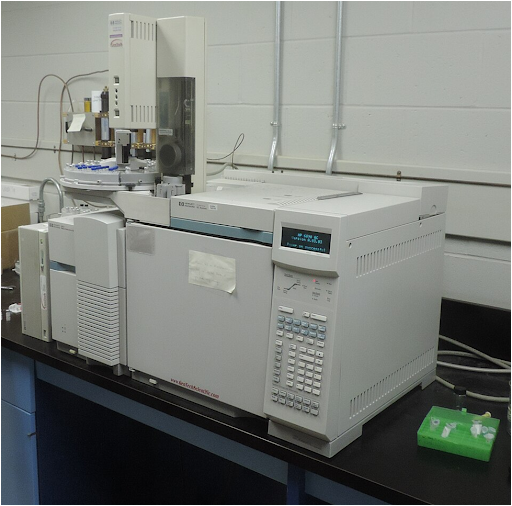
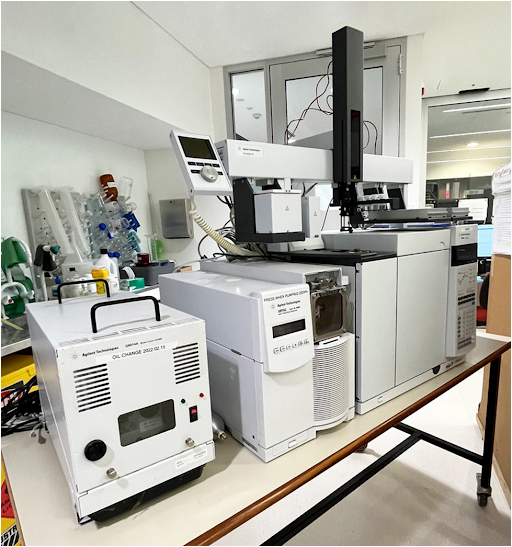
Gas Chromatography–Mass Spectrometry (GC–MS) is a highly sensitive analytical technique that integrates chromatographic separation with molecular identification. Gas chromatography separates volatile and semi-volatile compounds based on boiling point and column interactions, while mass spectrometry identifies each compound through characteristic mass-to-charge (m/z) fragmentation patterns.
At Materials Metric, GC–MS is used to detect and quantify trace-level organic compounds with high specificity and confidence. Our workflows support analysis of residual solvents, extractables and leachables, degradation products, volatile organic compounds (VOCs), additives, and small organic contaminants, generating defensible data for research, quality control, failure investigations, and regulatory submissions
Use of GC–MS
GC–MS is used to identify and quantify compounds that can be vaporized without decomposition.
Researchers and manufacturers use GC–MS for:
• Detecting volatile and semi-volatile impurities
• Identifying extractables and leachables from medical devices and packaging
• Analyzing degradation, oxidation, or thermal byproducts
• Screening VOCs in materials, coatings, adhesives, and polymers
• Confirming purity and validating chemical formulations
• Monitoring contamination events during R&D or production
• Verifying additives, plasticizers, and stabilizers in polymers
Applications of GC–MS
GC–MS supports critical testing across multiple industries:
• Medical Devices: extractables/leachables (E&L), residual solvents
• Biomaterials: identification of unreacted monomers, degradation compounds
• Polymers & Composites: additive screening, outgassing analysis
• Pharmaceuticals: impurity profiling and stability studies
• Environmental Testing: VOCs, organic pollutants
• Industrial Chemicals: purity verification and formulation analysis
Sample Analysis Process
1. Sample Submission & Objective Review
- Client provides sample type, known or suspected analytes, and testing goals
- We determine the appropriate GC column, temperature program, and MS mode
2. Sample Preparation
Preparation depends on material and impurity type:
• Solvent extraction for polymers, coatings, adhesives
• Headspace analysis for volatile compounds
• Thermal desorption for materials with low-volatility compounds
• Liquid injection for prepared solutions
• Concentration or cleanup if required
3. GC–MS Measurement
- GC separates sample components by retention time
- MS detects and identifies each compound via fragmentation pattern
- Optional modes:
– Full scan for unknowns
– SIM mode for targeted quantification
– TIC for complex mixture profiling
4. Data Processing & Reporting
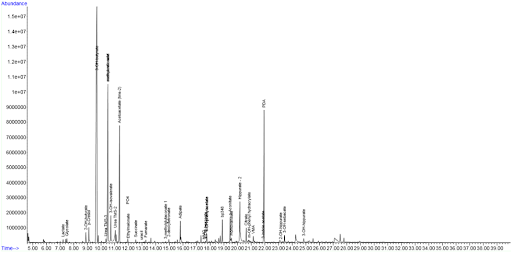
- Chromatograms and retention time profiles
- Mass spectra and compound matches
- Identification of impurities, additives, or contaminants
- Quantitative results (if applicable)
- Fully annotated report describing key findings
Why Choose Materials Metric for Your GC–MS Analysis
Materials Metric provides high-sensitivity GC–MS analysis for applications requiring precise identification of volatile and semi-volatile compounds.
Our GC–MS services deliver:
- Trace-level detection of organic impurities, VOCs, leachables, and degradation products
• Robust identification using high-quality spectral libraries
• Customizable extraction and headspace workflows for polymers, biomaterials, adhesives, and medical devices
• Targeted and non-targeted screening options
• Expert interpretation by chemists specializing in polymer chemistry, biomaterials, and device characterization
• Clear, annotated GC–MS reports suitable for R&D, QC, and regulatory documentation
By integrating GC–MS results with HPLC, FTIR, ICP-MS, and mechanical or thermal data, Materials Metric provides a complete chemical profile to support formulation refinement, regulatory submissions, and contamination troubleshooting.