Thermal Degradation Studies
Thermal degradation studies evaluate how materials chemically and physically change when exposed to elevated temperatures over time. Heat-driven degradation can result in bond scission, volatilization, phase changes, loss of mechanical integrity, discoloration, and formation of low-molecular-weight byproducts that affect performance, safety, and service life.
At Materials Metric, thermal degradation studies are used to identify degradation onset temperatures, mass-loss behavior, decomposition pathways, and thermally induced impurities. These analyses support polymers, biomaterials, pharmaceuticals, coatings, and advanced materials by informing processing limits, stability assessments, shelf-life prediction, and regulatory documentation.
Uses of Thermal Degradation Studies
• Determine thermal stability and decomposition temperatures
• Identify degradation products
• Predict processing and molding behavior
• Support polymer, biomaterial, and coating development
• Understand causes of heat-induced failures
• Assess suitability for sterilization or high-temperature applications

Applications
• Polymers, composites, biomaterials
• Pharmaceuticals and intermediates
• Coatings, adhesives, inks
• Battery/electrode materials
• Packaging, elastomers, consumer products
Sample Analysis Process
1. Method Definition
- Select analytical tools (TGA, DSC, DMA).
- Define decomposition endpoints and regulatory expectations.
2. Controlled Thermal Exposure
- Single or multi-rate heating
- Testing in nitrogen, air, or oxygen
- High-temperature stability screening
3. Analytical Characterization
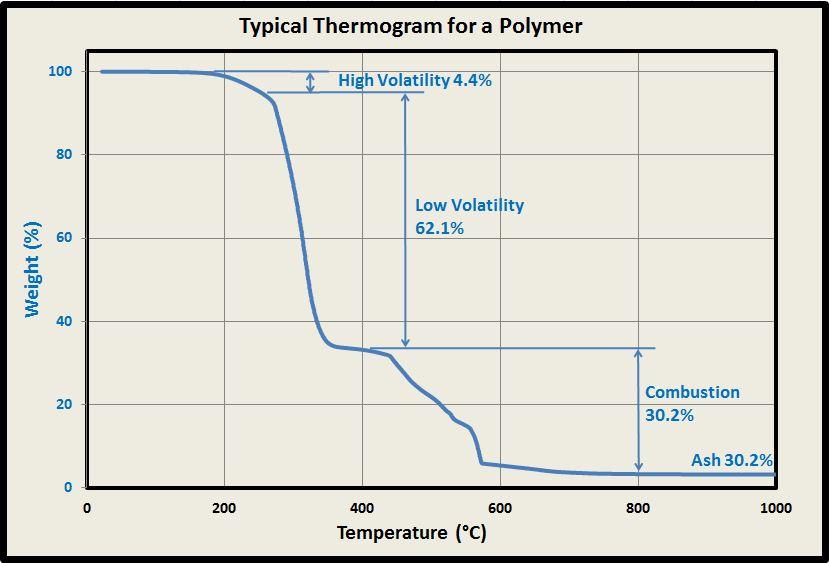
- TGA – mass loss and thermal decomposition
- DSC – phase transitions and reaction energetics
- GC–MS / FTIR coupling – volatile degradant identification
- Raman/FTIR – structural changes
4. Reporting
- Thermal stability metrics
- Degradation pathway mapping
- Processability insights
- Recommendations for formulation adjustments

Why Choose Materials Metric for Thermal Degradation Studies
Materials Metric provides high-resolution thermal diagnostics and expert interpretation to help you design thermally robust materials.
We offer:
• TGA, DSC, DMA, and hyphenated GC–MS/FTIR decomposition analysis
• Complete mapping of thermal breakdown pathways
• Specialized knowledge of polymer, biomaterial, and pharma degradation
• Regulatory-ready documentation
• Guidance on stabilizer selection and formulation improvement
We deliver the scientific clarity needed to strengthen performance and avoid thermally driven failures.