Why Advanced Material Characterization Techniques Are the Foundation of Modern Innovation
Advanced material characterization techniques are the analytical methods used to understand the structure, composition, and properties of materials at scales ranging from millimeters to individual atoms. These techniques answer critical questions for R&D professionals:
- What is it made of? (Spectroscopy methods like XPS, FTIR, Raman, EDS)
- What does it look like? (Microscopy methods like SEM, TEM, AFM)
- How is it organized? (Diffraction methods like XRD)
- How does it behave? (Mechanical and thermal analysis)
In today’s scientific and industrial landscape, the ability to precisely understand materials isn’t just helpful, it’s foundational. An estimated 70% of new product development relies on advanced materials, and the global market for characterization techniques is projected to reach USD 12.5 billion by 2027. Whether you’re developing next-generation batteries, optimizing semiconductor fabrication, or diagnosing why a component failed in the field, these techniques provide the data-driven insights that turn uncertainty into actionable knowledge.
The challenge? No single technique tells the complete story. A material’s performance depends on its composition, structure, and morphology, each requiring different analytical approaches. Companies that master this integrated toolkit report up to 20% reductions in material waste and 15% improvements in product reliability.
I’m Rupak Dua, Ph.D., a materials scientist and biomedical engineer with over a decade of experience leading R&D programs and directing polymer and materials divisions where advanced material characterization techniques were central to innovation, quality assurance, and regulatory readiness. As Founder and CEO of Materials Metric, I help R&D teams translate complex materials data into confident, compliance-aligned decisions that accelerate development and reduce technical risk.
The Core Categories of Materials Characterization
At its heart, material characterization is the broad and general process by which a material’s structure and properties are probed and measured. This crucial process helps us understand why different materials exhibit their unique properties and behaviors, allowing us to optimize designs and improve performance and reliability. The scope of characterization can range from angstroms (imaging individual atoms) to centimeters (imaging macroscopic grain structures).
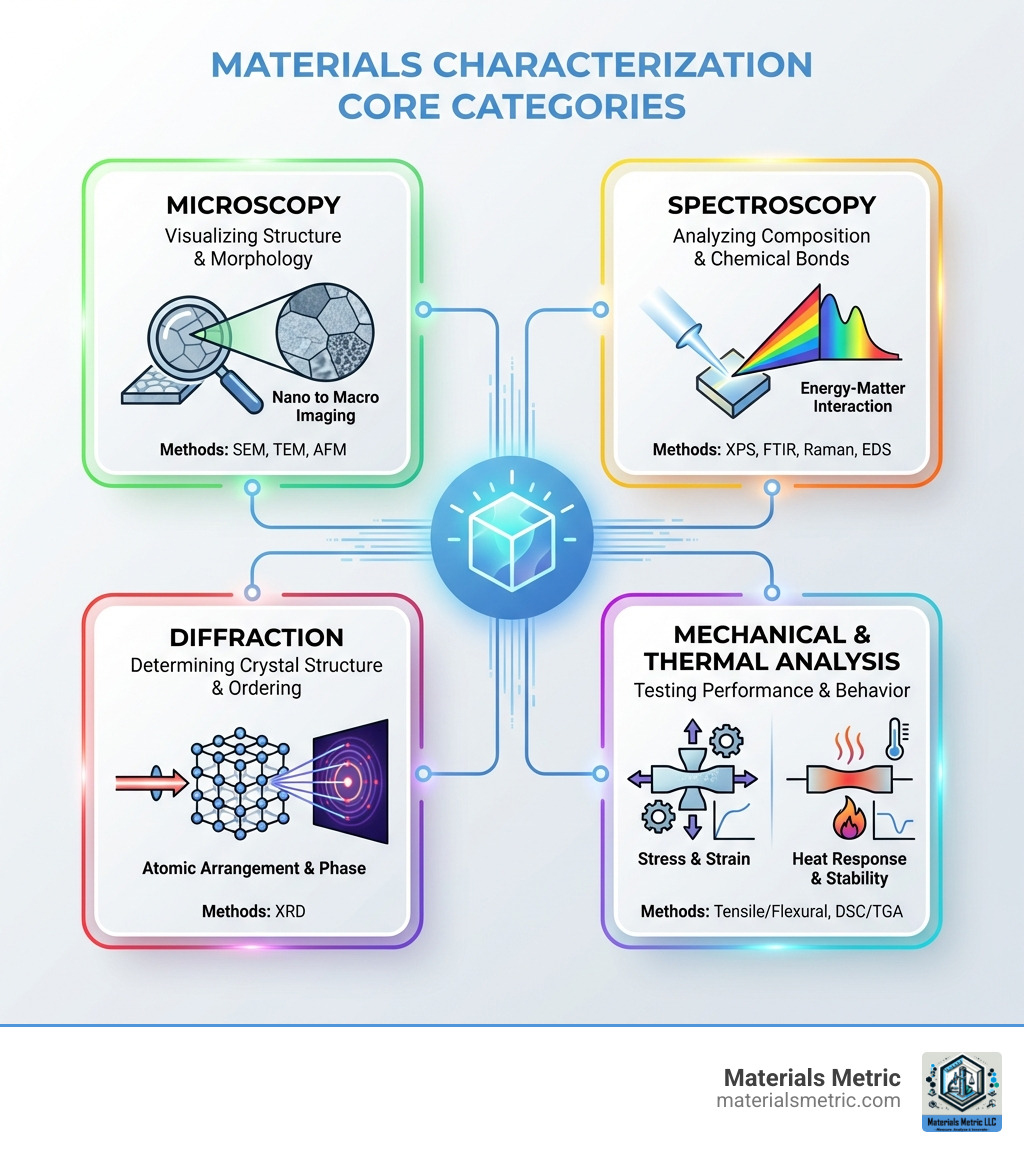
We can broadly categorize the essential advanced material characterization techniques into four primary groups:
- Microscopy for imaging structure: These techniques allow us to visualize the material’s physical appearance, from its surface topography to its internal microstructure, at various magnification levels. This helps us understand “what it looks like.”
- Spectroscopy for chemical analysis: By analyzing how materials interact with different forms of energy (like light or X-rays), we can uncover their elemental and chemical composition, including bonding and chemical states. This answers the question of “what it’s made of.”
- Diffraction for crystalline structure: Techniques in this category use the scattering patterns of waves (typically X-rays) to reveal the atomic and molecular structure of crystalline materials. This provides insight into “how it’s organized.”
- Mechanical and Thermal Analysis for physical properties: These methods measure a material’s response to external forces, temperature changes, or other environmental stimuli, providing information about its physical and thermal performance. This helps us predict “how it behaves.”
No single technique provides a complete picture, which is why a correlative approach, combining multiple methods, is often considered a best practice. The careful selection of the right technique, or combination of techniques, is paramount to obtaining comprehensive and accurate information about a material. This multi-modal approach is fundamental to identifying root causes of material behavior and driving robust research and development.
A Closer Look: Advanced Microscopy Techniques
Advanced microscopy techniques allow us to peer into the hidden worlds of materials, visualizing their micro- and nanostructures. This ability to see beyond the naked eye is crucial for understanding how a material’s physical form influences its function. We can push the limits of what we can see, from surface features to atomic arrangements, gaining unprecedented insights.
Scanning Electron Microscopy (SEM)
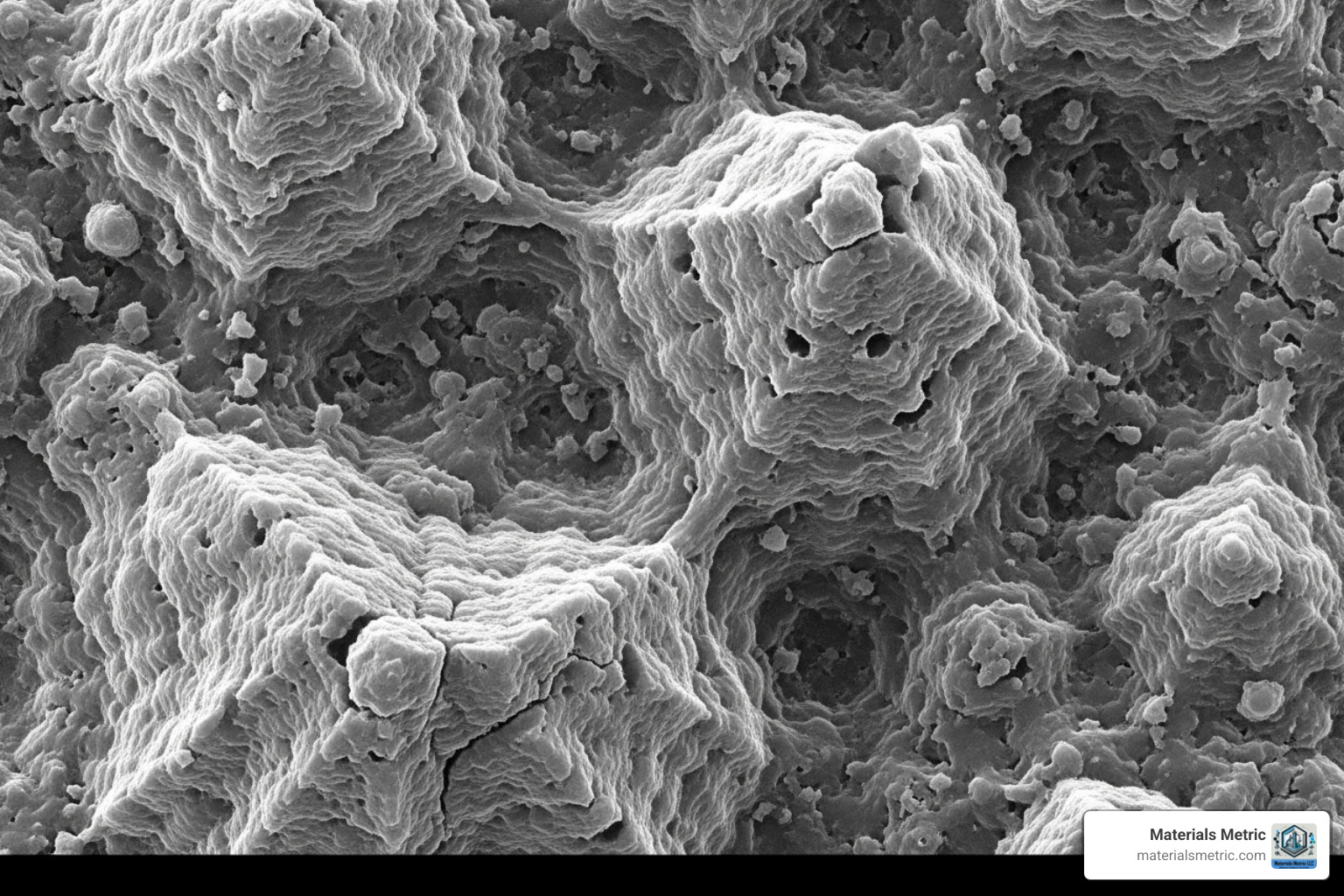
Scanning Electron Microscopy (SEM) is like a super-powered magnifying glass for surfaces. Its principle involves focusing a beam of electrons onto a sample’s surface. When these electrons interact with the sample, they produce various signals, including secondary electrons (which provide topographical information) and backscattered electrons (which reveal compositional differences). By detecting these signals, the SEM constructs a high-resolution image of the sample’s surface.
- Information Provided: SEM delivers detailed insights into a material’s surface topography, morphology (shape and size of particles), and provides structural details at the micron scale. It’s a non-destructive technique, making it ideal for examining delicate or valuable samples.
- Applications: SEM is widely used in failure analysis to pinpoint defects, for surface imaging of coatings or fractures, and for particle analysis in various industries. For instance, in solid-state battery research, SEM is essential for revealing surface morphology and structural details of battery components. Specialized ChemiSEM technology can even provide live color imaging that highlights chemical elements, allowing for faster and more accurate identification of materials within a sample.
Transmission Electron Microscopy (TEM)
If SEM shows us the surface, Transmission Electron Microscopy (TEM) allows us to see through the material, providing insights into its internal structure at an incredibly high resolution. The principle involves an electron beam passing through an ultra-thin sample. As electrons pass through, they are scattered or transmitted, forming an image that reveals the internal arrangement.
- Information Provided: TEM offers sub-nanometer scale characterization, delivering information to elucidate behavior at the atomic level. It can reveal a material’s internal structure, crystallographic information (how atoms are arranged), and identify defects within the crystal lattice.
- Applications: TEM is indispensable for nanomaterial analysis, where understanding atomic arrangements is critical. It’s used in semiconductor inspection to detect flaws and in the study of biological samples. In battery materials, TEM provides atomic-level insights into the relationship between structure and functionality, particularly useful for analyzing beam-sensitive materials like solid electrolyte interphase (SEI) layers.
Atomic Force Microscopy (AFM)
Unlike electron microscopes that use electron beams, Atomic Force Microscopy (AFM) works by physically “feeling” the surface. Its principle involves a sharp tip, mounted on a flexible cantilever, scanning the sample’s surface. As the tip interacts with the surface, forces (like van der Waals forces) cause the cantilever to deflect. A laser detects these deflections, and a computer translates them into a highly detailed three-dimensional map of the surface.
- Information Provided: AFM generates 3D topography maps with angstrom-level resolution, providing quantitative data on surface roughness, and even mechanical properties like elasticity and adhesion.
- Applications: AFM is invaluable for characterizing thin films, polymers, and biological materials, where surface properties dictate performance. It’s a versatile tool for studying surface phenomena at the nanoscale. The original concept of this powerful tool was patented as early as 1988 The original patent for the Atomic Force Microscope.
Showing Chemical Secrets with Advanced Spectroscopy
While microscopy shows us what a material looks like, spectroscopy unveils its chemical identity. These advanced material characterization techniques allow us to identify elemental and chemical compositions, probe molecular bonds, and even determine oxidation states. It’s like having a chemical detective in our lab, revealing the hidden secrets of materials.
Fourier-Transform Infrared (FTIR) and Raman Spectroscopy
FTIR and Raman spectroscopy are complementary techniques that provide “molecular fingerprints” of materials. Both techniques rely on the principle of molecular vibrations.
- FTIR Principle: FTIR works by shining infrared light through a sample. Molecules absorb specific frequencies of IR light, causing their bonds to vibrate. The transmitted light is then analyzed, creating a spectrum that shows which frequencies were absorbed. Each molecule has a unique absorption pattern.
- Raman Principle: Raman spectroscopy, on the other hand, involves shining a laser onto a sample. Most of the light is scattered elastically (Rayleigh scattering), but a small fraction is scattered inelastically (Raman scattering) due to interactions with molecular vibrations. The shift in energy of this scattered light provides information about the molecular structure.
- Information Provided: Both techniques provide insights into chemical bonds, functional groups present, and the overall molecular structure. They are excellent for identifying organic compounds, polymers, and some inorganic materials. Raman is particularly useful for analyzing carbon-based materials like graphene and carbon nanotubes, and can even be performed through transparent containers.
- Applications: FTIR is widely used for polymer identification, contamination analysis in manufacturing, and pharmaceutical quality control. Raman is frequently used for material identification, stress analysis, and studying crystalline structures.
X-ray Photoelectron Spectroscopy (XPS)
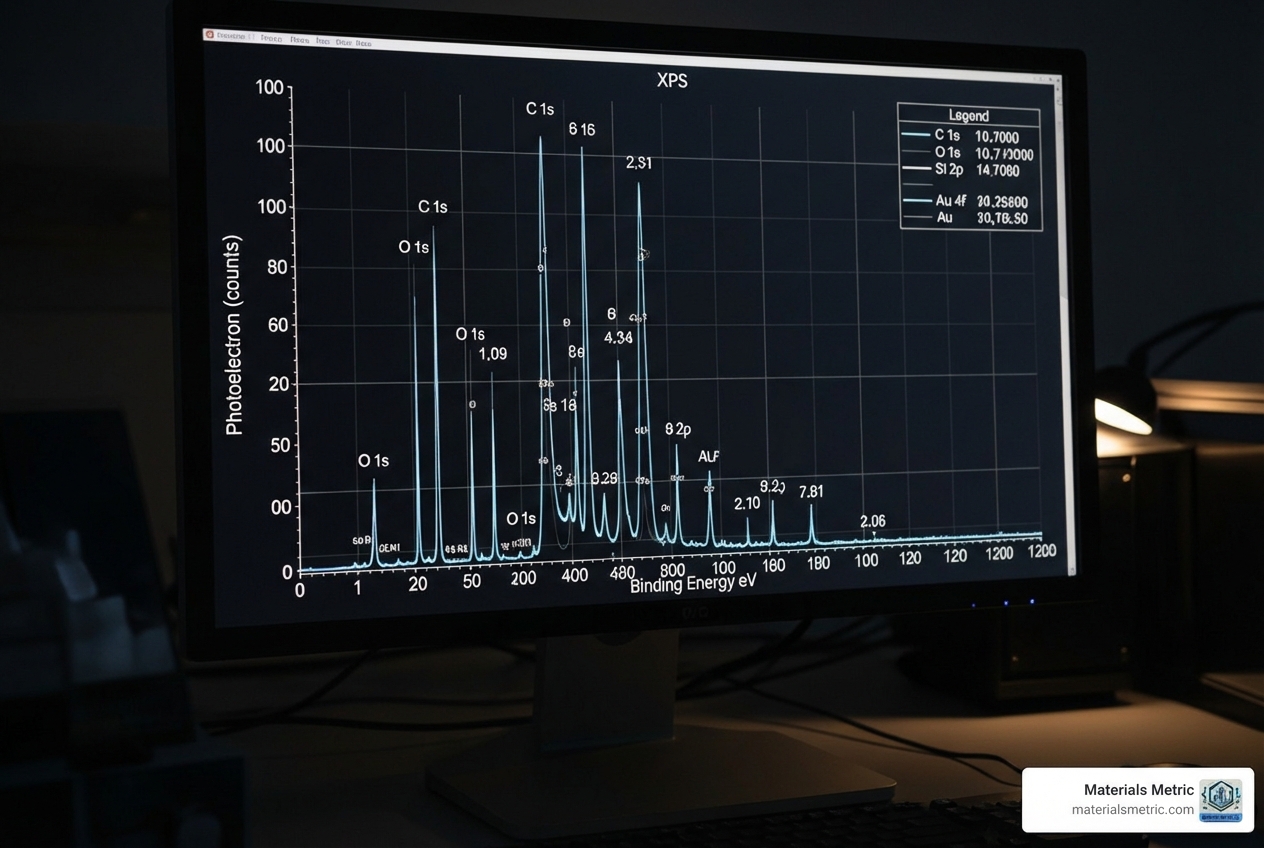
X-ray Photoelectron Spectroscopy (XPS) is a surface-sensitive technique that tells us about the elemental composition and chemical states of the very top layers of a material. Its principle is based on the photoelectric effect: when a sample is irradiated with X-rays, core-level electrons are emitted. The kinetic energy of these emitted photoelectrons is measured, which allows us to determine their binding energy.
- Information Provided: XPS provides quantitative elemental composition for the top 1-10 nanometers of a surface, along with crucial information about the chemical environment and oxidation states of those elements.
- Applications: XPS is invaluable for thin film analysis, corrosion studies (identifying oxide layers), and catalyst characterization (determining active sites). In solid-state battery research, XPS is critical for studying surface phenomena like the formation of the solid electrolyte interphase (SEI) layer and understanding changes in electrode materials after cycling. It helps determine how the SEI layer varies in depth and composition, which is vital for battery performance and safety.
Energy-Dispersive X-ray Spectroscopy (EDS/EDX)
Energy-Dispersive X-ray Spectroscopy (EDS or EDX) is an analytical technique often coupled with electron microscopes (SEM or TEM) to provide rapid elemental analysis. Its principle involves the electron beam from the microscope knocking out inner-shell electrons from atoms in the sample. When an outer-shell electron fills this vacancy, it emits a characteristic X-ray photon with an energy unique to that element.
- Information Provided: EDS provides elemental composition and allows for elemental mapping across a sample, showing the spatial distribution of different elements.
- Applications: It’s frequently used for microstructure elemental analysis, identifying inclusions, and quickly determining the composition of unknown phases in a wide range of materials, from metals to ceramics and biological samples.
Decoding Structures and Properties
Understanding the atomic arrangement within a material is as crucial as knowing its chemical makeup. Diffraction techniques, especially X-ray Diffraction, are our go-to for this.
X-ray Diffraction (XRD) for Crystalline Analysis
X-ray Diffraction (XRD) is the gold standard for structural analysis of crystalline materials, giving us a unique “fingerprint” of their internal atomic arrangement. Its principle is based on Bragg’s Law, which describes how X-rays are diffracted by the crystal lattice. When X-rays hit a crystalline material, they scatter off the atoms. If the waves scattered from different atomic planes interfere constructively, we observe a diffraction peak.
- Information Provided: XRD provides critical information about a material’s crystal structure, allowing for precise phase identification (which crystalline compounds are present), determination of lattice dimensions, calculation of crystallinity (the degree of structural order), and even crystallite size.
- Applications: XRD is fundamental across diverse fields. In mineralogy, it identifies different mineral phases. In metallurgy, it’s used to understand alloy structures and ensure specific crystal structures are achieved for desired mechanical properties. In pharmaceuticals, it’s crucial for studying polymorphism, as different crystal forms of a drug can affect its efficacy. Even in space exploration, XRD plays a role; for example, NASA’s Curiosity rover used XRD to analyze Martian soil, revealing its mineral composition NASA’s use of XRD to analyze Martian soil.
Choosing the Right Advanced Material Characterization Techniques
Selecting the appropriate advanced material characterization techniques is a strategic decision. It depends on the specific question we’re trying to answer, the type of material, and the scale of features we need to investigate. Here’s a comparative overview of some key techniques:
| Technique | Information Provided | Resolution | Sample Requirements | Primary Use Case |
|---|---|---|---|---|
| SEM | Surface topography, morphology, elemental composition (with EDS) | Nanometer to micron | Solid, conductive (or coated), vacuum compatible | Surface analysis, defect imaging, particle characterization |
| TEM | Internal structure, crystallography, defects, atomic arrangement, elemental composition (with EDS/EELS) | Sub-nanometer to atomic | Ultra-thin (electron transparent), vacuum compatible | Nanomaterial analysis, internal structure of crystals, defects, phase identification |
| AFM | 3D surface topography, roughness, mechanical properties (elasticity, adhesion) | Angstrom to nanometer (vertical & lateral) | Solid, can be conductive or non-conductive, in air or liquid | Surface roughness, nanoscale mechanical properties, imaging delicate biological samples |
| XPS | Surface elemental composition, chemical states, oxidation states | ~1-10 nm depth resolution, ~µm lateral | Solid, vacuum compatible | Surface chemistry, thin film analysis, corrosion, catalyst surface characterization |
| XRD | Crystal structure, phase identification, crystallinity, lattice parameters, stress/strain | Bulk (microns to mm), atomic-level structure | Crystalline solid (powder or bulk) | Phase identification, quantitative phase analysis, crystallite size, texture analysis, stress measurement |
Understanding these differences helps us integrate complementary methods to build a complete and accurate picture of a material.
Driving Innovation: The Industrial Impact of Advanced Material Characterization Techniques
The impact of advanced material characterization techniques extends far beyond academic research; it’s a driving force behind innovation in product design, development, and manufacturing quality control across numerous industries. By understanding materials at a fundamental level, companies can optimize processes, predict performance, and prevent failures. This leads to significant tangible benefits, with reports showing up to a 20% reduction in material waste and a 15% improvement in product reliability.
Industry-Specific Applications
- Automotive: The automotive industry is a major driver for materials characterization, with significant R&D spending focused on lightweight and high-strength materials for improved fuel efficiency and safety. Advanced techniques enable the creation of lightweight alloys for vehicle bodies, detailed analysis of battery materials for electric vehicles, and characterization of protective coatings to improve durability and corrosion resistance.
- Electronics: The electronics industry relies heavily on precise material characterization for the development of semiconductors and integrated circuits, with the market for semiconductor materials characterization expected to grow substantially. Techniques are used for quality control of semiconductor wafers, failure analysis of integrated circuits, and optimizing thin film deposition processes. For example, terahertz spectroscopy can be used for quality control and authentication of packaged integrated circuits by providing improved spatial resolution.
- Construction: In construction, material characterization is essential for evaluating the quality and strength of building materials like concrete and steel. It helps understand cement hydration processes, assess the performance of additives, and conduct durability studies to ensure the longevity and safety of infrastructure.
Case Study: The Role of Advanced Material Characterization Techniques in Solid-State Battery Research
Solid-state batteries are a game-changer for energy storage, promising higher energy density and improved safety. However, their development presents significant material challenges, particularly concerning interfaces, dendrite growth, and ion transport. This is where advanced material characterization techniques become indispensable.
- The Challenge: Understanding the complex interactions at electrode-electrolyte interfaces, preventing lithium dendrite formation (which can lead to short circuits), and optimizing ion movement within solid electrolytes are crucial problems. Traditional methods often fall short in providing the nanoscale detail needed.
- Key Techniques:
- Cryo-SEM: By freezing battery components, cryo-SEM allows us to examine the delicate, highly reactive interfaces and dendrite structures in their native state, minimizing sample damage that might occur during conventional SEM preparation.
- XPS for SEI Layer Analysis: The solid electrolyte interphase (SEI) layer, a passivation film on the electrode surface, is critical for battery performance. XPS is used to precisely analyze the elemental composition, chemical states, and depth profile of this nanometer-thick layer, helping us understand its formation mechanisms and evolution during cycling. This helps us study surface pre-treatment of graphite electrode materials and confirm post-cycling changes in composition of cathode and anode materials.
- In-situ XRD: Performing XRD while the battery is operating (in-situ or operando) allows researchers to observe real-time structural changes in electrode materials during charge and discharge cycles, providing dynamic insights into reaction mechanisms.
- DualBeam FIB-SEM Systems: These systems are used for fast, site-specific cross-section sample preparation and 3D material characterization. They can even prepare ultra-thin lamellae for TEM analysis. We’ve seen how Plasma FIB, using inert gases like xenon or argon, is excellent for examining larger volumes and minimizing interaction with sensitive lithium-containing materials. In contrast, Gallium FIB provides high-resolution imaging of fine structures but requires careful consideration due to potential interaction with lithium.
- Image Analysis Software: The vast amount of data generated by these techniques requires sophisticated image analysis software. This software not only helps process and interpret the data but also provides quantitative measurements and visualizations. 3D imaging software offers comprehensive views of material structure, crucial for assessing manufacturing quality, investigating aging, and understanding the connectivity and tortuosity of electrode materials. We can even use predictive modeling software to simulate material behavior under various conditions, forecasting how changes in structure or composition will impact battery performance.
- Benefits: By leveraging these advanced techniques, we can accelerate the development of solid-state batteries, gain a deeper understanding of failure mechanisms, and ultimately improve battery safety, performance, and longevity. This comprehensive approach is revolutionizing our ability to create more efficient and reliable energy storage solutions.
The Future of Materials Analysis
The field of materials characterization is constantly evolving, driven by the need for ever more precise, rapid, and comprehensive insights into materials.
Emerging Trends and Future Directions
We’re witnessing exciting trends that promise to further revolutionize how we understand materials:
- Automation and AI-powered Data Analysis: The sheer volume and complexity of data generated by advanced material characterization techniques necessitate smarter analysis. Automation streamlines experimental workflows, while AI and machine learning algorithms are increasingly being used to interpret complex spectra, identify patterns, and even predict material properties from raw data. This helps overcome the inherent complexity in data interpretation.
- High-Throughput Screening: The ability to rapidly characterize many samples simultaneously or sequentially accelerates materials findy and optimization. This is crucial for applications like drug findy, catalyst development, and new alloy design.
- In-situ and Operando Analysis: Moving beyond static analysis, in-situ and operando techniques allow us to observe materials under realistic operating conditions (e.g., a battery charging, a catalyst reacting, a material under stress). This provides dynamic, real-time insights into mechanisms and changes that are impossible to capture otherwise.
- New Modalities:
- Atom Probe Tomography (APT): APT is pushing the boundaries of nanoscale compositional analysis. It provides sub-0.3-nm spatial resolution with three-dimensional compositional information, allowing us to map the precise location of individual atoms in a material. Recent hardware configurations have simplified APT and significantly improved data acquisition rates, while new specimen fabrication methods have expanded the range of materials that can be analyzed. Atom probe tomography is becoming increasingly versatile.
- Resonant Inelastic X-ray Scattering (RIXS): RIXS is an advanced spectroscopic technique that probes electronic excitations within materials with high energy resolution. It provides unique insights into electronic structure, orbital interactions, and spin states, which are fundamental to understanding many material properties. Resonant Inelastic X-ray scattering is a powerful tool for solveing complex electronic phenomena.
- X-ray Absorption Spectroscopy (XAS): XAS, including XANES and EXAFS, is gaining even more prominence. This technique is element selective and highly sensitive, applicable to all states of matter, and ideal for integration with complex sample environments. X-ray absorption spectroscopy principles and practical use in materials analysis and X-ray absorption spectroscopy are widely used. It’s particularly strong in providing structural information for highly disperse and disordered systems, which are common in catalytic materials and biological samples.
Ensuring Data Accuracy and Reliability
The power of advanced material characterization techniques hinges on the accuracy and reliability of the data they produce. For laboratory professionals, ensuring this is paramount.
- Importance of Standards and Calibration: Adhering to established standards and regularly calibrating instruments are fundamental steps. This ensures that our measurements are consistent, reproducible, and comparable across different labs and experiments.
- Proper Sample Preparation: This cannot be overstated. Meticulous sample preparation, custom to the specific technique and material, is crucial to avoid artifacts and obtain representative data. Incorrect preparation can lead to misleading results, no matter how sophisticated the instrument.
- Expert Data Interpretation: The data generated by these techniques can be complex. Its interpretation requires specialized knowledge, experience, and often a multidisciplinary approach. Cross-referencing results from multiple techniques is a best practice for rigorous analysis and validation.
- ISO 9001 Alignment: Implementing quality management systems aligned with standards like ISO 9001:2015 ensures systematic control over processes, documentation, and continuous improvement, all contributing to the highest levels of data integrity and reliability.
Conclusion
Advanced material characterization techniques form an indispensable toolkit for innovation in science and industry. They empower us to understand the intricate details of materials, from their surface topography to their atomic arrangements and chemical bonds. This deep understanding enables quality assurance, helps solve complex problems, and dramatically accelerates research and development cycles.
No single technique can provide all the answers, which is why an integrated, multi-modal approach is often the most effective. For organizations facing complex material challenges, partnering with a specialized laboratory is key. At Materials Metric, we provide ISO 9001-aligned data and expert interpretation, ensuring you receive reliable insights to confidently achieve your material science goals.
Explore our materials characterization services to see how we can help you open up the full potential of your materials.